Zepbound Cost: Vials vs. Pens, Insurance Coverage, and What You'll Pay
{ if eq .Lang "zh" }{ else }{ end }42% of American adults have obesity. Zepbound is the first drug to achieve 22% mean body weight loss in a clinical trial. So why does it cost $1,059/month for the pen version — and how is Eli Lilly also offering a $550/month vial option?
The answer reveals something unusual about how this drug is being marketed — and which option makes sense for you depends entirely on your insurance situation.
Zepbound: Two Delivery Systems, Two Price Points
Zepbound (tirzepatide injection, weekly) received FDA approval for chronic weight management in November 2023. It’s the same molecule as Mounjaro but branded and approved specifically for obesity (BMI ≥ 30, or ≥ 27 with a weight-related condition).
In 2024, Eli Lilly introduced single-dose vials as a lower-cost option targeted at self-pay patients. This is notable — manufacturers rarely create lower-cost versions of branded biologics while still selling the higher-price version.
| Zepbound Option | Monthly Cost | Notes |
|---|---|---|
| Pen injectors, no insurance | $1,000 – $1,100 | Prefilled, 4 pens per pack |
| Single-dose vials, no insurance | $550 – $650 | Requires manual injection setup |
| Commercial insurance + savings card | $25 – $50 | Commercially insured, non-government |
| Medicare Part D | $50 – $400+ | Savings card not applicable |
| Medicaid | $0 – $50 | State formulary dependent |
The vial form launched at $549/month for the lower doses (2.5mg, 5mg) — less than half the pen price. Higher doses (10mg, 12.5mg, 15mg) run $650/month. Eli Lilly specifically designed this as a self-pay pathway, acknowledging that many patients without insurance coverage can’t sustain $1,000+/month.
How Zepbound Savings Programs Work
For commercially insured patients: Eli Lilly’s savings card program caps out-of-pocket costs at $25/month if your insurance covers Zepbound on formulary. Same structure as the Mounjaro card — government insurance not eligible.
For uninsured/self-pay patients: Eli Lilly’s “LillyDirect” platform sells the vials directly at the $549–$650 price without requiring insurance involvement. This is the self-pay pathway.
Savings card for partially covered patients: If your insurance covers Zepbound but your copay is high (Tier 3 or 4), the savings card offsets the difference down to $25/month for eligible patients.
Why Zepbound Became the Fastest-Growing Obesity Drug
The SURMOUNT-1 trial results (NEJM, 2022) drove Zepbound’s rapid uptake: tirzepatide 15mg achieved 22.5% mean body weight loss over 72 weeks compared to 2.4% for placebo. That 22% figure approaches the weight loss seen with gastric sleeve surgery, which achieves roughly 25–35% total body weight loss.
The FDA approved Zepbound for adults with BMI ≥ 30, or BMI ≥ 27 with at least one weight-related comorbidity (type 2 diabetes, hypertension, dyslipidemia, obstructive sleep apnea, or cardiovascular disease). The cardiovascular outcomes data — from the SURMOUNT-MMO trial — found Zepbound reduced major cardiovascular events, strengthening coverage arguments for high-risk patients.
The Coverage Expansion Trend
Coverage has improved substantially since Zepbound’s 2023 approval:
- About 55% of large-employer health plans cover GLP-1/dual agonist medications for obesity as of 2024, per JAMA Health Forum data
- Over 30 state Medicaid programs have added some form of GLP-1 obesity drug coverage
- Medicare Part D has added Zepbound to formulary in some plans following the cardiovascular outcomes data
Vials vs. Pens: Which to Choose?
Choose the pen (if insured): If your insurance covers Zepbound and your copay is manageable (especially with savings card), the pen is more convenient. No dose measurement needed.
Choose the vial (if self-pay): The $549–$650/month vial saves $400–$450/month versus the pen at full price. You’ll need syringes and proper storage equipment — your prescriber or pharmacist can walk you through the process.
Pharmacist training matters: Vials require drawing up the correct dose manually. If you’re new to self-injection, ask your pharmacist for a demonstration. The process isn’t difficult but needs to be done correctly for efficacy and safety.
Storage: Both require refrigeration (36–46°F). The vial form can also be stored at room temperature (up to 86°F) for up to 21 days after first use — a convenience advantage for travelers.
Prior Authorization: What Insurers Require
Zepbound PA criteria are typically more detailed than diabetes drugs because plans want to confirm obesity indication:
- BMI documentation: ≥ 30, or ≥ 27 with documented comorbidity (current lab or clinical note, within 12 months)
- Comorbidity diagnosis: At least one ICD-10 coded comorbidity if BMI 27–29.9
- Behavioral weight management attempt: Many plans require 3–6 months of documented dietary counseling or structured program (Noom, WW, etc.) — though this is increasingly challenged by clinicians citing delays in effective treatment
- No pregnancy or breastfeeding: Tirzepatide is contraindicated; plan requires confirmation
- Prior drug trial: Some plans require prior GLP-1 trial before approving tirzepatide
Approval timeline: 5–14 business days. Denial on first attempt is common — your prescriber can appeal citing the SURMOUNT-1 outcomes data and, if relevant, cardiovascular risk reduction from SURMOUNT-MMO.
Long-Term Cost Consideration
Zepbound is a chronic treatment. The vials at $550/month equal $6,600/year or $33,000 over five years for self-pay patients — still substantially more than the cost of bariatric surgery in the long run, particularly gastric sleeve ($15,000–$23,000 once) or gastric bypass ($20,000–$35,000 once).
For patients who qualify for surgery and compare on pure economics, the surgical option looks compelling. But Zepbound’s non-surgical nature, 22% weight loss results, and cardiovascular benefits make it a meaningful alternative — particularly for those below surgical BMI thresholds or with high anesthesia risk.
Bottom Line
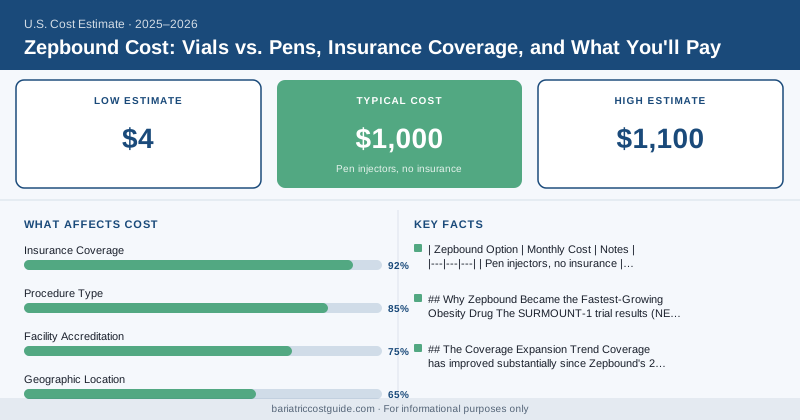
Zepbound’s pen form runs $1,000–$1,100/month; the vial form runs $550–$650/month for self-pay patients. With commercial insurance and the Eli Lilly savings card, it can drop to $25/month. It’s the newest FDA-approved obesity medication and shows the strongest weight loss outcomes of any non-surgical option currently available. The vial option is a genuine innovation for uninsured patients — if you can manage the manual injection process, you’re cutting your monthly cost roughly in half.
{ if eq .Lang "zh" }Disclaimer: BariatricCostGuide provides cost data for educational purposes only. We are not a medical provider, insurance company, or financial advisor. All costs are estimates based on published data and vary by location, facility, surgeon, insurance plan, and individual health factors. Consult a board-certified bariatric surgeon and your insurance carrier for personalized medical and cost advice.