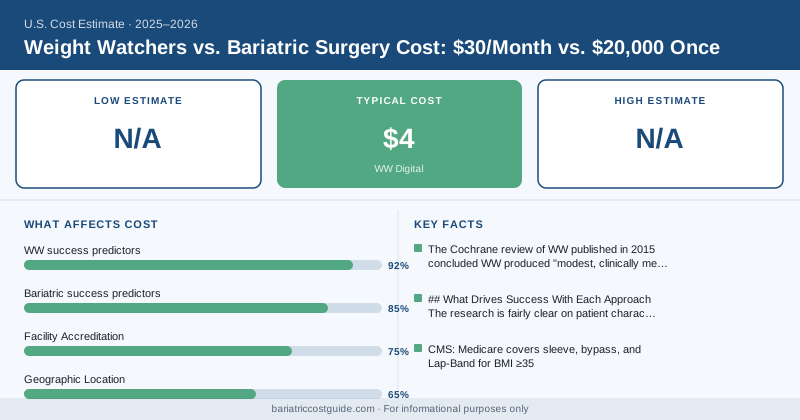
Weight Watchers vs. Bariatric Surgery Cost: $30/Month vs. $20,000 Once
{ if eq .Lang "zh" }{ else }{ end }Sarah, 44, has been on Weight Watchers for six years. She’s lost and regained 40 pounds three times. Her doctor is now recommending bariatric surgery. Her reaction: “I’ve already spent $2,000 trying to avoid surgery.”
That cycle — behavioral program, weight loss, regain, repeat — is the most common weight management story in America. Understanding where WW succeeds and where it falls short helps clarify when surgery becomes the right call.
The Direct Cost Comparison
| Option | Monthly Cost | 5-Year Total | Average Weight Loss |
|---|---|---|---|
| WW Digital | $13 – $25 | $780 – $1,500 | 4–6% body weight |
| WW Unlimited Workshops | $45 – $55 | $2,700 – $3,300 | 5–8% body weight |
| Gastric sleeve | $15,000 – $23,000 (once) | $17,500 – $26,500 | 25–35% total weight |
| Gastric bypass | $20,000 – $35,000 (once) | $23,000 – $38,500 | 30–40% total weight |
Surgical 5-year totals include ongoing supplements ($600–$1,500/year) and follow-up visits ($200–$600/year). WW costs are subscription only.
On raw cost, WW wins easily in years 1–3. By year 5, the gap has narrowed somewhat due to surgical follow-up costs, but WW is still cheaper if you’re measuring dollars alone. The problem is that the dollars and the outcomes are decoupled — you can spend $3,000 on WW and lose 5 pounds net over five years, or spend $20,000 on surgery and lose 80 pounds that mostly stays off.
What Research Actually Shows About WW Outcomes
WW has been studied more rigorously than most commercial programs. The results are real — and real in their limitations.
A 2015 Annals of Internal Medicine randomized controlled trial found WW participants lost 2.6% more body weight than self-directed dieters at 12 months. The Cochrane review of WW published in 2015 concluded WW produced “modest, clinically meaningful weight loss at 12 months.” The emphasis is on “modest.”
CDC data defines successful long-term weight loss as maintaining at least 10% of initial body weight lost for one year. By that benchmark, behavioral programs including WW succeed in roughly 20% of participants over a 5-year horizon. The 80% regain rate isn’t a criticism of WW — it reflects the biological difficulty of maintaining weight loss without surgical or pharmacological intervention.
For patients with Class II obesity (BMI 35–39.9) or Class III obesity (BMI ≥ 40), the gap between what WW can achieve and what’s needed to resolve comorbidities is often too large to bridge with behavioral intervention alone.
Who WW Actually Works For (And Who It Doesn't)
WW works well for:
- Patients with BMI 25–34 seeking 5–15 pounds of weight loss
- Post-surgical weight maintenance to prevent regain
- People who thrive with accountability, community, and structured tracking
- Patients who don’t qualify for surgery or medication and want structured support
WW is insufficient for:
- Class II–III obesity (BMI 35+) with comorbidities like type 2 diabetes or sleep apnea
- Patients who have cycled through behavioral programs 2+ times without durable results
- Anyone whose medical provider has recommended weight loss in excess of 20% of body weight for health purposes
- Patients with underlying metabolic disorders that don’t respond to caloric restriction
The Cycling Cost: What WW Actually Costs Over Time
Most WW members don’t stay continuously enrolled for five years. They join, succeed partially, lapse, regain weight, rejoin. According to WW’s own disclosed membership data, average member tenure is under two years before a lapse.
That cycling has a real cost. If you enroll, drop, regain weight, and re-enroll twice over five years, your total cost is $5,400–$9,900 (3 separate enrollment periods at the workshop tier). Compared to surgery at $15,000–$23,000 once, the gap has narrowed considerably — and you still don’t have the surgical outcome.
The behavioral cycling also has psychological costs that don’t show in a cost spreadsheet: the demoralization of repeated weight regain affects adherence to future treatment, surgical or otherwise.
What Drives Success With Each Approach
The research is fairly clear on patient characteristics that predict success:
WW success predictors:
- Strong social support and accountability preference
- Mild-to-moderate obesity (BMI 25–34)
- No significant metabolic comorbidities requiring large weight loss
- Prior behavioral program experience is a positive predictor when combined with structured accountability
Bariatric success predictors:
- Adherence to nutritional requirements post-surgery (protein intake, vitamins, supplements)
- Consistent follow-up with the bariatric program for 2+ years post-op
- Psychological readiness for permanent dietary changes (pre-surgical psychological evaluation is a reliable predictor)
- Absence of untreated binge eating disorder (which should be treated before surgery, not after)
The ASMBS notes that about 80% of bariatric patients maintain clinically significant weight loss (≥ 20% total body weight) at 5 years. That compares to roughly 20% of behavioral program participants by the same benchmark.
The Coverage Question
Most commercial insurance covers bariatric surgery (if you meet criteria) but historically hasn’t covered WW. That’s changing — some insurers now offer WW memberships as a wellness benefit, and the WW clinical program has been covered by select Medicare Advantage plans.
If your insurance covers surgery but not WW, the out-of-pocket cost gap narrows dramatically. Surgery with insurance might cost you $1,500–$5,000 in deductible/copay; WW at $45/month for five years costs $2,700. In that scenario, surgery may not cost more than long-term WW — and surgery delivers substantially better outcomes.
Bottom Line
WW costs $13–$55/month versus $15,000–$35,000 once for bariatric surgery. Over five years accounting for cycling behavior, WW totals $780–$9,900; surgery totals $17,500–$38,500. WW is the right choice for mild-to-moderate overweight with no comorbidities requiring major weight loss. Surgery is the right choice for Class II–III obesity where clinical evidence shows behavioral programs fail to deliver durable outcomes. The “cheap” program isn’t the right choice if it doesn’t work — and for serious obesity, the research shows it usually doesn’t.
{ if eq .Lang "zh" }Disclaimer: BariatricCostGuide provides cost data for educational purposes only. We are not a medical provider, insurance company, or financial advisor. All costs are estimates based on published data and vary by location, facility, surgeon, insurance plan, and individual health factors. Consult a board-certified bariatric surgeon and your insurance carrier for personalized medical and cost advice.