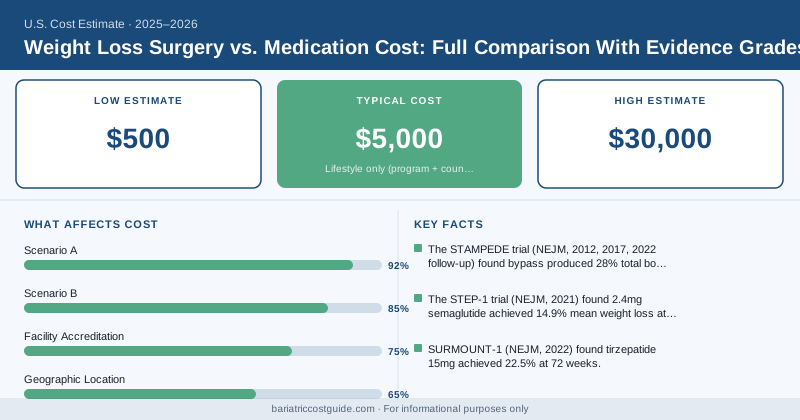
Weight Loss Surgery vs. Medication Cost: Full Comparison With Evidence Grades
{ if eq .Lang "zh" }{ else }{ end }What does the evidence actually say about surgery versus medication versus lifestyle for obesity treatment — and what does each cost? This article tries to answer both questions honestly, with evidence grades so you know how strong the data is behind each claim.
The Three Treatment Approaches: Quick Overview
Bariatric surgery is the most invasive and most effective option for Class II–III obesity. It produces structural anatomical changes that persist lifelong, driving weight loss through restriction, altered hormones, and (for bypass/duodenal switch) malabsorption.
GLP-1 receptor agonists (semaglutide, tirzepatide) are injectable medications that activate gut hormone receptors to reduce appetite, slow gastric emptying, and drive weight loss. They’re FDA-approved for obesity treatment and require indefinite use for maintained effect.
Lifestyle intervention (diet, exercise, behavioral counseling) is the foundation of all obesity treatment. It’s evidence-based for modest weight loss and has no downsides beyond adherence challenges.
Head-to-Head Cost Comparison
| Treatment Option | 1-Year Cost | 5-Year Cost | 10-Year Cost |
|---|---|---|---|
| Lifestyle only (program + counseling) | $500 – $3,000 | $2,500 – $15,000 | $5,000 – $30,000 |
| GLP-1 medication (no insurance) | $12,000 – $18,000 | $60,000 – $90,000 | $120,000 – $180,000 |
| GLP-1 medication (insured, $50 copay) | $600 | $3,000 | $6,000 |
| Gastric sleeve (self-pay, all-in) | $16,000 – $25,000 | $18,000 – $28,000 | $20,000 – $32,000 |
| Gastric sleeve (insured, avg out-of-pocket) | $2,000 – $5,000 | $5,000 – $11,000 | $7,000 – $14,000 |
| Gastric bypass (self-pay, all-in) | $21,000 – $37,000 | $24,000 – $43,000 | $27,000 – $50,000 |
The ranges here are wide because insurance situation matters more than almost any other factor. A patient with excellent GLP-1 coverage and a $50 copay has radically different economics than a self-pay patient choosing between medication and surgery.
Evidence Grades for Each Option
Here’s where things get specific. The following ratings use a simplified A–C scale based on study quality, duration, and consistency.
Bariatric surgery (sleeve/bypass) for Class II–III obesity: Grade A evidence. Multiple randomized controlled trials, large registry studies, and 10-year follow-up data. The STAMPEDE trial (NEJM, 2012, 2017, 2022 follow-up) found bypass produced 28% total body weight loss at 10 years; sleeve produced 20%. Diabetes remission of 37–45% at 10 years vs. 5% for lifestyle/medical therapy. This is the strongest evidence base of any obesity treatment.
GLP-1 medications (semaglutide, tirzepatide) for BMI ≥ 30: Grade A evidence for short-term outcomes (2–3 years); Grade B for long-term. The STEP-1 trial (NEJM, 2021) found semaglutide 2.4mg achieved 14.9% mean weight loss at 68 weeks. SURMOUNT-1 (NEJM, 2022) found tirzepatide 15mg achieved 22.5% at 72 weeks. Long-term (5+ year) outcomes data is not yet available for these medications. Regain after discontinuation is well-documented.
Lifestyle intervention (diet + exercise + behavioral): Grade A for modest weight loss; Grade B for long-term maintenance. The Diabetes Prevention Program (NEJM, 2002) found structured lifestyle intervention reduced diabetes incidence by 58% in high-risk patients. However, average weight loss at 3 years was 4.9% — insufficient to resolve established obesity-related comorbidities in most Class II–III patients.
Evidence-Based Treatment Selection by Patient Profile
Class III obesity (BMI ≥ 40): Bariatric surgery should be the primary offer. No medication produces equivalent weight loss at this BMI range, and 10-year outcomes from surgery are dramatically better than medication for severe obesity.
Class II obesity (BMI 35–39.9) with comorbidities: Surgery or GLP-1 depending on patient preference, insurance coverage, and surgical risk. Both have Grade A evidence. Surgery produces more weight loss; GLP-1 avoids surgery risk.
Class I obesity (BMI 30–34.9): GLP-1 medications are the appropriate first-line pharmacologic option. Surgery is appropriate with significant metabolic disease (diabetes, GERD, sleep apnea) when medications have failed.
Overweight (BMI 25–29.9): Lifestyle intervention + GLP-1 if approved (BMI ≥ 27 with comorbidity). Surgery generally not appropriate at this BMI.
The Insurance Factor: Biggest Cost Driver
What you actually pay is determined more by your insurance than by which treatment is scientifically superior. Two scenarios with vastly different economics:
Scenario A: Patient with employer insurance covering bariatric surgery (requires MBSAQIP accreditation, BMI ≥ 35 with comorbidities). Insurance doesn’t cover GLP-1 for obesity. Out-of-pocket for surgery: $2,000–$5,000. GLP-1 at full price: $14,400+/year. Surgery wins economically.
Scenario B: Patient with employer insurance covering Wegovy with $50/month copay. Bariatric surgery requires $20,000 out-of-pocket (high-deductible plan, partial coverage). GLP-1 at $600/year wins for the first 20 years. Eventually surgery wins economically — but the patient may prefer ongoing medication over surgery regardless.
Neither scenario is universal — your actual situation depends on your specific plan’s coverage terms.
The Regain Comparison: Critical for Long-Term Value
Surgery: ~80% of gastric bypass patients maintain ≥ 20% total body weight loss at 5 years per ASMBS registry data. At 10 years, most maintain clinically significant weight loss despite partial regain.
GLP-1: Weight regain occurs rapidly after stopping medication. A 2022 NEJM study found two-thirds of semaglutide-driven weight loss returns within one year of stopping. Regain data for tirzepatide is less mature but directionally similar.
Lifestyle: The 2012 Look AHEAD trial (JAMA) found behavioral lifestyle intervention produced 8.6% weight loss at year 1 but only 4.7% at year 8, despite maintained intervention. Regain without ongoing support is nearly universal.
The practical implication: surgery’s “one-time cost” is a real economic advantage if the weight loss durability holds. GLP-1’s ongoing cost reflects an ongoing therapeutic need.
What About Combination Approaches?
Emerging evidence supports GLP-1 medications as adjunct therapy after bariatric surgery for patients experiencing weight regain. A 2023 study in JAMA Surgery found post-bypass patients who added semaglutide lost an additional 11% total body weight.
Cost implication: surgery + GLP-1 for regain represents a hybrid approach. Total costs over 10 years would be higher than surgery alone ($20,000–$50,000 surgery + $600–$18,000 GLP-1 depending on coverage), but may be more effective for high-risk regain patients.
Bottom Line
For Class II–III obesity, bariatric surgery provides the strongest 10-year evidence and lowest long-term self-pay cost. For patients below surgical thresholds, with insurance covering GLP-1 but not surgery, or with high surgical risk, GLP-1 medications provide Grade A short-term evidence and meaningful clinical benefit. Lifestyle intervention remains foundational but rarely sufficient alone for severe obesity. The treatment decision should be made based on your BMI, comorbidities, insurance situation, surgical risk, and patient preference — with all three options on the table, not just one.
{ if eq .Lang "zh" }Disclaimer: BariatricCostGuide provides cost data for educational purposes only. We are not a medical provider, insurance company, or financial advisor. All costs are estimates based on published data and vary by location, facility, surgeon, insurance plan, and individual health factors. Consult a board-certified bariatric surgeon and your insurance carrier for personalized medical and cost advice.