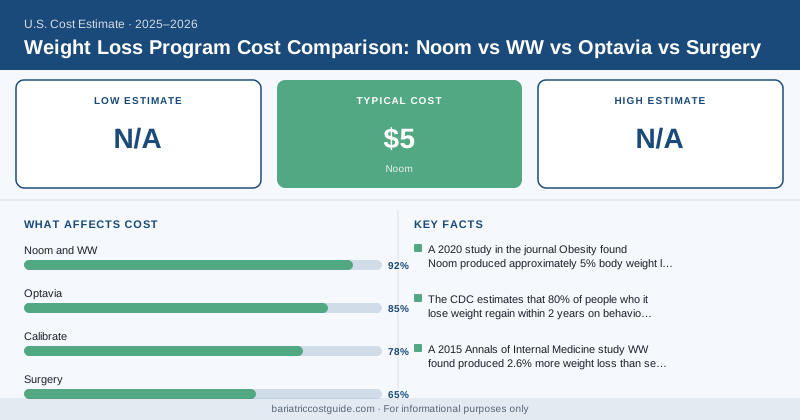
Weight Loss Program Cost Comparison: Noom vs WW vs Optavia vs Surgery
{ if eq .Lang "zh" }{ else }{ end }Noom charges $209 for a 4-month plan. Optavia costs $450/month in meal replacements. Calibrate adds prescription GLP-1 medication and runs $1,500+ for the first year. Surgery costs $15,000–$35,000 once.
Which is cheapest over five years? The answer isn’t Noom.
The Full Program Cost Breakdown
Most program comparisons show monthly costs without tallying the full multi-year commitment — or the cost of starting over after regain, which is the norm, not the exception.
| Program | Monthly Cost | 5-Year Total | Average Weight Loss |
|---|---|---|---|
| Noom | $30 – $70 | $1,800 – $4,200 | 5–7% body weight |
| WW (Weight Watchers) | $25 – $55 | $1,500 – $3,300 | 4–6% body weight |
| Optavia | $350 – $500 | $21,000 – $30,000 | 8–12% (often regained) |
| Calibrate (GLP-1 + coaching) | $1,500 – $3,000/yr | $7,500 – $15,000 | 10–15% body weight |
| Gastric sleeve surgery | $15,000 – $23,000 (once) | $17,000 – $26,000 | 25–35% total weight |
| Gastric bypass surgery | $20,000 – $35,000 (once) | $22,000 – $38,000 | 30–40% total weight |
The Optavia number is genuinely surprising to most people. Because meal replacements ($400–$500/month) are a required purchase — not optional — long-term program costs exceed most surgery costs by year 4.
Noom: The App-Based Approach
Noom uses cognitive behavioral therapy-based content delivered through a smartphone app, combined with calorie tracking and coached check-ins. It’s been heavily marketed as “psychology-based weight loss.”
Cost: $30–$70/month depending on subscription tier. Annual premium plans can bring it lower.
The clinical evidence is modest. A 2020 study in the journal Obesity found Noom produced approximately 5% body weight loss at 52 weeks in participants who engaged consistently — comparable to other behavioral programs. That’s meaningful, but well below surgical outcomes.
The real cost trap: you’ll likely pay for years, cycle off when motivation drops, regain weight, and restart. The CDC estimates that 80% of people who lose weight regain it within 2 years on behavioral programs alone. Five years of Noom cycling on and off could easily total $2,000–$4,000 without producing durable weight loss.
WW (Weight Watchers): The Oldest Commercial Program
WW has gone through multiple brand reinventions but remains the most widely used commercial weight loss program in the US. The Points system tracks food choices without hard calorie limits.
Cost: $25–$55/month. The all-access tier includes unlimited workshop attendance.
A 2015 Annals of Internal Medicine study found WW produced 2.6% more weight loss than self-help at 52 weeks. For mild-to-moderate overweight, that’s clinically meaningful. For Class II–III obesity (BMI 35+), behavioral programs rarely produce sufficient weight loss to resolve comorbidities like type 2 diabetes or sleep apnea.
WW is most cost-effective when used for weight maintenance after surgery or medication-driven weight loss — a role it performs reasonably well at low cost.
Optavia: The Meal Replacement Model
Optavia (formerly Medifast) sells meal replacement “fuelings” — bars, shakes, and snacks — that make up 5 of 6 daily meals. The sixth meal is a “lean and green” home-cooked option.
Cost: $350–$500/month for the fuelings, required as part of the program. This is not optional — the program doesn’t function without purchasing the proprietary products.
Short-term results are good: a 2020 randomized trial in Obesity Science and Practice found 12.1% body weight loss at 16 weeks. The problem is durability. Most Optavia research doesn’t extend beyond 6 months, and program completion rates are low. Regain after program completion is common.
At $450/month, five years of Optavia (with on-and-off cycling that most users experience) costs $15,000–$27,000 — comparable to surgical options with dramatically worse long-term outcomes.
Who These Programs Actually Work For
Noom and WW work best for: Patients with BMI 25–34 seeking modest weight loss, weight maintenance support after other treatment, or motivation and accountability structure. Not appropriate as primary treatment for severe obesity.
Optavia works best for: Short-term, medically supervised rapid weight loss before surgery or a specific event. Not recommended as a long-term maintenance strategy due to cost and durability concerns.
Calibrate (GLP-1 + coaching) works best for: Patients who want medical obesity treatment with clinical support but aren’t ready for surgery. The GLP-1 component drives most of the actual weight loss; the coaching addresses behavioral factors.
Surgery works best for: Patients with BMI ≥ 35, or BMI ≥ 30 with serious comorbidities, who want the most durable long-term outcomes and are ready for a permanent anatomical change.
Calibrate: The Telehealth GLP-1 Program
Calibrate is a membership-based program that combines prescription GLP-1 medications (Wegovy, Ozempic, or Mounjaro depending on your situation) with lifestyle coaching. It’s positioned between traditional weight loss programs and pure medication management.
Cost: $1,500–$2,000/year for the program itself, plus medication costs. If your insurance covers the GLP-1, total annual cost can be $1,500–$3,000. Without medication coverage: $14,000–$20,000/year.
Calibrate’s reported outcomes (internal data, not peer-reviewed trial): ~15% body weight loss at one year for adherent patients. That aligns with GLP-1 clinical trial data — which is exactly what you’d expect when the primary intervention is semaglutide or tirzepatide.
The program adds value through accountability, nutrition coaching, and clinical support. Whether that’s worth the premium over seeing a bariatric physician for the medication and doing free behavioral support is debatable.
The Five-Year Winner
For patients with Class II–III obesity seeking maximum long-term weight loss and metabolic improvement at the lowest long-term cost, bariatric surgery (specifically gastric sleeve) wins the 5-year cost-effectiveness comparison. The ASMBS published data showing 10-year metabolic outcomes — type 2 diabetes remission, hypertension resolution, sleep apnea resolution — that no commercial program has matched.
For patients below surgical thresholds, GLP-1 programs (Calibrate or direct prescription) deliver clinically meaningful outcomes that behavioral-only programs can’t match. The SCALE Obesity trial found liraglutide produced 8.4% weight loss vs. 2.5% for placebo at 56 weeks — a gap that’s far larger than Noom vs. placebo.
Bottom Line
WW and Noom are the cheapest programs at $25–$70/month, but deliver modest 4–7% weight loss that’s often temporary. Optavia looks cheap monthly but costs $21,000–$30,000 over five years with much less durable results than surgery. Calibrate with GLP-1 medication delivers meaningful weight loss for $7,500–$15,000 over five years if medication is covered. Bariatric surgery — at $17,000–$38,000 over five years including follow-up — delivers the highest weight loss and best long-term metabolic outcomes of any option reviewed here.
{ if eq .Lang "zh" }Disclaimer: BariatricCostGuide provides cost data for educational purposes only. We are not a medical provider, insurance company, or financial advisor. All costs are estimates based on published data and vary by location, facility, surgeon, insurance plan, and individual health factors. Consult a board-certified bariatric surgeon and your insurance carrier for personalized medical and cost advice.