VA Bariatric Surgery Coverage: MOVE! Program, Eligibility & Surgical Criteria
{ if eq .Lang "zh" }{ else }{ end }Veterans deal with obesity at higher rates than the general population. Research published in JAMA Surgery found that veterans have obesity rates approximately 5 percentage points higher than age- and sex-matched civilians — a gap attributed to service-related factors including deployment stress, musculoskeletal injuries limiting physical activity, and PTSD. The VA knows this, and it offers bariatric surgery through its healthcare system, but the path to approval is longer and more structured than most commercial insurance.
What the VA Actually Offers
The VA covers bariatric surgery for eligible veterans at VA Medical Centers (VAMCs) that have designated bariatric surgery programs. This isn’t available at every VA facility — only those with trained bariatric teams and accredited programs.
The VA also uses the Community Care Network to refer veterans to non-VA bariatric surgeons when the veteran’s VAMC doesn’t have a bariatric program or has unacceptable wait times.
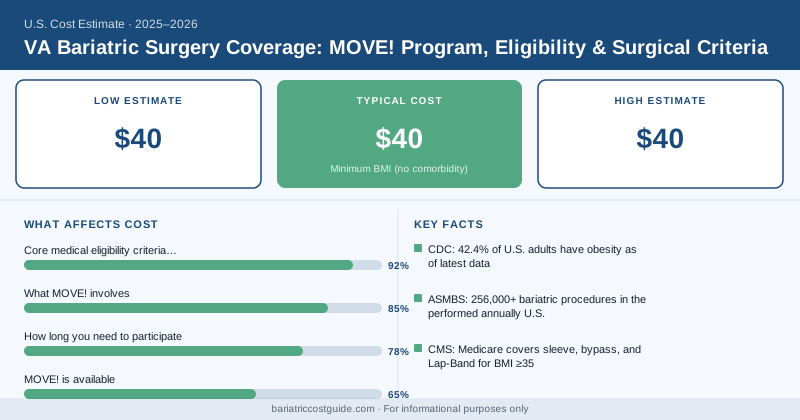
Core medical eligibility criteria for VA bariatric surgery:
- BMI ≥ 40, OR
- BMI 35–39.9 with at least one major obesity-related comorbidity (type 2 diabetes, sleep apnea, hypertension, coronary artery disease, hyperlipidemia, or severe osteoarthritis)
- Service connection for the obesity or a comorbidity is helpful but not strictly required if the veteran is enrolled in VA healthcare
- Documentation of prior conservative weight loss treatment attempts
| VA Criterion | Requirement |
|---|---|
| Minimum BMI (no comorbidity) | ≥ 40 |
| Minimum BMI with comorbidity | 35–39.9 |
| MOVE! program participation | Required (typically 3–6 months) |
| Psych evaluation | Required |
| Enrolled in VA healthcare | Required |
| Service connection | Helpful, not always required |
The MOVE! Program: Your Gateway to VA Bariatric Surgery
MOVE! (Managing Overweight/Obesity for Veterans Everywhere) is the VA’s comprehensive weight management program. Participation in MOVE! is almost universally required before the VA will approve bariatric surgery. It’s not optional, and it’s not fast.
What MOVE! involves:
- Individual and group sessions with dietitians, health coaches, and medical providers
- Regular weight and health monitoring
- Behavioral health coaching
- Physical activity guidance
- Documentation of your weight management history
How long you need to participate: Most VA bariatric programs require three to six months of active MOVE! participation with documented attendance and progress before they’ll submit you for bariatric surgery approval. Some programs require up to twelve months.
MOVE! is available: In-person at VAMCs, via telehealth (MOVE! Coach app), and through some community-based outpatient clinics (CBOCs).
Start MOVE! Early
The VA Surgical Approval Process
Getting approved for bariatric surgery at the VA involves multiple steps:
Enrollment in VA healthcare — You must be enrolled. If you’re not, apply at va.gov or at any VAMC enrollment office.
MOVE! program participation — Typically three to six months of documented participation is required before surgical evaluation
Referral to bariatric program — Your VAMC primary care provider or MOVE! team refers you to the bariatric surgery program (if your VAMC has one) or initiates a Community Care referral
Bariatric surgery evaluation — Multi-disciplinary evaluation including surgical consultation, psychology evaluation, nutrition assessment, and medical clearance
Surgical review committee — Many VA bariatric programs have a multidisciplinary committee that reviews each case before approving surgery
Surgery scheduling — At a VAMC bariatric program or through Community Care
This process routinely takes six months to two years from initial request to surgery date, depending on the VAMC’s capacity, wait lists, and how long MOVE! participation is required.
VA Procedures Covered
The VA covers:
- Roux-en-Y gastric bypass (RYGB)
- Laparoscopic sleeve gastrectomy (VSG / gastric sleeve)
- Adjustable gastric band (laparoscopic banding) — though increasingly limited
The VA generally does not cover:
- Duodenal switch at most facilities
- Revisional bariatric surgery without strong indication
- Cosmetic procedures following weight loss
Community Care for Bariatric Surgery
If your VAMC doesn’t have a bariatric surgery program or if you’ve been waiting longer than the VA’s access standards, you may be eligible for Community Care — VA-authorized surgery at a private bariatric center, covered by the VA.
Eligibility triggers for Community Care:
- No VAMC bariatric program within reasonable distance
- Wait time at the VAMC exceeds VA access standards (currently 28 days for primary care, 28 days for specialty)
- Clinically appropriate to receive care in the community
Community Care is billed directly to the VA; the veteran typically pays only standard VA copayments, not private insurance rates.
VA vs. Private Insurance: Key Differences
| Factor | VA | Commercial Insurance |
|---|---|---|
| Cost to veteran | Copays based on priority group | Deductible + coinsurance |
| MOVE! requirement | Yes — mandatory | Not applicable |
| Timeline | Often 6–24 months | 3–6 months typically |
| Facility choice | VAMC or VA-authorized Community Care | Any in-network facility |
| Procedure options | Limited to VA program offerings | Broader range |
If You Have Both VA and Private Insurance
Some veterans have both VA benefits and employer-sponsored or marketplace insurance. You don’t have to choose — but you need to coordinate. The VA is generally a secondary payer. If your private insurance covers bariatric surgery, it may be faster and more flexible to pursue surgery through your private plan while still participating in MOVE! for your overall health.
Talk to a VA patient advocate or benefits coordinator about coordination of benefits before proceeding. The rules vary based on your specific coverage situations and can affect how costs are shared.
Disability and Service Connection Considerations
Service-connected obesity or obesity-related conditions can affect your VA disability rating and your priority for VA healthcare. If your obesity is secondary to a service-connected condition (e.g., PTSD leading to weight gain, or an orthopedic injury preventing exercise), this connection may strengthen your case for priority access to bariatric services.
For veterans navigating VA bureaucracy around bariatric surgery, VSO (Veterans Service Organization) representatives at organizations like the VFW, DAV, or American Legion can help at no cost.
{ if eq .Lang "zh" }Disclaimer: BariatricCostGuide provides cost data for educational purposes only. We are not a medical provider, insurance company, or financial advisor. All costs are estimates based on published data and vary by location, facility, surgeon, insurance plan, and individual health factors. Consult a board-certified bariatric surgeon and your insurance carrier for personalized medical and cost advice.