UnitedHealthcare Bariatric Surgery Coverage: Criteria & Center of Excellence
{ if eq .Lang "zh" }{ else }{ end }Here’s the thing about UnitedHealthcare and bariatric surgery that most patients don’t know until they’re already deep in the process: UHC doesn’t just require medical criteria — for most commercial plans, they require you to have surgery at a UHC-designated Bariatric Center of Excellence. Pick the wrong facility and you’re looking at thousands of dollars in additional out-of-pocket costs, even if you otherwise meet every clinical criterion.
UHC’s Standard Medical Criteria
UnitedHealthcare’s medical policy for bariatric surgery (Policy CS152.D or current equivalent) requires:
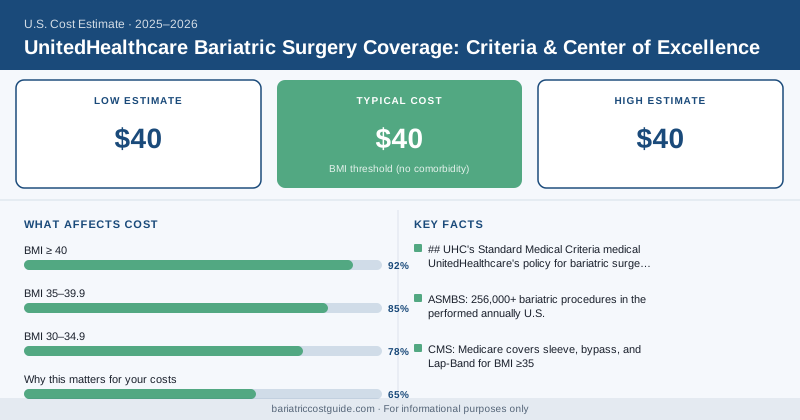
- BMI ≥ 40 — covered without requiring comorbidities
- BMI 35–39.9 — requires at least one documented obesity-related comorbidity: type 2 diabetes, hypertension, sleep apnea, cardiovascular disease, hyperlipidemia, or severe joint disease
- BMI 30–34.9 — extremely limited coverage; some UHC plans allow this range for patients with uncontrolled type 2 diabetes or metabolic syndrome, but this is plan-specific and not the standard
Beyond BMI, UHC requires documentation of:
- Failure of non-surgical weight loss attempts (typically physician-supervised)
- Psychological/psychiatric evaluation
- Pre-op nutritional assessment
- Medical clearance from internist or PCP
The CDC’s National Health and Nutrition Examination Survey estimated that 41.9% of U.S. adults had obesity in the most recent reporting period — a number that has fundamentally changed how large insurers like UHC approach coverage decisions.
| Requirement | UHC Standard |
|---|---|
| BMI threshold (no comorbidity) | ≥ 40 |
| BMI with comorbidity | 35–39.9 |
| Supervised diet requirement | 3–6 months (plan-specific) |
| Center of Excellence | Required for most commercial plans |
| Psychological eval | Required |
| Nutritional consult | Required |
The Center of Excellence Requirement
This is where UHC gets more specific than most major insurers. UnitedHealthcare has its own Bariatric Center of Excellence designation program. To qualify, facilities must:
- Be MBSAQIP (Metabolic and Bariatric Surgery Accreditation and Quality Improvement Program) accredited
- Meet UHC’s volume requirements (number of bariatric procedures per year)
- Agree to UHC’s data-sharing and outcomes reporting
- Have credentialed bariatric surgeons on staff
Why this matters for your costs: If your plan includes the COE requirement and you have surgery at a non-COE facility — even an excellent bariatric program — UHC may apply out-of-network cost sharing or deny the claim entirely. Some UHC plans have tiered benefits where non-COE facilities result in significantly higher cost-sharing.
Find a COE Before You Choose a Surgeon
Which UHC Plans Cover Bariatric Surgery?
UnitedHealthcare’s portfolio is broad:
UHC Choice/Choice Plus — These are common employer-sponsored PPO plans. Coverage depends on whether your employer’s plan includes the bariatric benefit. Not all employers opt in.
UHC Options PPO — Often offers out-of-network coverage, but bariatric COE requirements typically still apply for optimal benefits.
UHC Navigate (HMO-style) — Narrower network; COE requirement is more rigid because network options are more limited.
UHC Medicare Advantage — UHC is the largest Medicare Advantage insurer in the U.S. MA plans cover bariatric surgery when original Medicare criteria are met, but specific benefit details vary by plan and region.
UHC Medicaid (managed Medicaid) — Administered in multiple states. Coverage mirrors state Medicaid program rules.
UHC All Savers (level-funded small group) — A self-funded-adjacent product for small employers; bariatric coverage varies significantly.
Prior Authorization at UHC
UHC requires prior authorization without exception for bariatric procedures. Expect the following:
- Surgeon’s office submits PA request with clinical documentation package
- UHC reviews against their medical policy — turnaround is typically 15 business days by law, often faster
- Approval or denial letter issued
- If denied: surgeon can request peer-to-peer review within the window stated in the denial
Documents UHC typically requires for PA:
- Progress notes showing BMI history over 2+ years
- Supervised diet records (per plan requirement)
- Comorbidity documentation: labs, diagnostic reports, treating physician notes
- Psychiatric/psychological evaluation
- Dietitian consultation
- Surgeon’s letter of medical necessity
UHC’s Approved Procedures
| Procedure | UHC Coverage Status |
|---|---|
| Laparoscopic gastric sleeve (VSG) | Covered |
| Roux-en-Y gastric bypass | Covered |
| Biliopancreatic diversion with DS | Covered with documentation |
| Adjustable gastric band | Varies; many UHC plans restricting |
| Revisional bariatric surgery | Case-by-case |
| Endoscopic sleeve gastroplasty | Often investigational/not covered |
| Single anastomosis gastric bypass | Plan-specific; verify before scheduling |
When UHC Denies Your Request
Common UHC denial reasons:
- Plan doesn’t include bariatric benefit (employer opted out)
- BMI criteria not met at time of review
- Incomplete supervised diet documentation
- Non-COE facility selected
- Missing comorbidity clinical documentation
Appeal rights are the same as any insurer: internal appeal, peer-to-peer, then external independent review for fully insured plans. UHC must respond to appeals within federally mandated timelines. For urgent appeals, they must respond within 72 hours.
Cost-Sharing Under UHC
If you’re approved and at a COE in-network facility, expect:
- Deductible applies first — Bariatric surgery costs ($15,000–$25,000 for VSG, $20,000–$30,000 for bypass) may exceed your deductible in one procedure
- Then cost-sharing kicks in — Typically 20–30% coinsurance after deductible for in-network
- Out-of-pocket maximum caps your total liability — most UHC plans have OOP maxes in the $4,000–$8,000 range for in-network
The total cost of bariatric surgery ranges from $15,000 to $35,000 without insurance. With UHC approval and in-network COE surgery, your out-of-pocket is usually limited to your plan’s maximum. That math makes prior auth worth the effort.
For questions about financing the cost-sharing portion, see our guides on HSA/FSA and payment plan options.
{ if eq .Lang "zh" }Disclaimer: BariatricCostGuide provides cost data for educational purposes only. We are not a medical provider, insurance company, or financial advisor. All costs are estimates based on published data and vary by location, facility, surgeon, insurance plan, and individual health factors. Consult a board-certified bariatric surgeon and your insurance carrier for personalized medical and cost advice.