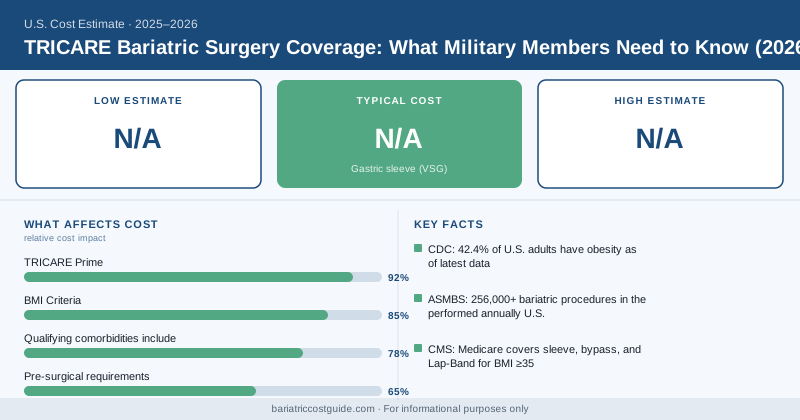
TRICARE Bariatric Surgery Coverage: What Military Members Need to Know (2026)
{ if eq .Lang "zh" }{ else }{ end }Most TRICARE beneficiaries don’t realize that bariatric surgery is a covered benefit — it’s not in the standard benefit summaries, and military medicine’s culture of “push through it” hasn’t historically encouraged weight loss surgery conversations. But TRICARE does cover it, and for active duty, retirees, and dependents who meet the clinical criteria, it can cover the entire cost of a surgery that would cost $18,000–$30,000 out of pocket in the civilian world.
Here’s what the coverage actually looks like — and what hoops you’ll need to jump through to use it.
TRICARE Bariatric Surgery: What’s Covered
TRICARE covers bariatric surgery as a covered benefit under TRICARE Prime, TRICARE Select, TRICARE Reserve Select, and TRICARE For Life. The covered procedures are:
| Procedure | TRICARE Coverage Status |
|---|---|
| Gastric sleeve (VSG) | Covered — prior auth required |
| Roux-en-Y gastric bypass | Covered — prior auth required |
| Duodenal switch (BPD-DS) | Covered — prior auth required (more restrictive criteria) |
| Mini gastric bypass / OAGB | Limited coverage — case-by-case review |
| Lap-band removal/revision | Covered if medically necessary |
| Body contouring after weight loss | NOT covered (cosmetic exclusion) |
| GLP-1 weight loss medications | Covered for active duty and dependents; limited for retirees |
Cost-sharing for covered bariatric surgery follows your TRICARE plan type. Under TRICARE Prime, active duty members pay nothing; Prime dependents pay $0 to minimal copays. Under TRICARE Select, beneficiaries pay cost-shares based on their status (active duty family members pay less than retirees).
TRICARE Prime vs. Select for Bariatric Surgery
TRICARE Bariatric Surgery Requirements (2026)
TRICARE’s coverage criteria are based on NIH guidelines and are more detailed than many commercial plans. You must meet all of the following:
BMI Criteria:
- BMI ≥ 40 (Class III obesity), or
- BMI ≥ 35 with at least one serious obesity-related comorbidity
Qualifying comorbidities include:
- Type 2 diabetes mellitus
- Obstructive sleep apnea (with documented sleep study)
- Hypertension requiring medication
- Hyperlipidemia
- Severe GERD
- Obesity hypoventilation syndrome
- Osteoarthritis with functional impairment attributable to obesity
Pre-surgical requirements:
- Documented participation in a medically supervised weight management program for at least 6 months within the 24 months prior to surgery
- Psychological/psychiatric evaluation and clearance
- Nutritional evaluation by a registered dietitian
- Medical history review and surgical risk assessment
The 6-month supervised weight loss requirement is firm under TRICARE — unlike some commercial plans that accept 3 months. Some beneficiaries lose coverage due to deployment or PCS moves interrupting their 6-month program. If your supervision period is interrupted by military orders, document it carefully and discuss continuity of care with your PCM.
The TRICARE Pre-Authorization Process
Prior authorization is required for all bariatric surgery under TRICARE. The process:
Start with your PCM (Primary Care Manager). Your PCM must initiate the referral and submit the prior authorization request. TRICARE Prime beneficiaries need a referral; Select beneficiaries can self-refer but still need prior auth.
Complete the 6-month program. Your PCM or a supervised weight management program must document monthly visits with documented weight, BMI, dietary compliance, and behavioral modification. TRICARE reviewers look for consistent documentation — gaps will flag the submission.
Complete evaluations. Psychological evaluation, nutritional evaluation, and any required specialty consults (cardiology if indicated) must be completed and documented.
Submit to Wisconsin Physicians Service (WPS). TRICARE’s main region contractor for authorizations is WPS (for most regions). Submit all documentation through your regional contractor. The clinical criteria are reviewed by WPS physicians. Allow 4–6 weeks for determination.
Get an authorization letter. Do not schedule surgery until you have a written authorization letter with an authorization number. Keep a copy.
The ASMBS reports that bariatric surgery is among the most thoroughly evidence-based interventions for severe obesity, with outcomes data from decades of follow-up studies. TRICARE reviewers are familiar with this literature — a well-documented submission that clearly meets criteria is routinely approved.
VA Bariatric Surgery vs. TRICARE
Veterans eligible for VA healthcare face a different system from TRICARE — and the two are often confused.
VA bariatric surgery is available at select VA facilities through the MOVE! Bariatric Surgery Program. The VA covers gastric sleeve and gastric bypass at participating VA medical centers. The VA system prioritizes veterans based on service-connection and disability rating — but bariatric surgery isn’t available at every VA facility, and wait times can be significant.
Key differences:
| Factor | TRICARE | VA |
|---|---|---|
| Who it covers | Active duty, retirees, dependents | Veterans with VA enrollment |
| Provider | TRICARE network + MTFs | VA facilities (limited list) |
| Availability | Most regions have TRICARE-authorized surgeons | Limited to VA facilities with MOVE! program |
| Wait times | Typically 3–6 months after authorization | Can be 6–18 months at some facilities |
| Costs | Plan-dependent (Prime = minimal; Select = cost-shares) | $0 for most veterans |
| Medications post-op | Covered through TRICARE formulary | Covered through VA formulary |
Some veterans are dually eligible — they have both VA benefits and TRICARE For Life (if they’re retired military). In that case, they can often choose which system to use. TRICARE For Life acts as secondary insurance to Medicare for retirees 65+, so the path differs for that population.
GLP-1 Medications Under TRICARE
TRICARE’s formulary now covers GLP-1 weight loss medications — but with tier differences:
- Active duty: Wegovy, Zepbound, and other FDA-approved weight loss GLP-1s are covered through the MTF pharmacy or TRICARE pharmacy benefit, typically at minimal or no cost.
- Retirees and dependents: Coverage depends on TRICARE formulary tier and whether the drug is on the TRICARE formulary as a preferred medication. Ozempic (semaglutide for diabetes) is covered; Wegovy coverage is more variable.
The GLP-1 medication cost guide has a full breakdown. For TRICARE beneficiaries specifically, the MTF pharmacy is the lowest-cost access point — always check formulary status there before going to a civilian pharmacy.
Cost Summary: What You’ll Actually Pay
Under TRICARE Prime (the most common plan for active duty families):
- Pre-op workup, psychological evaluation, nutritional consults: $0
- Surgery, hospital, anesthesia: $0 (covered in full)
- Post-operative follow-up: $0
- Vitamins and supplements post-surgery: Out of pocket (not covered)
- Body contouring after weight loss: Not covered
Under TRICARE Select:
- Deductibles apply (E1–E4: $50–$150/year; others: $150–$300/year)
- Cost-shares: 20–25% of TRICARE allowable charges after deductible for non-active-duty
- A sleeve gastrectomy with 20% cost-share on a $20,000 allowable charge = ~$4,000 patient responsibility
Bottom Line
TRICARE covers bariatric surgery — gastric sleeve and bypass specifically — for beneficiaries who meet strict but achievable clinical criteria. The 6-month supervised weight loss requirement is real and can’t be shortened. Start with your PCM, document everything, and allow 3–4 months for the pre-authorization process before surgery scheduling. For veterans considering the VA route, compare wait times at your local VA with TRICARE network access in your area. Either way, this is a covered benefit that many eligible military beneficiaries don’t know they have.
{ if eq .Lang "zh" }Disclaimer: BariatricCostGuide provides cost data for educational purposes only. We are not a medical provider, insurance company, or financial advisor. All costs are estimates based on published data and vary by location, facility, surgeon, insurance plan, and individual health factors. Consult a board-certified bariatric surgeon and your insurance carrier for personalized medical and cost advice.