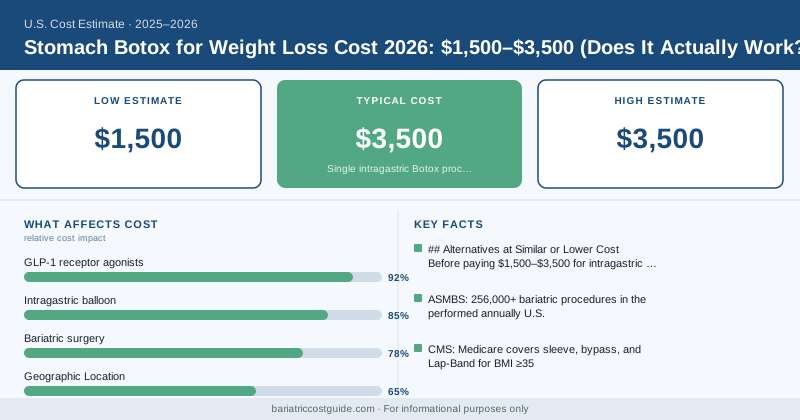
Stomach Botox for Weight Loss Cost 2026: $1,500–$3,500 (Does It Actually Work?)
{ if eq .Lang "zh" }{ else }{ end }What if you could lose weight with a 20-minute outpatient procedure, no incisions, no anesthesia, and be back at work the same afternoon? That’s the pitch for intragastric Botox — and it’s partly true. The “partly” matters.
Intragastric Botox is real. It’s growing in popularity. And it genuinely produces weight loss in clinical studies. But it’s off-label (not FDA-approved for weight loss), the results are modest compared to surgery, it only lasts 4–6 months before you need to repeat it, and there’s meaningful variation in how different patients respond. Understanding all of this before you pay $1,500–$3,500 is the point of this article.
What the Procedure Involves
The procedure is done via upper endoscopy — the same type of scope gastroenterologists use to examine the esophagus and stomach. You’re sedated with moderate sedation (not general anesthesia), and the whole thing takes 20–30 minutes.
During the endoscopy, the physician injects botulinum toxin (Botox) directly into the wall of the stomach, typically into the antrum — the lower part of the stomach involved in gastric emptying. The Botox temporarily paralyzes the smooth muscle in that area, slowing how quickly food moves through the stomach. You feel full faster and stay full longer.
No incisions. No hospital stay. Recovery is typically same-day or next day.
Cost Breakdown
| Treatment | Cost |
|---|---|
| Single intragastric Botox procedure | $1,500–$3,500 |
| Two procedures per year (ongoing maintenance) | $3,000–$7,000 annually |
| Gastric sleeve surgery (for comparison) | $15,000–$25,000 (one-time) |
| GLP-1 medications (Wegovy/Ozempic, annual) | $13,000–$16,000 without insurance |
Pricing varies by facility, provider, and region. Academic medical centers and university gastroenterology programs tend to charge at the higher end; private GI practices and outpatient endoscopy centers are often lower. The cost includes the procedure, sedation, and the endoscopy facility fee.
Some providers offer package pricing for multiple procedures upfront — be cautious here, since you don’t know in advance how well you’ll respond.
What the Research Actually Shows
A 2016 study published in Obesity Surgery found average weight loss of approximately 12.1 kg (about 27 pounds) in patients receiving intragastric Botox versus 3.6 kg in the placebo group over 12 weeks. Those are meaningful differences.
A 2020 systematic review in Gastrointestinal Endoscopy analyzed multiple trials and found consistent evidence of modest, short-term weight loss — with high variability between patients. Some responded well; others lost little.
The critical finding across studies: effects are temporary. Gastric motility normalizes as Botox wears off, typically at 4–6 months. Patients who don’t use the treatment window to change eating behaviors tend to return to baseline weight.
The 4–6 Month Window
FDA Status: Off-Label Use
Botulinum toxin is FDA-approved for numerous conditions: cervical dystonia, chronic migraine, excessive sweating, overactive bladder, and cosmetic uses. It is not FDA-approved for weight loss or intragastric injection for obesity management.
That means:
- It’s legal for physicians to perform (off-label use of approved drugs is legal)
- It won’t be covered by insurance for weight loss
- Long-term safety data specific to this application is more limited than for FDA-approved treatments
- You’re relying on the individual physician’s judgment and patient selection criteria
Off-label use isn’t inherently dangerous — many established medical practices involve off-label use. But it does mean you should look specifically for a gastroenterologist with experience performing this procedure, not just any physician offering it.
Who Is This Best For?
Intragastric Botox is most appropriate for:
- People with a BMI in the 27–40 range who don’t qualify for or don’t want bariatric surgery
- Patients with a specific short-term goal (pre-surgical weight loss, event preparation)
- People who’ve struggled with appetite control as their primary obstacle to weight loss
- Anyone who clearly understands this is temporary and non-surgical with modest expected results
It’s not a good fit for:
- Patients with severe obesity (BMI 40+) who need significant, sustained weight loss
- Anyone expecting results comparable to gastric sleeve or bypass
- Patients unwilling to commit to behavioral changes during the treatment window
Alternatives at Similar or Lower Cost
Before paying $1,500–$3,500 for intragastric Botox, it’s worth comparing against alternatives:
GLP-1 receptor agonists (semaglutide/Wegovy, tirzepatide/Zepbound) produce substantially greater weight loss — 15–22% of body weight in trials — and are FDA-approved for obesity. With insurance or manufacturer coupons, monthly costs can be $0–$500. Without any coverage, they’re expensive ($1,000+/month), but the clinical results are dramatically better than Botox.
Intragastric balloon (Orbera) costs $6,000–$9,000 but stays in place for 6 months and produces greater weight loss than Botox in most head-to-head comparisons.
Bariatric surgery is significantly more invasive and expensive upfront ($15,000–$25,000) but produces lasting, substantial results and is often covered by insurance if you meet criteria.
For the right patient — someone with modest goals, reasonable BMI, and realistic expectations — intragastric Botox is a legitimate non-surgical option. For patients who need substantial, lasting weight loss, it’s unlikely to be the right primary approach.
{ if eq .Lang "zh" }Disclaimer: BariatricCostGuide provides cost data for educational purposes only. We are not a medical provider, insurance company, or financial advisor. All costs are estimates based on published data and vary by location, facility, surgeon, insurance plan, and individual health factors. Consult a board-certified bariatric surgeon and your insurance carrier for personalized medical and cost advice.