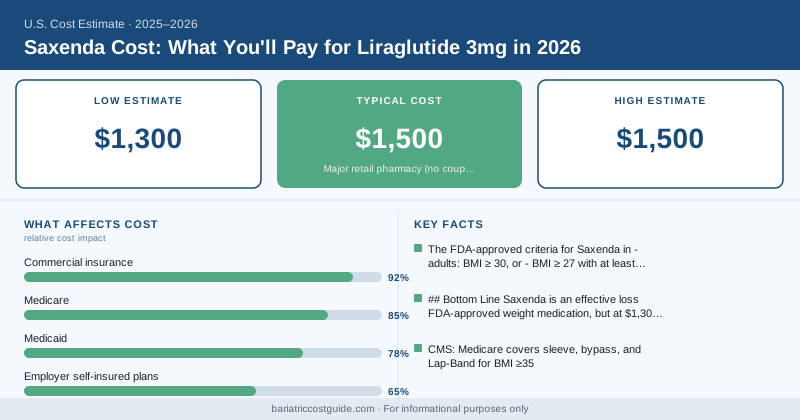
Saxenda Cost: What You'll Pay for Liraglutide 3mg in 2026
{ if eq .Lang "zh" }{ else }{ end }$1,349. That’s what a month of Saxenda costs at a major pharmacy chain without insurance or a discount card. For a medication you may need indefinitely, that adds up fast — about $16,000 a year.
Saxenda (liraglutide 3 mg) was the first GLP-1 receptor agonist approved specifically for chronic weight management in adults. It arrived in 2014, years before Wegovy and Ozempic became household names. It still has a meaningful place in treatment — but its price tag and injection-frequency compared to newer options mean you should know exactly what you’re getting into before you start.
Saxenda Cash Price in 2026
| Where You Fill It | Monthly Cash Price |
|---|---|
| Major retail pharmacy (no coupon) | $1,300 – $1,500 |
| GoodRx / discount card | $900 – $1,100 |
| Novo Nordisk savings card (eligible patients) | As low as $25/month |
| Telehealth weight loss platforms | $200 – $350 (compounded liraglutide) |
| Canadian/international pharmacy | $300 – $500 |
Saxenda comes in a prefilled pen — each pen contains 18 mg of liraglutide at 6 mg/mL. You start at 0.6 mg daily and titrate up over five weeks to the full 3 mg dose. A standard monthly supply at full dose is five pens (one pen lasts about six days at 3 mg/day).
Novo Nordisk Saxenda Savings Program
Does Insurance Cover Saxenda?
Insurance coverage for Saxenda is inconsistent — which is one of the defining frustrations of obesity medicine. The American Society for Metabolic and Bariatric Surgery (ASMBS) has long advocated for parity in coverage of anti-obesity medications, but many commercial plans still exclude them.
Here’s the reality by coverage type:
Commercial insurance: Coverage varies widely by plan and employer. Some Blue Cross Blue Shield plans, Cigna, and Aetna plans cover Saxenda; many don’t. Even when covered, it’s often on a non-preferred tier with a $100–$200/month copay after deductible.
Medicare: Part D does not cover Saxenda or any anti-obesity medication under current law (as of 2026). The Treat and Reduce Obesity Act, which would change this, has not yet passed. Read more about insurance coverage broadly here.
Medicaid: Coverage varies by state. Some states (Colorado, Louisiana, Oregon) have expanded Medicaid coverage for anti-obesity medications. Most haven’t.
Employer self-insured plans: A growing number of large employers — particularly tech companies and major corporations — now cover GLP-1s for obesity. Check with your HR benefits team specifically.
Saxenda vs. Wegovy vs. Ozempic: What’s the Cost Difference?
Saxenda is now largely overshadowed by semaglutide-based options. Here’s a direct comparison:
| Medication | Active Drug | Dosing | Cash Price/Month | Weight Loss (avg) |
|---|---|---|---|---|
| Saxenda | Liraglutide 3 mg | Daily injection | $1,300 – $1,500 | ~8% body weight |
| Wegovy | Semaglutide 2.4 mg | Weekly injection | $1,300 – $1,600 | ~15% body weight |
| Ozempic (off-label) | Semaglutide 1–2 mg | Weekly injection | $900 – $1,100 | ~10–12% body weight |
| Mounjaro (off-label) | Tirzepatide 5–15 mg | Weekly injection | $1,000 – $1,200 | ~20–22% body weight |
| Contrave | Naltrexone/bupropion | Daily pill | $200 – $400 | ~5–6% body weight |
The numbers are stark. In a landmark 68-week clinical trial (SCALE Obesity and Prediabetes), Saxenda produced an average weight loss of 8.4% of body weight — meaningful, but roughly half what Wegovy delivers. Both drugs cost about the same per month. That efficacy gap is why most obesity medicine physicians now reach for semaglutide first, unless there’s a reason to avoid it.
Situations where Saxenda still makes sense:
- You’ve failed or can’t tolerate semaglutide
- Your insurance covers Saxenda but not Wegovy
- You’re using the Novo Nordisk savings card and price is manageable
- You’re treating obesity alongside cardiovascular risk (liraglutide has a CV outcomes trial)
Who Qualifies for Saxenda?
The FDA-approved criteria for Saxenda in adults:
- BMI ≥ 30, or
- BMI ≥ 27 with at least one weight-related comorbidity (type 2 diabetes, high blood pressure, high cholesterol)
The CDC estimates that approximately 42% of U.S. adults have obesity (BMI ≥ 30), which means tens of millions of Americans meet the basic threshold. However, meeting the medical criteria and actually getting the prescription covered are very different things.
Compounded Liraglutide: A Warning
You’ll see telehealth platforms offering “compounded liraglutide” at $200–$350/month. This is a lower-cost version made by compounding pharmacies, not Novo Nordisk.
The FDA has consistently warned that compounded versions of brand-name drugs — especially injectables — carry quality and safety risks. Saxenda was never on the FDA’s drug shortage list (unlike semaglutide), which means compounded liraglutide has been operating in a legally gray zone throughout. The FDA has sent warning letters to compounders marketing it.
If cost is the main barrier, apply for the Novo Nordisk savings program or seek a patient assistance program before turning to compounded versions.
Annual Cost Outlook
Saxenda is intended for long-term use. The SCALE Maintenance trial showed that patients who stopped Saxenda regained most of their weight within a year. If you’re budgeting for it:
- With insurance coverage: $600–$2,400/year in copays
- With savings card: ~$300/year ($25/month)
- Full cash price: $15,600–$18,000/year
For many patients, the long-term cost calculation pushes them toward considering bariatric surgery — a higher upfront cost with no ongoing medication expense and often superior long-term outcomes. The GLP-1 cost guide has a full side-by-side breakdown of annual medication costs versus surgery.
Bottom Line
Saxenda is an effective FDA-approved weight loss medication, but at $1,300–$1,500/month cash, it’s one of the more expensive ongoing treatments for obesity. If you have insurance that covers it or qualify for the Novo Nordisk savings program, it can be genuinely affordable. If you’re paying out of pocket at full price, it’s hard to justify when Wegovy delivers nearly twice the weight loss for similar money — or when surgery offers a one-time cost.
Talk to your prescribing physician about what’s actually covered under your plan before filling your first prescription.
{ if eq .Lang "zh" }Disclaimer: BariatricCostGuide provides cost data for educational purposes only. We are not a medical provider, insurance company, or financial advisor. All costs are estimates based on published data and vary by location, facility, surgeon, insurance plan, and individual health factors. Consult a board-certified bariatric surgeon and your insurance carrier for personalized medical and cost advice.