SADI Surgery Cost: $18,000–$35,000 — 2026 Price Guide
{ if eq .Lang "zh" }{ else }{ end }$18,000 to $35,000. That’s the realistic price window for SADI-S surgery in the United States right now — and most patients who’ve done the research find they land somewhere in the $22,000–$28,000 range on a self-pay basis.
SADI-S (Single Anastomosis Duodeno-Ileal bypass with Sleeve gastrectomy) is one of the newer additions to bariatric surgery’s lineup. It delivers results nearly on par with the full duodenal switch — 70–80% excess weight loss, strong diabetes remission rates — but at a lower technical complexity and a noticeably lower price tag. The American Society for Metabolic and Bariatric Surgery (ASMBS) formally recognized SADI-S as a standalone approved bariatric procedure in 2020, which has helped push insurance coverage forward, though inconsistently.
Here’s what you’ll actually pay, how insurance fits in, and how this stacks up against your other options.
What SADI-S Surgery Costs: Full Breakdown
The total bill for SADI-S comes from four main components: surgeon fee, hospital or facility fee, anesthesia, and pre-op workup. Self-pay all-inclusive packages at accredited bariatric centers are usually priced as a bundle — that’s often your best deal if you don’t have insurance coverage.
| Cost Component | Typical Range |
|---|---|
| Surgeon fee | $3,500 – $7,000 |
| Hospital/facility fee | $9,000 – $18,000 |
| Anesthesia fee | $1,200 – $3,000 |
| Pre-op workup (labs, psych eval, nutrition consult) | $1,000 – $2,500 |
| Post-op follow-up (first year) | $500 – $1,500 |
| Total self-pay (all-inclusive) | $18,000 – $35,000 |
The wide range isn’t padding — it reflects real market variation. A SADI-S performed at a high-volume center in the Midwest by a surgeon who does 200+ cases per year will price differently than the same procedure at an academic medical center in a major coastal city.
What SADI-S Actually Is (and Why It Costs What It Does)
A SADI-S combines two operations. First, about 75–80% of the stomach is removed, creating a narrow gastric sleeve — the same step used in a standard gastric sleeve procedure. Second, the first part of the small intestine (the duodenum) is divided just past the stomach and reconnected much further down the intestinal tract — bypassing roughly 250–300 cm of bowel. This single intestinal reconnection (one anastomosis) is what distinguishes SADI-S from the classic duodenal switch, which requires two separate connections.
That one-anastomosis design matters for cost. Less OR time. Fewer potential leak points. A technically simpler reconstruction — which is why experienced surgeons can complete SADI-S in roughly 90 minutes to 2.5 hours versus 3–5 hours for a full BPD/DS.
Why SADI-S Costs Less Than the Classic Duodenal Switch
The classic duodenal switch requires two separate intestinal reconnections (anastomoses). SADI-S uses just one. That single difference typically translates to:
- 60–90 fewer minutes of operating room time
- Reduced anesthesia time and fees
- Lower facility costs per case
- Slightly lower surgeon fee for most providers
The tradeoff: SADI-S bypasses somewhat less bowel, which means marginally less malabsorption — but outcomes data show weight loss and diabetes remission rates are very similar to the full DS.
SADI-S vs. Other Bariatric Procedures: Cost Comparison
One of the most common questions patients ask: how does SADI-S stack up in price against the other options?
| Procedure | Self-Pay Cost | With Insurance (OOP) | Avg. Excess Weight Loss |
|---|---|---|---|
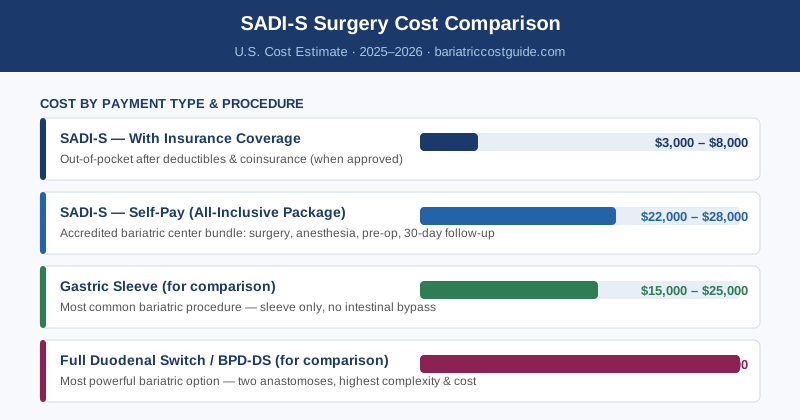
| Gastric sleeve | $15,000 – $25,000 | $1,500 – $5,000 | 50–70% |
| Gastric bypass (RYGB) | $20,000 – $35,000 | $2,000 – $6,500 | 60–80% |
| SADI-S | $18,000 – $35,000 | $3,000 – $8,000 | 70–80% |
| Duodenal switch (BPD/DS) | $25,000 – $45,000 | $4,000 – $10,000 | 75–85% |
SADI-S lands in the middle of the price range, but at the high end of the outcomes range. For patients who qualify — and who have researched what they’re getting into — it’s often the most cost-effective path to maximum weight loss and metabolic improvement.
Does Insurance Cover SADI-S?
This is where things get complicated. SADI-S coverage is a patchwork, and you’ll need to do your homework before assuming your plan will pay.
Medicare: Medicare covers SADI-S when performed at a designated MBSAQIP-accredited bariatric center (formally called a Center of Excellence). You must have a BMI ≥ 35 with at least one qualifying comorbidity, or BMI ≥ 40 without comorbidities. Expect standard cost-sharing: deductible plus 20% coinsurance under Part B/hospital coverage.
Commercial insurers: Coverage is inconsistent. Some plans — particularly larger employers using carriers like UnitedHealthcare or Cigna — have updated their bariatric surgery policies to include SADI-S following ASMBS recognition. Others still code it as an “investigational” or “emerging” procedure and deny claims outright. Aetna, as of recent policy reviews, has moved SADI-S into its covered bariatric procedures list under specific criteria.
What typically drives denials: Lack of prior authorization, failure to document conservative treatment history (usually 6 months of medically supervised weight loss), or an insurer policy that explicitly lists only sleeve and gastric bypass as covered options.
Self-Pay Options and Medical Tourism
If your insurance won’t cover SADI-S, self-pay is absolutely viable — and you have more pricing leverage than you might expect.
Domestic self-pay packages: Many MBSAQIP-accredited bariatric centers offer all-inclusive self-pay pricing that bundles pre-op labs, the procedure, anesthesia, hospital stay, and 30–90 days of follow-up. National averages for these packages run $22,000–$28,000. Centers in the Midwest and Southeast tend to come in at the lower end; California, New York, and Boston skew higher.
Payment plans: Most bariatric centers partner with medical financing companies (CareCredit, Prosper Healthcare Lending) that offer 12–24 month promotional financing, often at 0% interest for qualified borrowers. Spreading a $25,000 SADI-S over 24 months comes out to roughly $1,040/month.
Medical tourism: Mexico and Costa Rica offer SADI-S at $8,000–$14,000 at internationally accredited facilities (JCI-accredited hospitals). This is a legitimate option for some patients, but it introduces real logistical considerations: follow-up care coordination, travel costs for complications, and U.S. surgeon willingness to manage post-op nutrition in an unfamiliar program.
Who’s a Candidate for SADI-S?
Not everyone who wants SADI-S will qualify. ASMBS guidelines and typical surgeon criteria point to:
- BMI ≥ 40 without comorbidities, or BMI ≥ 35 with obesity-related conditions (type 2 diabetes, obstructive sleep apnea, hypertension, NAFLD)
- Super-obesity (BMI ≥ 50): SADI-S is often specifically recommended here, as outcomes data show superior weight loss compared to sleeve alone
- Type 2 diabetes: NIH and ASMBS data confirm bariatric surgery produces remission in 60–80% of T2D patients; SADI-S’s malabsorptive component makes it especially effective for metabolic disease
- Prior sleeve gastrectomy: SADI-S is increasingly used as a revision procedure for patients who’ve had a sleeve but regained weight — in these cases, only the intestinal bypass portion is added
SADI-S May Be Preferred Over Full DS If...
Your surgeon may recommend SADI-S over the classic duodenal switch when:
- BMI is in the 40–55 range (full DS is often reserved for BMI 50+)
- You want strong metabolic outcomes with somewhat less malabsorption risk
- Prior sleeve gastrectomy is already in place (revision scenario)
- Your insurer will cover SADI-S but not the full BPD/DS
What to Ask at Your Consultation
Before committing to SADI-S, get clear answers on these pricing questions:
- Is the quoted price all-inclusive? Ask specifically about labs, psych evaluation, dietitian visits, and 12-month follow-up.
- What’s included in post-op follow-up? Vitamin and mineral monitoring is lifelong after SADI-S. Know what the first year costs before you sign.
- Does the surgeon perform SADI-S in meaningful volume? ASMBS data consistently links higher procedure volume to lower complication rates. Ask for their annual case count.
- What happens if there’s a complication? Understand the revision and re-hospitalization policy upfront — especially for self-pay patients.
SADI-S sits in a sweet spot: more powerful than gastric sleeve, simpler and less expensive than the full duodenal switch, with outcomes that are genuinely competitive with the most aggressive bariatric options available. The price is real, but for patients with severe obesity and metabolic disease, it’s often the right investment.
{ if eq .Lang "zh" }Disclaimer: BariatricCostGuide provides cost data for educational purposes only. We are not a medical provider, insurance company, or financial advisor. All costs are estimates based on published data and vary by location, facility, surgeon, insurance plan, and individual health factors. Consult a board-certified bariatric surgeon and your insurance carrier for personalized medical and cost advice.