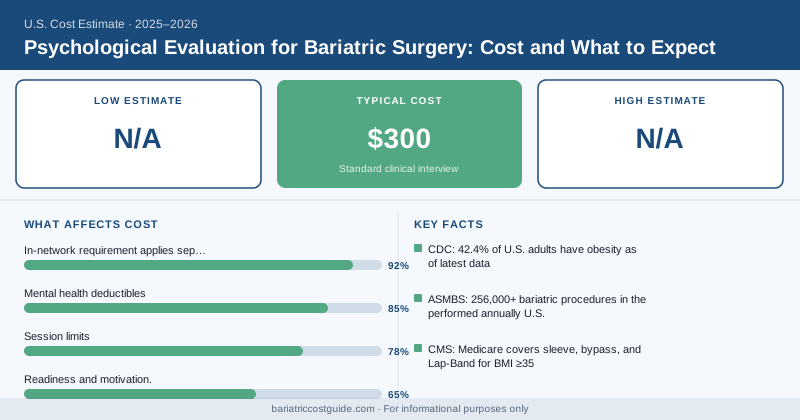
Psychological Evaluation for Bariatric Surgery: Cost and What to Expect
{ if eq .Lang "zh" }{ else }{ end }Nearly every bariatric surgery patient needs a psychological evaluation before getting clearance for surgery — and nearly nobody knows what it’s actually testing for. Hint: it’s not looking for reasons to disqualify you.
The psych eval costs $300–$1,200 and takes 1–3 hours. Here’s exactly what it covers, how it’s billed, and how to approach it.
What the Psychological Evaluation Costs
| Evaluation Format | Duration | Typical Cost (Uninsured) | Insurance Copay |
|---|---|---|---|
| Standard clinical interview | 60–90 min | $300 – $600 | $30 – $100 |
| Clinical interview + standardized psychological testing | 2–3 hours | $600 – $1,200 | $50 – $150 |
| Group evaluation format (some programs) | 3–4 hours | $200 – $400 | $20 – $80 |
| Telehealth psychological evaluation | 60–90 min | $250 – $500 | $30 – $100 |
Some bariatric programs have in-house psychologists or social workers who conduct the evaluation as part of the program’s overall fee structure. Others require you to find and schedule independently with a clinical psychologist who specializes in bariatric evaluations.
Insurance Coverage for Bariatric Psych Evals
Coverage falls under the mental health or behavioral health benefit on most insurance plans, not the medical/surgical benefit. This matters because:
- In-network requirement applies separately — your in-network bariatric surgeon doesn’t mean the psychologist is in-network
- Mental health deductibles sometimes differ from medical deductibles on older plans
- Session limits — some older plans limit the number of covered mental health sessions per year; one session for a psych eval should be covered, but confirm it doesn’t count against a limited session benefit
The Mental Health Parity and Addiction Equity Act (MHPAEA) requires that mental health benefits be no more restrictive than medical benefits — which means if your plan covers a pre-op medical consultation, it should cover a pre-op psychological evaluation on similar terms.
What the Evaluation Actually Assesses
This is the part most patients worry about unnecessarily. The psychological evaluation for bariatric surgery is not looking for disqualifying diagnoses. It’s assessing:
Readiness and motivation. Do you understand what surgery will and won’t do? Are your expectations realistic? Do you understand that surgery requires permanent lifestyle changes?
Eating behaviors. The evaluator screens for active binge eating disorder, night eating syndrome, or other disordered eating patterns that — if unaddressed — significantly reduce surgical success. These aren’t automatically disqualifying; they’re identified so they can be treated before or alongside surgery.
Mental health history. Depression and anxiety are extremely common in patients seeking bariatric surgery. Having a history of these conditions doesn’t disqualify you — but actively untreated severe depression, psychosis, or substance use disorder may require stabilization before surgery proceeds.
Social support. Do you have people who will support your recovery? Patients with strong social support have better long-term outcomes after bariatric surgery.
Substance use. Active alcohol or drug dependence is a contraindication for surgery. Post-bariatric alcohol use disorder is a recognized complication — alcohol is absorbed much more rapidly after gastric bypass — and the pre-op evaluation includes substance use screening.
| Factor Assessed | Impact on Clearance |
|---|---|
| Untreated severe depression or psychosis | May delay surgery; requires treatment first |
| Active substance use disorder | Typically requires sobriety period before clearance |
| Active binge eating disorder (BED) | Often requires pre-op treatment; not automatically disqualifying |
| Unrealistic expectations about outcomes | Additional education/counseling may be required |
| Strong understanding and motivation | Supports clearance |
| Active support system | Supports clearance |
What Standardized Tests Are Used
Many evaluations include standardized psychological assessment tools. Common ones in bariatric pre-op evaluation:
- Beck Depression Inventory (BDI) or PHQ-9: Depression screening
- Beck Anxiety Inventory (BAI) or GAD-7: Anxiety screening
- Binge Eating Scale (BES): Disordered eating assessment
- Minnesota Multiphasic Personality Inventory (MMPI): Comprehensive personality and psychopathology assessment (more common at academic centers)
- Barratt Impulsiveness Scale (BIS): Impulsivity assessment
You won’t “pass” or “fail” these — they provide structured data to supplement the clinical interview.
How to Prepare for the Bariatric Psych Eval
Be honest. The evaluation exists to support your success, not to find reasons to deny you surgery.
What to prepare:
- Know your psychiatric and mental health history (diagnoses, past treatments, current medications)
- Be able to describe your relationship with food — emotional eating, stress eating, nighttime eating patterns
- Have a clear sense of why you’re pursuing surgery now and what you expect it to change
- Identify your support system (who’s helping you through recovery)
- Know your substance use history honestly
What NOT to do:
- Don’t minimize symptoms you actually have — the evaluator is there to help, not screen you out
- Don’t try to “game” standardized test responses — it rarely works and raises red flags
- Don’t worry if you have a mental health history — most patients do and still receive clearance
If the evaluator recommends therapy or other pre-op support, take it seriously. It’s not a rejection — it’s preparation for better outcomes.
When Clearance Is Delayed
A minority of patients don’t receive immediate clearance. Common reasons for delay:
- Active untreated depression requiring treatment before surgery
- Active alcohol or substance use requiring sobriety documentation
- Significant eating disorder (binge eating disorder) requiring treatment
- Unrealistic expectations requiring additional education
In most cases, clearance is achievable after completing recommended treatment or waiting period — typically 3–6 months. Very rarely is clearance permanently denied; it’s almost always a “not yet, here’s what to address first.”
The Bottom Line
A bariatric psychological evaluation costs $300–$1,200 depending on format and whether it includes formal testing. It’s covered under most insurance plans’ mental health benefit. The evaluation assesses readiness, expectations, eating behaviors, mental health, and social support — and it’s designed to support surgical success, not disqualify candidates. Most patients receive clearance at the first evaluation or after addressing a specific recommendation.
{ if eq .Lang "zh" }Disclaimer: BariatricCostGuide provides cost data for educational purposes only. We are not a medical provider, insurance company, or financial advisor. All costs are estimates based on published data and vary by location, facility, surgeon, insurance plan, and individual health factors. Consult a board-certified bariatric surgeon and your insurance carrier for personalized medical and cost advice.