Qsymia Cost: Phentermine-Topiramate Price, REMS & Insurance in 2026
{ if eq .Lang "zh" }{ else }{ end }$228. That’s what Qsymia costs at the top dose through the manufacturer’s mail-order pharmacy — and it’s about one-sixth the price of Wegovy. If you’ve never heard of it, you’re not alone. Qsymia doesn’t get the press coverage of semaglutide, but it’s FDA-approved, has solid clinical trial data, and is one of the few weight loss medications that actually rivals GLP-1 injections in average weight loss.
Qsymia combines phentermine (a stimulant that suppresses appetite) with topiramate extended-release (an anticonvulsant that independently reduces appetite and may slow calorie absorption). The combination has been FDA-approved for chronic weight management since 2012. Because phentermine is a controlled substance, Qsymia comes with a federal Risk Evaluation and Mitigation Strategy (REMS) program — which affects how you get it.
Qsymia Pricing in 2026
| Dose | Monthly Cash Price |
|---|---|
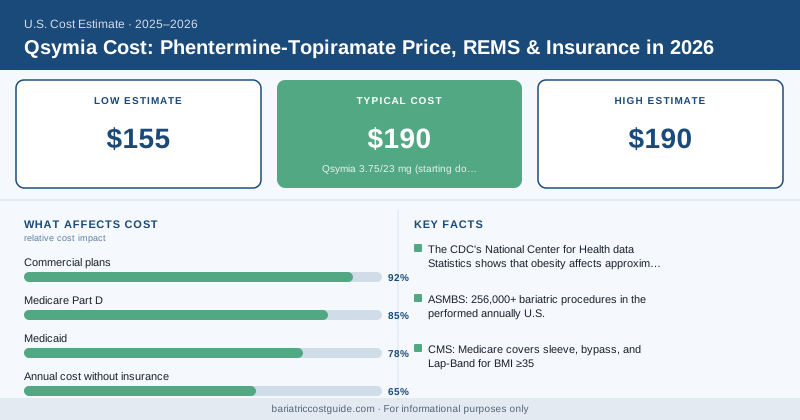
| Qsymia 3.75/23 mg (starting dose) | $155 – $190 |
| Qsymia 7.5/46 mg (recommended dose) | $200 – $250 |
| Qsymia 11.25/69 mg (titration dose) | $215 – $265 |
| Qsymia 15/92 mg (top dose) | $225 – $300 |
| With Qsymia Savings Card (commercially insured) | As low as $75/month |
| GoodRx / discount card | $160 – $240 |
Vivus Pharmaceuticals offers a Qsymia Savings Card for commercially insured patients — eligible patients can pay as little as $75/month. The medication is dispensed exclusively through VIVUS Direct (the company’s mail-order pharmacy) or certified retail pharmacies in the REMS network. You can’t just walk into any CVS and fill it.
REMS Program: What This Means for You
Does Insurance Cover Qsymia?
Insurance coverage is inconsistent — the same story as every other anti-obesity medication in the US. The Obesity Medicine Association has documented that fewer than half of commercial insurance plans cover any FDA-approved anti-obesity medication. Qsymia specifically:
Commercial plans: Coverage varies. Some Blue Cross Blue Shield plans, Aetna, and United Healthcare plans include Qsymia on formulary — often on Tier 3 with copays of $80–$150/month after deductible. Many plans exclude anti-obesity medications entirely. Check your specific plan formulary under the drug name “phentermine/topiramate ER.”
Medicare Part D: Does not cover Qsymia. Federal law excludes anti-obesity medications from Part D coverage unless an indication other than obesity is being treated. The full insurance coverage guide breaks down this exclusion and pending legislation.
Medicaid: Coverage varies by state. A handful of states (Oregon, Louisiana, Colorado) have expanded coverage for anti-obesity medications. Most haven’t. Call your state Medicaid office or check the formulary directly.
Who Qualifies for Qsymia?
FDA-approved criteria for adult patients:
- BMI ≥ 30, or
- BMI ≥ 27 with at least one weight-related comorbidity (type 2 diabetes, hypertension, or dyslipidemia)
Contraindications include:
- Pregnancy or planned pregnancy
- Hyperthyroidism
- Glaucoma
- MAO inhibitor use within 14 days
- Hypersensitivity to sympathomimetic amines
The FDA also approved Qsymia for patients aged 12–17 years (BMI ≥ 95th percentile for age/sex) in 2022 — making it one of the few approved options for adolescent obesity.
Qsymia vs. GLP-1 Options: The Honest Comparison
In the EQUATE trial and CONQUER trial data, the top dose of Qsymia (15/92 mg) produced average weight loss of 10.9% of body weight over 56 weeks in patients who completed treatment. That’s significantly better than Contrave (~9%) and Saxenda (~8%), and competitive with lower-dose semaglutide (Ozempic off-label, ~10–12%). It’s still below Wegovy (~15%) and far below tirzepatide (Mounjaro/Zepbound, ~20%).
| Medication | Monthly Cost | Average Weight Loss | Injection Required |
|---|---|---|---|
| Qsymia (top dose) | $225 – $300 | ~10–11% | No |
| Contrave | $45 – $400 | ~5–9% | No |
| Saxenda | $1,300 – $1,500 | ~8% | Yes (daily) |
| Ozempic (off-label) | $900 – $1,100 | ~10–12% | Yes (weekly) |
| Wegovy | $1,300 – $1,600 | ~15% | Yes (weekly) |
| Mounjaro (off-label) | $1,000 – $1,200 | ~20–22% | Yes (weekly) |
Qsymia’s real differentiator is cost-to-efficacy ratio. At $225–$300/month, you’re getting weight loss comparable to off-label Ozempic at roughly one-quarter the price — if you can tolerate the side effects and navigate the REMS program.
Side Effects: The Trade-Off
Phentermine is a mild stimulant related to amphetamine. Common side effects include elevated heart rate, insomnia, dry mouth, and constipation. It’s Schedule IV controlled — there’s a theoretical potential for dependence, though clinical trial rates were low.
Topiramate side effects are worth knowing: cognitive blunting (“Dopamax” is the slang among patients — topiramate can make you feel foggy, slow recall, and affect word-finding), tingling in hands/feet (paresthesias), kidney stone risk, and metabolic acidosis at higher doses. These side effects are dose-dependent and often manageable at the doses used in Qsymia.
The CDC’s National Center for Health Statistics data shows that obesity affects approximately 42% of US adults — a population with significant cardiovascular risk factors. That cardiovascular risk is why phentermine use requires blood pressure monitoring and why patients with pre-existing significant heart disease are generally not candidates.
Annual Cost and Long-Term Outlook
Qsymia is intended for indefinite use. The 2-year extension data from the SEQUEL trial showed that patients maintained most of their weight loss at the recommended dose — but weight typically returns when the medication stops.
- Annual cost without insurance: $2,160–$3,600 at full cash price
- Annual cost with savings card: ~$900/year
- Annual cost fully insured: $960–$1,800/year in copays
Compared to gastric sleeve surgery ($14,000–$25,000, one-time cost) or gastric bypass ($18,000–$35,000), Qsymia becomes more expensive over five-plus years at full cash price — though the upfront commitment is far lower. Bariatric surgery financing options can close that gap for patients who qualify.
Bottom Line
Qsymia delivers meaningful weight loss at a much lower monthly cost than GLP-1 injectables — roughly $250/month versus $1,000+. The REMS program adds a layer of paperwork, and the side effect profile requires some tolerance for cognitive fogginess and stimulant effects. But for patients who want an oral medication, can’t afford GLP-1s, and don’t have contraindications, Qsymia is one of the most underrated options in obesity medicine. Talk to your prescriber about whether it fits your health history.
{ if eq .Lang "zh" }Disclaimer: BariatricCostGuide provides cost data for educational purposes only. We are not a medical provider, insurance company, or financial advisor. All costs are estimates based on published data and vary by location, facility, surgeon, insurance plan, and individual health factors. Consult a board-certified bariatric surgeon and your insurance carrier for personalized medical and cost advice.