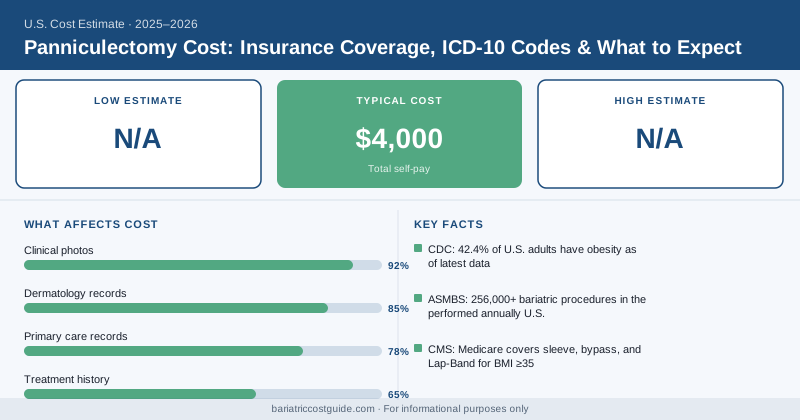
Panniculectomy Cost: Insurance Coverage, ICD-10 Codes & What to Expect
{ if eq .Lang "zh" }{ else }{ end }Here’s something most plastic surgery websites won’t tell you directly: of all the body contouring procedures offered after major weight loss, panniculectomy is the one most likely to get insurance coverage. Not guaranteed — but genuinely possible. The difference between a $0 out-of-pocket claim and a $10,000 bill often comes down to paperwork, documentation, and knowing exactly which diagnostic codes your surgeon needs to use.
What a Panniculectomy Actually Is
A panniculectomy removes the “pannus” — the apron of redundant skin and fat that hangs below the waistline after significant weight loss (or sometimes after multiple pregnancies). It’s purely about removing that overhanging tissue. It doesn’t tighten underlying muscles or reshape the overall abdomen the way a tummy tuck does.
That functional focus is precisely why insurance sometimes covers it: if the hanging skin is causing documented medical problems, removal becomes treatment — not cosmetic enhancement.
Self-Pay Cost Range
| Cost Component | Typical Range |
|---|---|
| Surgeon fee | $2,000 – $5,500 |
| Facility fee (hospital or ASC) | $1,500 – $5,000 |
| Anesthesia | $800 – $2,000 |
| Pre-op evaluation and labs | $300 – $800 |
| Post-op visits | $300 – $700 |
| Total self-pay | $4,000 – $12,000 |
Geography matters enormously here. A panniculectomy in rural Oklahoma may run $4,500–$6,000 all-in at an ASC. The same procedure in Manhattan or Los Angeles routinely exceeds $10,000.
The Exact Insurance Criteria
Most major U.S. insurers (Aetna, BCBS, Cigna, UnitedHealthcare, Humana) use similar criteria for medical necessity. All of the following must typically be present:
- The pannus hangs below the inguinal crease (pubic area) — Grade II or higher on standard classification
- Documented skin problems beneath the fold, including one or more of:
- Intertrigo (chafing/skin fold rash)
- Recurrent bacterial skin infections
- Candidiasis (yeast infections in the skin fold)
- Chronic ulceration
- Dermatitis that hasn’t responded to treatment
- Conservative treatment has failed — topical antifungals, moisture barriers, wound care, weight management
- Weight stability — most require 6 months of stable weight; many prefer 12+ months, especially post-bariatric
- No active smoking — most surgical programs require smoking cessation for 4–8 weeks minimum
ICD-10 Codes That Support Prior Authorization
This is the section most patients never see — but it matters. Your surgeon’s billing team needs to attach the right diagnostic codes to your prior authorization packet.
| ICD-10 Code | Description |
|---|---|
| L30.4 | Erythema intertrigo |
| L30.1 | Dyshidrosis (pompholyx) |
| L02.211 | Cutaneous abscess, abdominal wall |
| B37.2 | Candidiasis of skin and nail |
| L98.412 | Non-pressure chronic ulcer of abdominal wall |
| L29.9 | Pruritus, unspecified (beneath fold) |
| M79.3 | Panniculitis, not elsewhere classified |
| L57.9 | Skin changes due to chronic exposure (post-weight-loss) |
| Z87.39 | Personal history of other musculoskeletal disorders |
How to Build a Strong Prior Auth Packet
Insurance approvals for panniculectomy are won or lost on documentation. Here’s what an effective prior auth packet includes:
- Clinical photos: Taken at surgeon’s office showing the pannus hanging below the inguinal crease, any visible rash, ulceration, or infection
- Dermatology records: If you’ve seen a dermatologist for the skin problems, include all visit notes
- Primary care records: Every office visit where the skin fold complications were documented
- Treatment history: Records of prescribed antifungal creams, moisture barriers, wound care — proof that conservative management was attempted
- Letter of medical necessity: Written by plastic surgeon, referencing specific ICD-10 codes and functional impairment
- Bariatric surgery records: Documentation of total weight lost and current weight stability timeline
Most insurers want at least 6 months of documented treatment attempts before approving surgical removal.
What Happens When Insurance Denies (First Appeal)
A first-pass denial is not the end. Denial rates on first submission for panniculectomy run around 40–60%. Many approvals happen on appeal.
The first-level appeal should include:
- Additional medical records you didn’t submit initially
- A more detailed letter of medical necessity from your surgeon
- Any specialist letters (dermatology, wound care)
If first appeal fails, request a peer-to-peer review — a phone call between your plastic surgeon and the insurer’s medical director. This direct physician-to-physician conversation resolves many denials that survive the paper appeal process.
Self-Pay Options and Financing
If insurance won’t cover it, you’re looking at $4,000–$12,000. Options:
- HSA/FSA funds: Panniculectomy qualifies as a medical expense — use pre-tax dollars
- Medical financing: CareCredit 12-month 0% deferred interest plans; Alphaeon Credit; Prosper Healthcare Lending
- Payment plans directly through surgeon’s office: Many practices offer 3–6 month in-house plans
- Surgery center vs. hospital: Choosing an ASC over a hospital can reduce facility costs by 30–50%
How Long Is Recovery?
Compared to a full tummy tuck, panniculectomy recovery is relatively straightforward:
- 1–2 weeks off work (desk jobs)
- 4–6 weeks avoiding heavy lifting
- Drains in place for 1–3 weeks (most surgeons use them)
- Compression garment for 4–6 weeks
- Most patients feel back to normal activity at 6–8 weeks
The complication most specific to panniculectomy: seroma (fluid accumulation under the skin). It’s common — rates of 10–20% — and usually treated with in-office aspiration at follow-up visits at no additional charge.
{ if eq .Lang "zh" }Disclaimer: BariatricCostGuide provides cost data for educational purposes only. We are not a medical provider, insurance company, or financial advisor. All costs are estimates based on published data and vary by location, facility, surgeon, insurance plan, and individual health factors. Consult a board-certified bariatric surgeon and your insurance carrier for personalized medical and cost advice.