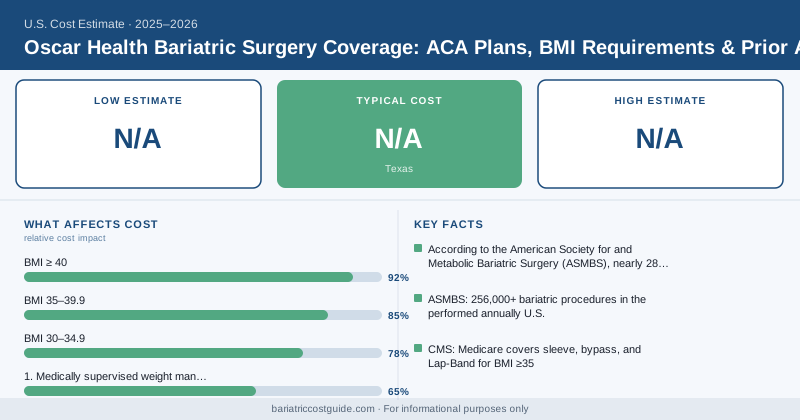
Oscar Health Bariatric Surgery Coverage: ACA Plans, BMI Requirements & Prior Auth
{ if eq .Lang "zh" }{ else }{ end }Most people shopping Oscar Health on healthcare.gov aren’t thinking about weight loss surgery — they’re looking at monthly premiums and deductibles. Then they gain 40 pounds, develop sleep apnea, and suddenly that coverage question matters a lot. Oscar serves roughly 1.5 million members across ACA Marketplace plans, and whether bariatric surgery is on the table depends on which plan tier you picked and which state you’re in.
Here’s the full picture.
Does Oscar Health Cover Bariatric Surgery?
Short answer: sometimes. Oscar’s bariatric coverage isn’t uniform across all of its plans. The ACA doesn’t mandate bariatric surgery as an essential health benefit — it’s a state-by-state decision — so Oscar can include or exclude it depending on the plan and market.
Oscar generally offers bariatric coverage on its Gold and Platinum tier plans in states where it operates a bariatric benefit. Step Up and Step Up Plus plans (Oscar’s tiered network offerings) may include it on higher-tier selections. Bronze plans and Basic plans frequently exclude it.
According to the American Society for Metabolic and Bariatric Surgery (ASMBS), nearly 280,000 Americans had weight loss surgery in 2022 — yet that’s still only 1–2% of the medically eligible population. Insurance barriers, including coverage gaps on marketplace plans, are a primary reason.
States Where Oscar Operates
Oscar is available in select states — it’s not a national carrier. As of 2025–2026, Oscar operates in:
| State | Oscar Marketplace Presence | Bariatric Coverage Possible |
|---|---|---|
| Texas | Yes (major market) | Yes on qualifying plans |
| Florida | Yes (major market) | Yes on qualifying plans |
| New York | Yes | Yes on qualifying plans |
| California | Yes | Yes on qualifying plans |
| Tennessee | Yes | Check plan details |
| Arizona | Yes | Check plan details |
| Ohio | Yes | Check plan details |
| New Jersey | Yes | Check plan details |
| Georgia | Yes | Check plan details |
| Colorado | Yes | Check plan details |
Coverage within a state still depends on your specific plan document. Always verify in your Summary of Benefits and Coverage before assuming.
Oscar’s Medical Criteria for Bariatric Surgery
Where Oscar does cover bariatric surgery, the clinical requirements align with the NIH Consensus Statement baseline used by most major insurers:
- BMI ≥ 40 with no comorbidity required
- BMI 35–39.9 with at least one qualifying comorbidity: type 2 diabetes, hypertension, obstructive sleep apnea, GERD, osteoarthritis, or hyperlipidemia
- BMI 30–34.9 — Oscar generally doesn’t cover this range; this is an area where commercial marketplace insurers lag behind clinical guidelines. The ASMBS formally endorses surgery at BMI 30–34.9 with metabolic disease, but payer policies haven’t caught up
The Comorbidity Documentation Requirement
Pre-Authorization Requirements
Oscar requires prior authorization for bariatric surgery. The standard checklist mirrors most commercial insurers:
1. Medically supervised weight management program. Oscar typically requires 3–6 months of documentation showing participation in a physician-supervised diet and exercise program. These visits must be with a licensed medical provider (MD, DO, NP, or PA), not just a gym trainer or online coach.
2. Psychological evaluation. A formal behavioral health assessment by a licensed psychologist or psychiatrist is required. Oscar’s telemedicine platform (Oscar uses concierge care teams via app) can sometimes facilitate the referral, but the evaluation itself generally needs to be in-person or via compliant telehealth.
3. Nutritional counseling. At least one session with a registered dietitian documented before surgery submission.
4. Medical clearance. Labs, EKG, and any condition-specific clearances (cardiac, pulmonary) depending on your history.
5. Surgeon letter of medical necessity. Your bariatric surgeon submits a detailed letter tying your clinical history to the medical necessity criteria in Oscar’s clinical policy.
Oscar’s Prior Auth Process: How It Actually Works
Oscar has built its platform around telemedicine and app-based care coordination, which shapes the prior auth experience:
| Step | Who Initiates | Typical Timeline |
|---|---|---|
| Benefits verification | Your surgeon’s billing team | Day 1–3 |
| PA submission by surgeon | Bariatric surgeon or coordinator | Day 1 |
| Initial Oscar review decision | Oscar utilization management | 5–14 business days |
| Additional info request response | Your surgeon (your records) | 5 business days |
| Approval letter issued | Oscar | After complete submission |
| Appeal (if denied) | You + surgeon | 30–60 days |
Oscar uses your “Oscar Care Team” — a nurse and physician assistant assigned to each member — as a first-stop resource. They can help you understand what documentation you need and navigate the prior auth process. This is a differentiator from traditional insurers where you’d call a generic member services line.
What Oscar Covers (and Doesn’t)
Typically covered on qualifying plans:
- Laparoscopic gastric sleeve (VSG)
- Roux-en-Y gastric bypass (RYGB)
- Pre-op evaluations (psych, nutritional, labs)
- Inpatient hospital stay
- Initial post-operative follow-up visits
Usually not covered:
- Gastric balloon procedures (intragastric balloon — Orbera, ReShape)
- Revisional surgery unless medically necessary with documented complications
- Body contouring surgery after weight loss
- Bariatric vitamins and long-term supplements
- GLP-1 medications like Wegovy on most Oscar plans — this is a separate benefit determination
Cost-Sharing: What You’ll Pay
If Oscar approves your surgery, you still have out-of-pocket costs. Typical cost-sharing structure on a Gold-tier Oscar plan:
- Deductible: $1,000–$2,500 (varies by plan)
- Co-insurance: 20–30% of allowed amount after deductible
- Out-of-pocket maximum: $7,000–$9,100 (ACA maximum for 2025 is $9,200 for individuals)
For a gastric sleeve that would cost $20,000–$25,000 uninsured, your actual out-of-pocket with Oscar Gold would typically land between $3,000–$7,000 once you hit your deductible. That’s a significant discount — but it’s still real money. See bariatric surgery financing options if you’re not sure how to cover the cost-share.
How to Verify Your Oscar Bariatric Coverage
- Log into your Oscar app and pull your Summary of Benefits and Coverage
- Search “bariatric” or “weight loss surgery” in the document — look at both the covered services section and the exclusions list
- Call the number on your Oscar ID card and ask: “Is bariatric surgery a covered benefit on my specific plan, and can you email me the clinical criteria?”
- Have your bariatric surgeon’s office run a benefits verification — they do this every day and know exactly what questions to ask
- If you’re shopping plans during open enrollment, compare the SBCs of Gold vs. Platinum before choosing based on premium alone
Oscar’s digital-first model is genuinely useful during the pre-op process — the Care Team feature can reduce some of the phone-tag frustration that plagues traditional insurer navigation. But the coverage itself isn’t more generous than legacy carriers. Whether you qualify comes down to the same BMI and comorbidity math everyone else uses. Compare how bariatric surgery insurance coverage works across other major carriers before assuming Oscar is your best or only option.
{ if eq .Lang "zh" }Disclaimer: BariatricCostGuide provides cost data for educational purposes only. We are not a medical provider, insurance company, or financial advisor. All costs are estimates based on published data and vary by location, facility, surgeon, insurance plan, and individual health factors. Consult a board-certified bariatric surgeon and your insurance carrier for personalized medical and cost advice.