Obesity Surgery Cost Guide: What Every Procedure Actually Costs in 2026
{ if eq .Lang "zh" }{ else }{ end }What does obesity surgery actually cost in 2026? The honest answer: it depends heavily on which procedure you need, where you live, and whether insurance is footing part of the bill. Self-pay prices for the four major bariatric procedures span from roughly $12,000 to $45,000 — a wide enough range that “bariatric surgery costs $20,000” as a blanket statement is nearly useless for planning purposes.
This guide breaks down real pricing across every standard procedure, plus what changes the math if you have insurance, Medicaid, or Medicare.
Cost by Procedure Type (2026)
| Procedure | Self-Pay Range | Avg. Insured Out-of-Pocket |
|---|---|---|
| Gastric sleeve (VSG) | $12,000 – $22,000 | $0 – $3,000 |
| Gastric bypass (RYGB) | $18,000 – $30,000 | $0 – $4,000 |
| Duodenal switch (DS) | $20,000 – $40,000 | $1,000 – $6,000 |
| Biliopancreatic diversion (BPD/DS) | $25,000 – $45,000 | $2,000 – $8,000 |
| Adjustable gastric band | $10,000 – $18,000 | $0 – $2,500 |
The CDC reports that over 42% of American adults have obesity, and the American Society for Metabolic and Bariatric Surgery estimates roughly 260,000 bariatric procedures are performed annually in the U.S. — a volume that has actually helped stabilize pricing at accredited centers as competition among high-volume programs has increased.
What Drives the Price Within Each Range
Even within one procedure category, prices swing widely based on:
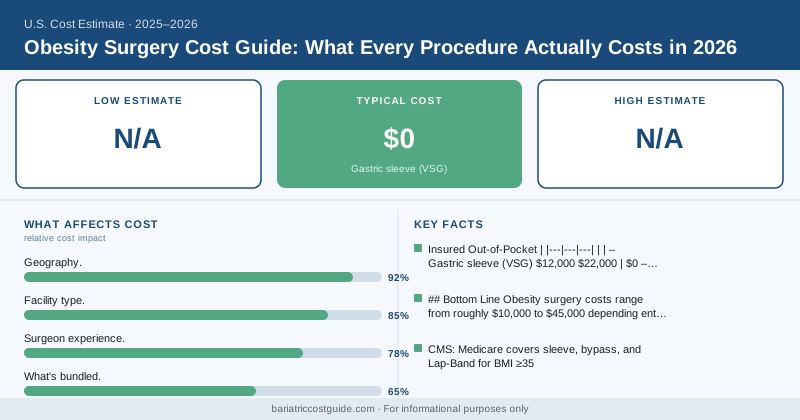
Geography. Coastal metro areas (Los Angeles, Boston, New York) run 20-40% above Midwest and Southern averages for identical procedures.
Facility type. Academic medical centers typically charge more than high-volume independent bariatric centers, partly because they handle more complex cases and carry more overhead.
Surgeon experience. Surgeons with MBSAQIP Center of Excellence credentials and higher case volumes often charge a premium, though this doesn’t always translate to a proportionally better outcome for straightforward cases.
What’s bundled. “All-inclusive” self-pay packages that cover pre-op testing, the procedure, anesthesia, and a set number of follow-up visits are more predictable than à la carte billing.
The Real All-In Cost Includes More Than Surgery Day
Insurance, Medicaid, and Medicare Coverage
Whether insurance covers your procedure depends on your specific plan, not just your insurer’s name. The baseline criteria most plans use, rooted in the 1991 NIH Consensus Statement, require:
- BMI ≥ 40, or
- BMI ≥ 35 with a documented obesity-related comorbidity (type 2 diabetes, hypertension, obstructive sleep apnea)
- Often 3-6 months of physician-supervised weight-loss documentation
- Psychological evaluation and nutritional counseling completion
Medicaid coverage varies enormously by state — some states cover all standard procedures with minimal restriction, others impose additional hurdles or narrower procedure lists. Original Medicare covers gastric bypass, sleeve, and adjustable band when criteria are met, and most Medicare Advantage plans mirror that coverage.
Financing When You’re Self-Pay
For patients without coverage, financing is the most common path to surgery. A $16,000 gastric sleeve financed over 48 months at typical medical lending rates runs approximately $340-$390/month. Most bariatric programs have relationships with CareCredit, Prosper Healthcare Lending, or United Medical Credit, and many offer in-house payment plans as well.
Bottom Line
Obesity surgery costs range from roughly $10,000 to $45,000 depending entirely on which procedure you need. Gastric sleeve is the most affordable standard option; duodenal switch and BPD/DS carry the highest price tags due to their complexity. Insurance coverage, when available, dramatically reduces out-of-pocket costs but requires clearing documented medical necessity hurdles first. Start by understanding which procedure your surgeon recommends, then work backward to figure out your actual expected cost.
{ if eq .Lang "zh" }Disclaimer: BariatricCostGuide provides cost data for educational purposes only. We are not a medical provider, insurance company, or financial advisor. All costs are estimates based on published data and vary by location, facility, surgeon, insurance plan, and individual health factors. Consult a board-certified bariatric surgeon and your insurance carrier for personalized medical and cost advice.