Nutritional Counseling Cost for Bariatric Surgery: What to Budget
{ if eq .Lang "zh" }{ else }{ end }Your insurance company isn’t going to approve bariatric surgery without documentation of dietary counseling. Neither is most surgeons’ programs. Nutritional counseling is baked into the bariatric surgery process whether you want it or not — so understanding the cost upfront prevents surprises.
Here’s what RD visits cost, how many you’ll need, and how to navigate coverage.
Pre-Op Nutrition Counseling: Requirements and Costs
Most bariatric programs require 3–6 pre-operative registered dietitian (RD) visits as part of the surgical preparation process. Many insurance plans also require documented nutritional counseling as part of their prior authorization criteria.
| RD Visit Type | Typical Duration | Uninsured Cost | Insurance Copay (Mental Health/Nutrition Benefit) |
|---|---|---|---|
| Initial bariatric nutrition assessment | 60–90 minutes | $150 – $300 | $20 – $75 |
| Follow-up RD visit (pre-op) | 30–60 minutes | $100 – $175 | $20 – $50 |
| Pre-op RD series (3 visits) | — | $350 – $650 | $60 – $225 |
| Pre-op RD series (6 visits) | — | $700 – $1,300 | $120 – $450 |
Why Nutrition Counseling Is Required
It’s not just a bureaucratic hoop. Pre-op dietary counseling serves several medical purposes:
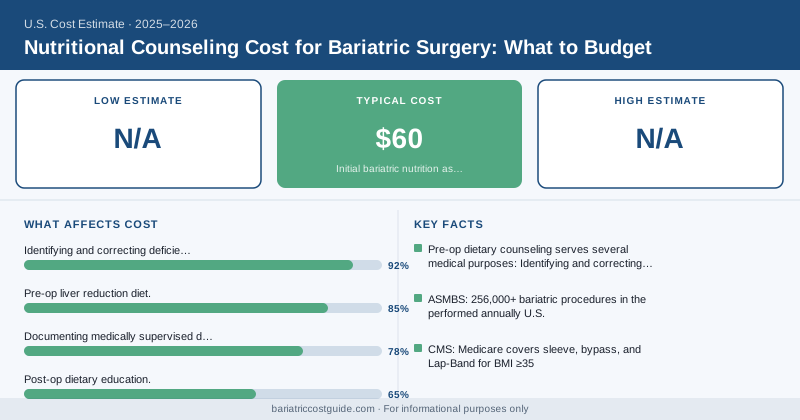
Identifying and correcting deficiencies before surgery. The ASMBS reports that vitamin D insufficiency affects 40–65% of pre-surgical bariatric patients, and iron deficiency is also common. Correcting these pre-op reduces surgical risk.
Pre-op liver reduction diet. Most bariatric programs require a 2–4 week high-protein, low-carbohydrate diet immediately before surgery to shrink the liver. A large liver makes laparoscopic bariatric surgery significantly more difficult — and in some cases, causes surgeons to abort the operation mid-procedure. Your RD will coach you through this critical pre-op phase.
Documenting medically supervised dietary attempts. Many insurance plans require 3–6 months of documented weight management attempts before approving surgery. RD visits are part of meeting this requirement.
Post-op dietary education. The liquid-to-pureed-to-soft-to-regular diet progression after bariatric surgery is specific and different for each procedure. Understanding it before surgery — not after — leads to better outcomes.
Insurance Coverage for Nutrition Counseling
Coverage varies dramatically. Key factors:
- Some plans cover it under “preventive care” — CDC-recognized obesity counseling is a zero-copay benefit under the ACA for many plans
- Other plans require a documented diagnosis (obesity, diabetes, metabolic syndrome) for coverage
- Some plans cover it as “medical nutrition therapy” (MNT) — a specific billing code (97802–97804) used by RDs that many major insurance plans cover
- Mental health parity laws sometimes extend coverage to dietitian visits depending on how they’re billed
The most practical approach: call your insurance and ask if registered dietitian visits are covered under your medical nutrition therapy benefit (CPT codes 97802-97804), and whether your plan has a separate nutrition benefit under the bariatric surgery benefit.
How to Maximize Insurance Coverage for RD Visits
Use in-network RDs: Look up your insurer’s provider directory for “registered dietitian” or “medical nutrition therapy.” Most major plans have contracted RDs.
Ask the RD’s billing department to use the MNT billing codes (97802-97804) rather than general nutrition education codes — MNT codes have better coverage rates.
Confirm your diagnosis code. RD visits billed with ICD-10 codes for obesity (E66), type 2 diabetes (E11), or metabolic syndrome are more likely to be covered than visits billed for general wellness.
Check your bariatric program’s own RD. Many MBSAQIP-accredited programs have in-house RDs who are already credentialed with major insurers — and whose visits are folded into the bariatric program’s billing structure.
Post-Op Nutrition Counseling: Ongoing Need
Surgery doesn’t end the need for dietary guidance — it intensifies it. The post-op diet requires careful management, and individual responses to the anatomical changes vary significantly.
Standard post-op RD visit schedule:
- 2–4 weeks post-op: Diet advancement check-in ($100–$175 uninsured; $20–$50 copay)
- 3 months post-op: Protein intake assessment, supplement review
- 6 months post-op: Review eating behaviors, address plateau concerns
- 12 months post-op: Annual nutritional review
- Annual thereafter: Ongoing yearly check-in
Many patients — particularly those experiencing significant GERD, food intolerances, protein malnutrition risk (especially after duodenal switch), or weight plateau — benefit from more frequent visits than this minimum schedule.
| Post-Op Period | RD Visits (Typical) | Uninsured Cost | Insured Cost |
|---|---|---|---|
| First year | 4–6 visits | $400 – $1,050 | $80 – $300 |
| Second year | 2–4 visits | $200 – $700 | $40 – $200 |
| Annual ongoing | 1–2 visits/year | $100 – $350 | $20 – $100 |
Virtual and Group Nutrition Counseling
Telehealth nutrition counseling has expanded significantly since 2020. Most major bariatric-specialized RDs now offer virtual appointments, which are:
- Often covered by insurance on the same terms as in-person visits
- More convenient for follow-up between major milestone visits
- Less expensive when using direct-pay telehealth nutrition platforms ($80–$120 per session vs. $150–$200 in-office)
Many bariatric programs also offer group nutrition education classes — either in-person or virtual — that count toward the pre-op requirement at lower per-session cost than individual RD visits.
The Bottom Line
Pre-op nutritional counseling for bariatric surgery costs $350–$1,300 for a 3–6 visit series without insurance, or $60–$450 with typical insurance coverage. Post-op visits add $400–$1,050 in the first year uninsured. Most insurance plans cover medical nutrition therapy (MNT) visits with an in-network RD — call your insurer to confirm coverage under the MNT benefit before paying out of pocket for sessions that may be covered.
{ if eq .Lang "zh" }Disclaimer: BariatricCostGuide provides cost data for educational purposes only. We are not a medical provider, insurance company, or financial advisor. All costs are estimates based on published data and vary by location, facility, surgeon, insurance plan, and individual health factors. Consult a board-certified bariatric surgeon and your insurance carrier for personalized medical and cost advice.