Mounjaro vs. Bariatric Surgery Cost: 5-Year Analysis
{ if eq .Lang "zh" }{ else }{ end }Most patients assume bariatric surgery is more expensive than weight loss medication. Over five years, that’s often not true.
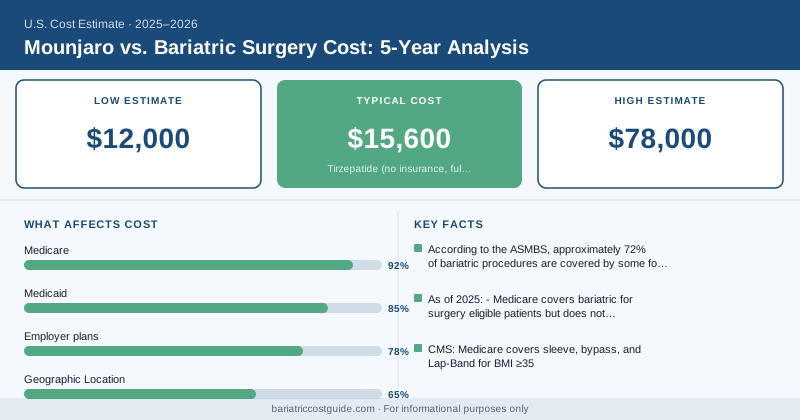
Tirzepatide (Mounjaro/Zepbound) costs $1,000–$1,300 per month without insurance coverage. Run that out five years and you’re looking at $60,000–$78,000 — substantially more than a $15,000–$20,000 bariatric procedure. But that’s only the start of the comparison. Here’s the full picture.
The Raw Cost Comparison
| Scenario | Year 1 | Years 2–5 | 5-Year Total |
|---|---|---|---|
| Tirzepatide (no insurance, full price) | $12,000 – $15,600 | $12,000 – $15,600/yr | $60,000 – $78,000 |
| Tirzepatide (with GLP-1 coverage, $100–$300/mo copay) | $1,200 – $3,600 | $1,200 – $3,600/yr | $6,000 – $18,000 |
| Bariatric surgery (self-pay, gastric sleeve) | $12,000 – $20,000 | $1,000 – $2,000/yr | $16,000 – $28,000 |
| Bariatric surgery (with insurance, OOP share) | $3,000 – $7,000 | $800 – $1,500/yr | $6,200 – $13,000 |
The math shifts dramatically based on your insurance situation. If you have insurance covering either tirzepatide or bariatric surgery, the 5-year costs can be comparable. Without insurance, surgery is almost always cheaper long-term.
What the SURMOUNT Trial Data Shows
The SURMOUNT-1 trial, published in the New England Journal of Medicine in 2022, found that tirzepatide at its highest dose (15 mg weekly) produced an average weight loss of 22.5% of body weight over 72 weeks. That’s remarkable for a medication — it approaches the weight loss typically seen with gastric sleeve surgery (25–30% of total body weight).
But the SURMOUNT data has a critical footnote: the weight loss largely reverses when the medication stops. A follow-up study found that patients who discontinued tirzepatide regained about two-thirds of their lost weight within one year. Bariatric surgery produces more durable weight loss — the anatomical changes are permanent (in the case of sleeve or bypass).
The Durability Question
This is where the surgery vs. medication comparison gets philosophically complicated.
| Factor | Tirzepatide (Mounjaro/Zepbound) | Gastric Sleeve/Bypass |
|---|---|---|
| Average weight loss (2 years) | 20–22% total body weight | 25–35% total body weight |
| Weight loss durability | Reverses if drug stopped | Largely durable long-term |
| Requires ongoing treatment | Yes, indefinitely | No (though some regain occurs) |
| Complication risk | Low (GI side effects mainly) | 5–10% surgical complication rate |
| Coverage trend | Improving but inconsistent | Better established |
Insurance Coverage Reality in 2025
This is where most patients get surprised. According to the ASMBS, approximately 72% of bariatric procedures are covered by some form of health insurance. GLP-1 agonist coverage for weight loss is considerably less consistent.
As of 2025:
- Medicare covers bariatric surgery for eligible patients but does not cover GLP-1s for obesity (only for type 2 diabetes)
- Medicaid varies by state for both bariatric surgery and GLP-1s
- Employer plans are split — roughly 50–60% of large employer plans now cover GLP-1s for obesity, but often with significant prior authorization requirements and step therapy
The trend is toward broader GLP-1 coverage, but it’s not there yet across the board.
Which Is Covered Under Your Plan?
To figure out your actual costs, call your insurance company and ask specifically:
For tirzepatide/Mounjaro/Zepbound:
- Is tirzepatide covered for weight management (not just type 2 diabetes)?
- What’s my copay/coinsurance?
- Is there a prior authorization requirement?
- Is there a step therapy requirement (trying other GLP-1s first)?
For bariatric surgery:
- Does my plan cover bariatric surgery?
- What BMI and comorbidity criteria apply?
- What are my deductible and out-of-pocket maximum for the surgery?
- Are pre-op requirements (supervised diet, psych eval, nutrition visits) covered?
Who Tirzepatide Makes More Sense For
Medication is a reasonable primary strategy if:
- Your BMI is 30–35 with metabolic issues (below typical surgical thresholds)
- You’re not a surgical candidate due to cardiac or other conditions
- Your insurance covers tirzepatide at an affordable copay
- You want to lose weight before surgery to reduce operative risk
Who Bariatric Surgery Makes More Sense For
Surgery is typically a stronger choice if:
- Your BMI is ≥ 40, or ≥ 35 with significant comorbidities
- You can’t afford or access GLP-1s long-term
- You want a one-time intervention rather than lifelong medication
- You’ve had poor results or significant side effects with GLP-1 medications
The Bottom Line
Mounjaro/tirzepatide costs $60,000–$78,000 over five years without insurance — far more than bariatric surgery self-pay. With strong insurance coverage, the 5-year costs can be comparable. The SURMOUNT trial shows tirzepatide delivers impressive weight loss, but durability is the key weakness: the weight comes back when you stop. Surgery’s main advantage is permanence. Your coverage situation, BMI, comorbidities, and preference for medication vs. procedure should all factor into the decision.
{ if eq .Lang "zh" }Disclaimer: BariatricCostGuide provides cost data for educational purposes only. We are not a medical provider, insurance company, or financial advisor. All costs are estimates based on published data and vary by location, facility, surgeon, insurance plan, and individual health factors. Consult a board-certified bariatric surgeon and your insurance carrier for personalized medical and cost advice.