Molina Healthcare Bariatric Surgery Coverage: Medicaid Managed Care, State Rules & Prior Auth
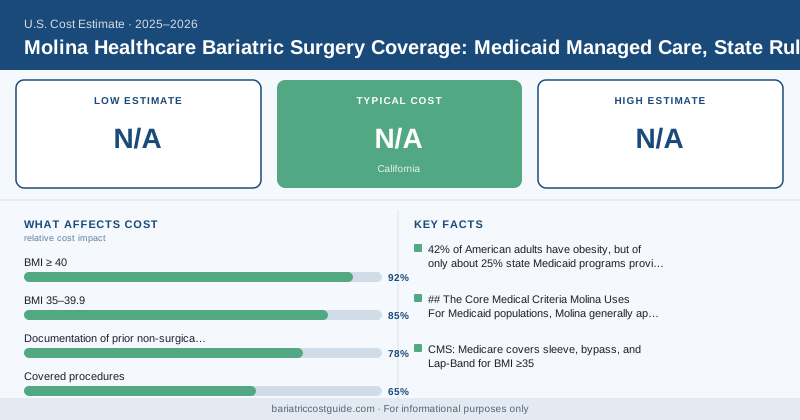
{ if eq .Lang "zh" }{ else }{ end }42% of American adults have obesity, but only about 25% of state Medicaid programs provide any meaningful bariatric surgery coverage. Molina Healthcare — one of the largest Medicaid managed care organizations in the country — falls squarely in that uncertain middle: coverage exists in some states, it’s thin in others, and in a few it’s not available at all. If you’re on Molina Medicaid, your state of residence may matter more than anything else about your plan.
Here’s how to figure out where you stand.
What Is Molina Healthcare?
Molina doesn’t write its own benefit rules from scratch. It’s a managed care organization (MCO) that contracts with state Medicaid agencies to administer benefits. When a state hires Molina, Molina agrees to cover what the state Medicaid program covers — and sometimes adds a few extras, but never covers less than the state requires.
That means: Molina’s bariatric coverage = your state Medicaid program’s bariatric coverage, administered by Molina. Understanding your state’s rules is step one.
States Where Molina Healthcare Operates (Medicaid)
| State | Molina Medicaid Present | Bariatric Coverage in State Medicaid |
|---|---|---|
| California | Yes | Yes — gastric bypass, sleeve, band |
| Texas | Yes | Limited — prior auth required, strict criteria |
| Florida | Yes | Yes — with qualifying comorbidities |
| Ohio | Yes | Yes — gastric bypass and sleeve covered |
| Michigan | Yes | Yes — prior auth, 6-month diet requirement |
| Washington | Yes | Yes — comprehensive coverage |
| Virginia | Yes | Yes — follows DMAS guidelines |
| New Mexico | Yes | Yes — covered with criteria |
| Idaho | Yes | Limited — check current contract |
| Nevada | Yes | Varies by plan year |
Molina also serves Medicare-Medicaid dual-eligible members (Dual Complete plans) and Marketplace members in some states. For those populations, bariatric coverage may differ from standard Medicaid rules.
The Core Medical Criteria Molina Uses
For Medicaid populations, Molina generally applies criteria aligned with the state Medicaid program plus the NIH Consensus Statement baseline:
- BMI ≥ 40, regardless of comorbidities
- BMI 35–39.9 with at least one qualifying comorbidity: type 2 diabetes, hypertension, severe sleep apnea, obesity-related cardiomyopathy, or life-limiting joint disease
- Documentation of prior non-surgical weight loss attempts — typically 6–24 months of documented medical attempts, though this varies significantly by state
The ASMBS reports that bariatric surgery produces 60–80% remission rates for type 2 diabetes — a compelling clinical argument that increasingly influences state Medicaid coverage decisions.
Why the 6-Month Supervised Diet Requirement Exists
Prior Authorization: How Molina Processes Bariatric Requests
Even in states with full coverage, bariatric surgery requires prior authorization through Molina. The process typically runs:
- Your bariatric surgeon or primary care physician initiates the PA request — This includes your BMI history, comorbidity documentation, supervised diet records, and psych evaluation results
- Molina’s utilization management team reviews the submission — Typically within 14 calendar days; urgent cases may receive decisions faster
- Additional documentation requests — Molina frequently requests more records; respond quickly to keep the timeline moving
- Approval or denial issued in writing
- Appeals process — You have 30–90 days (varies by state) to file an internal appeal; your surgeon can request a peer-to-peer review
- State fair hearing — If internal appeal fails, Medicaid enrollees have the right to a state fair hearing, which is often more favorable than the internal process
| Prior Auth Step | Typical Timeline |
|---|---|
| Initial submission to first decision | 7–14 calendar days |
| Response to additional documentation request | 5 business days (your side) |
| Internal appeal decision | 30–45 days |
| State fair hearing scheduling | 30–90 days from request |
What Molina Medicaid Typically Covers
Covered procedures in states with full bariatric benefits:
- Roux-en-Y gastric bypass (RYGB)
- Vertical sleeve gastrectomy (VSG/gastric sleeve)
- Adjustable gastric band (Lap-Band) — less commonly now; many programs are phasing this out
- Duodenal switch — typically requires stronger medical necessity and COE facility
Usually covered with coverage:
- Pre-operative psychological evaluation
- Pre-op nutritional counseling
- Inpatient hospital stay (typically 1–2 days)
- Follow-up visits with the surgical team
Typically NOT covered:
- Elective body contouring after weight loss (skin removal)
- Bariatric vitamins and supplements (B12, iron, calcium, D3)
- Revision surgery unless medically necessary with documented complication
- Weight loss medications like GLP-1 drugs — Medicaid coverage for these varies dramatically by state
Molina Marketplace Plans vs. Molina Medicaid
If you have Molina through the ACA Marketplace (not Medicaid), the rules are different. ACA benchmark plans aren’t required to cover bariatric surgery, and coverage varies by metal tier and state. Some Molina Marketplace plans include it; others explicitly exclude it. Read your Summary of Benefits and Coverage carefully — don’t assume Marketplace rules match what you’ve heard about Medicaid coverage.
What to Do If Molina Denies Your Request
Medicaid denials carry more procedural protections than commercial insurance denials. If Molina denies your bariatric surgery request:
- Request the written denial with the specific reason and clinical criteria cited
- Have your surgeon write a detailed medical necessity letter addressing each reason
- Submit the internal appeal within the required window (check your denial letter)
- If internal appeal fails, request a state fair hearing — Medicaid enrollees are entitled to this, and bariatric surgery approvals at fair hearings are not uncommon when documentation is solid
- Consider contacting your state’s Medicaid beneficiary advocacy organization for support
How to Verify Your Molina Bariatric Coverage Today
- Call the Member Services number on your Molina ID card and ask: “Does my plan cover bariatric surgery, what are the criteria, and what pre-authorization documentation is required?”
- Request your plan’s Evidence of Coverage document in writing
- Ask your bariatric surgeon’s office to run a benefits verification — they do this daily and know the right questions
- Look up your state’s Medicaid bariatric policy directly through your state’s Medicaid agency website
If surgery isn’t covered or you’re years away from meeting criteria, compare GLP-1 medication costs — some state Medicaid programs have better medication coverage than surgical coverage, and Ozempic or Wegovy may be an accessible path forward. See also bariatric surgery financing options if you’re weighing self-pay routes.
{ if eq .Lang "zh" }Disclaimer: BariatricCostGuide provides cost data for educational purposes only. We are not a medical provider, insurance company, or financial advisor. All costs are estimates based on published data and vary by location, facility, surgeon, insurance plan, and individual health factors. Consult a board-certified bariatric surgeon and your insurance carrier for personalized medical and cost advice.