Medicare Coverage for Bariatric Surgery: What Part A and B Pay
{ if eq .Lang "zh" }{ else }{ end }Medicare started covering bariatric surgery in 2006 — but not all beneficiaries and not at all facilities. The rules are specific, and most Medicare patients don’t know them until they’re deep in the approval process.
The short version: Medicare Part B covers certain bariatric surgery procedures for beneficiaries with a BMI ≥ 35 and at least one obesity-related comorbidity, performed at a Medicare-certified facility. If you meet those criteria and work with an approved facility, Medicare typically covers 80% of the approved cost after your deductible.
What Medicare Covers (and What It Doesn’t)
Medicare covers three bariatric surgery procedures:
- Roux-en-Y gastric bypass (laparoscopic and open)
- Laparoscopic adjustable gastric banding (Lap-Band)
- Open and laparoscopic sleeve gastrectomy (added in 2012)
Medicare does NOT cover: gastric balloon, endoscopic sleeve gastroplasty, or duodenal switch (as of 2025–2026). If you want DS or ESG, you’re paying out of pocket even with Medicare.
The Medicare Coverage Requirements
| Requirement | Medicare Standard |
|---|---|
| BMI | ≥ 35 |
| Comorbidity requirement | At least 1 obesity-related condition |
| Facility certification | CMS-certified bariatric facility |
| Previous treatment | Documentation of failed conservative treatment |
| Procedure type | Sleeve, bypass, or Lap-Band only |
The BMI ≥ 35 Rule: Stricter Than Commercial Insurance
Here’s the key difference between Medicare and commercial insurance: Medicare requires BMI ≥ 35 with a comorbidity, period. It does not cover bariatric surgery for BMI 35–40 without a documented comorbidity, and it doesn’t cover patients with BMI < 35 under any circumstances.
Commercial plans sometimes cover patients with BMI ≥ 40 without a comorbidity. Medicare doesn’t — you need the comorbidity regardless.
Qualifying comorbidities include: type 2 diabetes, hypertension, obstructive sleep apnea, coronary artery disease, hyperlipidemia, or obesity hypoventilation syndrome.
The Medicare-Certified Facility Requirement
This is the requirement that surprises most patients. Medicare only covers bariatric surgery at facilities that have met Medicare’s certification standards for bariatric surgery — essentially requiring the facility to be MBSAQIP-accredited or meet equivalent standards.
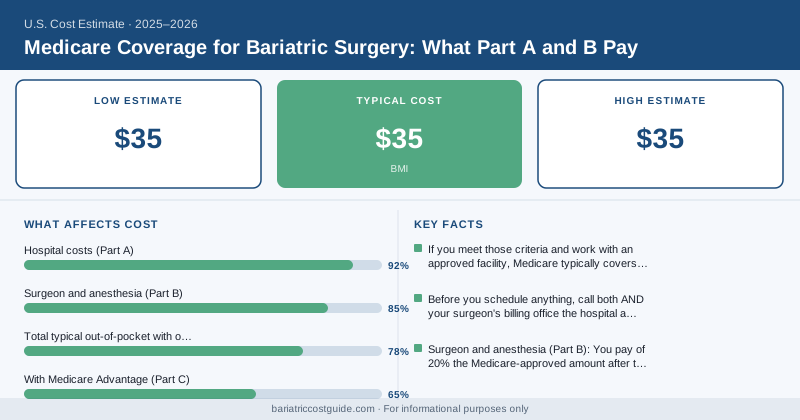
Not every bariatric surgery center accepts Medicare or is certified for Medicare bariatric coverage. Before you schedule anything, call both your surgeon’s billing office AND the hospital and ask explicitly: “Is this facility certified by Medicare for bariatric surgery?”
What You’ll Pay Out of Pocket
With traditional Medicare (Part A and Part B, no supplement):
Hospital costs (Part A): You pay the Part A inpatient deductible ($1,632 in 2024) for the first 60 days of a hospital stay. For laparoscopic sleeve or bypass (typically 1–2 day stays), your Part A cost is usually just the deductible.
Surgeon and anesthesia (Part B): You pay 20% of the Medicare-approved amount after the Part B deductible ($240 in 2024). If Medicare’s approved rate for the surgeon is $3,000, you pay $600.
Total typical out-of-pocket with original Medicare: $2,500–$5,000 for a 1–2 day hospitalization.
With Medicare Advantage (Part C): Costs vary by plan. Many Medicare Advantage plans have lower copays and deductibles but require you to use their specific network. Verify bariatric coverage with your specific plan — not all Medicare Advantage plans cover bariatric surgery even though original Medicare does.
With a Medicare supplement (Medigap): Medigap plans cover all or part of the 20% coinsurance, reducing your out-of-pocket cost to near zero for covered services. If you have a Medigap plan, bariatric surgery may cost you very little.
Does Medicare Cover Bariatric Surgery Complications?
Yes. If you experience a complication requiring additional hospitalization or surgery within 90 days of your bariatric procedure, Medicare covers those services under the same rules as the original surgery.
Your surgeon’s global surgical period — typically 90 days — includes follow-up visits at no additional charge from the surgeon. Facility charges and other providers bill separately.
Complications from bariatric surgery are uncommon at accredited facilities (major complication rate: 1–3%) but do occur. Know your coverage.
Medicare and Bariatric Surgery Revision
Medicare covers bariatric surgery revision — repair or conversion of a prior bariatric procedure — using the same criteria as initial surgery. You still need BMI ≥ 35 + comorbidity, and you still need to be at a certified facility. The approval process for revision can be more complex because you’ll need to document why the initial procedure failed or what complication requires revision.
Medicaid vs. Medicare: Key Differences
Medicare is federal insurance for people 65+ and disabled individuals under 65. Medicaid is state-federal insurance for low-income individuals. They have different bariatric coverage rules:
- Medicare: national coverage rules, consistent across states
- Medicaid: varies dramatically by state — some states cover bariatric surgery generously, others don’t cover it at all
If you have both Medicare and Medicaid (dual eligible), Medicare is primary and Medicaid covers some of your remaining costs. Contact your state Medicaid office to understand how they coordinate with Medicare for bariatric surgery.
The Bottom Line
Medicare covers gastric sleeve, gastric bypass, and Lap-Band for beneficiaries with BMI ≥ 35 and a documented obesity-related comorbidity at Medicare-certified facilities. Out-of-pocket costs with traditional Medicare run $2,500–$5,000 for a 1–2 day hospitalization; Medigap holders can reduce that to near zero. Verify facility certification and your specific plan’s details before scheduling — and note that Medicare Advantage plans vary significantly from original Medicare.
{ if eq .Lang "zh" }Disclaimer: BariatricCostGuide provides cost data for educational purposes only. We are not a medical provider, insurance company, or financial advisor. All costs are estimates based on published data and vary by location, facility, surgeon, insurance plan, and individual health factors. Consult a board-certified bariatric surgeon and your insurance carrier for personalized medical and cost advice.