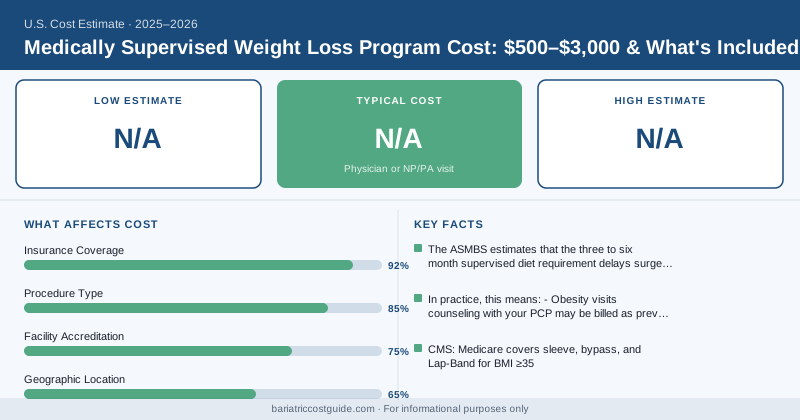
Medically Supervised Weight Loss Program Cost: $500–$3,000 & What's Included
{ if eq .Lang "zh" }{ else }{ end }Before most insurers approve bariatric surgery, they want to see that you tried. Specifically, they want three to six months of documented, physician-supervised weight management on paper — not “I’ve been dieting for years,” but actual chart notes with dates, weights, and a physician signature. The cost of building that record runs $500–$3,000 depending on your location, the program structure, and your insurance coverage. Here’s what you’re actually buying and why it matters.
What Is a Medically Supervised Weight Loss Program?
A medically supervised weight loss (MSWL) program is a structured weight management intervention overseen by a licensed medical provider. It’s distinct from:
- Commercial diet programs (Weight Watchers, Noom, Jenny Craig)
- Gym or fitness programs
- App-based or self-guided weight loss
- General PCP monitoring without specific obesity management focus
What makes a program “medically supervised” in the insurance context:
- Physician, NP, or PA involvement at each visit
- Documented weight measurements at each visit
- Clinical chart notes capturing dietary assessment, exercise discussion, and compliance
- Formal assessment by a licensed provider (not just a dietitian or health coach, in most plans)
Why Insurers Require It
Insurance companies require the MSWL because:
- It documents that conservative treatment was attempted before surgery
- It creates a baseline demonstrating the need for surgical intervention
- It ensures patients understand behavioral changes required post-operatively
- It filters out patients who might achieve adequate results without surgery
The NIH’s 1991 Consensus Statement, which remains the foundation of bariatric surgery coverage criteria, recommends that patients have a record of prior weight loss attempts before surgery. Insurance companies operationalized this into the MSWL requirement. The ASMBS estimates that the three to six month supervised diet requirement delays surgery for approximately 30–40% of otherwise-qualified patients who weren’t documenting their weight management before deciding to pursue surgery.
What a Medically Supervised Weight Loss Program Includes
Programs vary, but a comprehensive MSWL program typically includes:
| Component | Frequency | Purpose |
|---|---|---|
| Physician or NP/PA visit | Monthly | Weight check, chart documentation |
| Dietary assessment/counseling | Monthly | Food diary review, nutritional guidance |
| Exercise counseling | Monthly | Activity logging, barrier assessment |
| Behavioral health coaching | Sometimes | Eating behaviors, psychological readiness |
| Lab work | Periodically | Baseline and progress metabolic markers |
| Nutrition education classes | Some programs | Group or individual education |
Bariatric surgery programs at hospitals often include a formal pre-surgical MSWL program. Independent programs exist at medical weight management clinics, endocrinology offices, and internal medicine practices.
Cost Breakdown by Program Type
Costs depend heavily on whether your insurance covers any portion of the MSWL and on the program structure.
Hospital-based bariatric program MSWL:
- Often the most comprehensive and best-documented for insurance purposes
- Cost: $1,000–$3,000 for the full 3–6 month program if self-pay
- Insurance may cover some or all visits as preventive care or obesity counseling
Medical weight management clinic:
- Standalone programs run by obesity medicine specialists (often internists or endocrinologists)
- Monthly visits: $75–$250 per visit depending on region and provider type
- Three-month program: $225–$750 (visits only); six-month: $450–$1,500
- Lab work additional: $100–$400 over the program period
Primary care physician (PCP) documentation:
- Using your existing PCP is often the least expensive option
- Monthly office visit copay (under insurance): $20–$60/visit
- Self-pay visit: $75–$200/visit
- Challenge: PCP chart notes may be less detailed than a formal bariatric program’s documentation — requires explicit discussion with your PCP about what needs to be recorded
| Program Type | Monthly Cost (Self-Pay) | Total for 6 Months |
|---|---|---|
| Hospital bariatric program | $150–$400/month | $900–$2,400 |
| Medical weight management clinic | $75–$250/visit | $450–$1,500 |
| PCP visits (self-pay) | $75–$200/visit | $450–$1,200 |
| PCP visits (insured, copay) | $20–$60/visit | $120–$360 |
| Medication-assisted (phentermine, etc.) | Additional $50–$150/month | Additional $300–$900 |
When Insurance Covers the MSWL
The Affordable Care Act requires that fully insured plans cover preventive services without cost-sharing. USPSTF (U.S. Preventive Services Task Force) guidelines recommend obesity counseling and behavioral interventions for adults with obesity — an A-grade recommendation, which means covered under the ACA.
In practice, this means:
- Obesity counseling visits with your PCP may be billed as preventive care under the ACA and covered at 100%
- Formal intensive behavioral therapy for obesity (IBT) through Medicare is covered for qualifying Medicare beneficiaries
- Commercial insurance varies significantly — some cover MSWL visits, many treat them as regular office visits subject to deductible and coinsurance
Always call your insurer before starting a program and ask specifically how obesity counseling visits are covered under your plan.
Bill It as Obesity Counseling, Not Weight Loss
What Documentation the Insurer Actually Wants
When your surgeon submits your prior authorization for bariatric surgery, the MSWL documentation needs to show:
- Date of each visit — Insurers count months; gaps between visits can disqualify months
- Provider name and credentials — MD, DO, NP, PA with supervising physician
- Weight and BMI at each visit — Must be in chart, not just implied
- Documentation of counseling — Notes should mention dietary discussion, exercise, behavioral goals
- Evidence of compliance and effort — Notes should indicate the patient is engaged with the program
A chart note that says “patient returned for weight management follow-up, weight 234 lbs, BMI 38.1, discussed diet and exercise, return in 4 weeks” is adequate. A note that says “F/U obesity” with just a weight is often insufficient.
What Happens If You Don’t Have MSWL Documentation
If your insurer requires three to six months of MSWL and you don’t have it, your prior authorization will be denied — or it won’t even be submitted by your surgeon’s office until you complete the requirement.
Options if you’re starting from zero:
- Enroll in a formal MSWL program today and do the time
- Check if past PCP visits have adequate documentation — some patients discover they already have qualifying visits from general medical care
- Consult with a bariatric program navigator who can review your medical records for any qualifying visits you may not have counted
There’s no shortcut to the documentation requirement. The months have to exist in your chart.
Programs That Combine MSWL with Surgical Evaluation
The most efficient path is typically enrolling in a bariatric surgery program that includes MSWL within its pre-surgical evaluation process. These programs:
- Coordinate MSWL documentation specifically for insurance purposes
- Ensure visit notes contain exactly what insurers require
- Begin psychological evaluation, nutritional assessment, and surgical evaluation concurrently
- Have experience navigating each major insurer’s specific documentation requirements
Ask prospective bariatric programs specifically: “Do you include a medically supervised weight loss program as part of your pre-surgical evaluation, and is that documentation formatted to meet insurance requirements?”
The bottom line on MSWL cost: with insurance, your out-of-pocket for the required months runs $120–$360 (copays). Self-pay runs $450–$3,000 depending on program type and length. Start as soon as you decide you want surgery — the clock starts ticking the moment you have your first documented visit, and it can’t run faster than one month per month.
{ if eq .Lang "zh" }Disclaimer: BariatricCostGuide provides cost data for educational purposes only. We are not a medical provider, insurance company, or financial advisor. All costs are estimates based on published data and vary by location, facility, surgeon, insurance plan, and individual health factors. Consult a board-certified bariatric surgeon and your insurance carrier for personalized medical and cost advice.