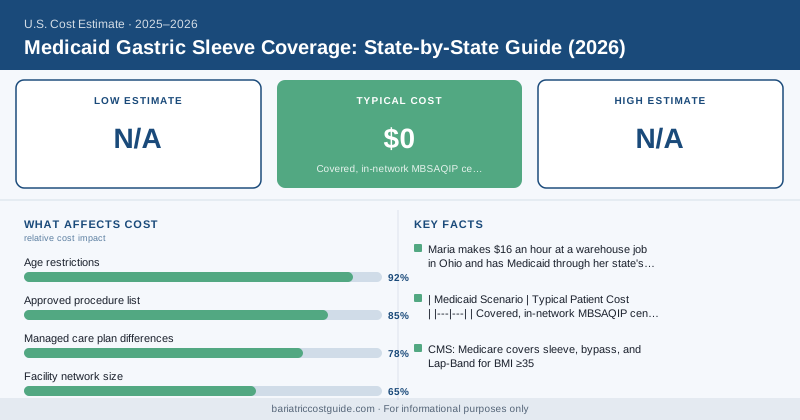
Medicaid Gastric Sleeve Coverage: State-by-State Guide (2026)
{ if eq .Lang "zh" }{ else }{ end }Maria makes $16 an hour at a warehouse job in Ohio and has Medicaid through her state’s managed care plan. When her doctor mentioned gastric sleeve surgery for her BMI of 42 and worsening type 2 diabetes, her first question wasn’t about the procedure — it was whether Medicaid would actually pay for it. That question, more than any other, determines whether millions of eligible Americans ever get to surgery.
The short answer: yes, in most states, if you meet the criteria and complete the paperwork correctly. Here’s exactly how that works.
Does Your State Medicaid Program Cover Gastric Sleeve?
Coverage of gastric sleeve surgery under Medicaid is not uniform nationally — each state administers its own program, often through managed care organizations, and sets its own specific policy layered on top of federal guidance.
| Medicaid Scenario | Typical Patient Cost |
|---|---|
| Covered, in-network MBSAQIP center | $0 – $500 |
| Covered, requires travel to approved facility | $500 – $1,500 (travel/lodging) |
| Denied on first submission, approved on appeal | $0 (after appeal success) |
| Not covered / excluded procedure in your state | $12,000 – $22,000 self-pay |
Most states cover gastric sleeve as a standard benefit under their Medicaid medical policy, following criteria rooted in the 1991 NIH Consensus Statement. A minority of states impose additional restrictions, such as requiring documentation of a longer supervised diet period or limiting coverage to specific accredited centers.
Standard Medicaid Eligibility Criteria
Across most states, expect these baseline requirements:
- BMI ≥ 40, or BMI ≥ 35 with a qualifying comorbidity (type 2 diabetes, hypertension, obstructive sleep apnea, or severe joint disease)
- 6 months of physician-documented, medically supervised weight-loss attempts (this is the single most common reason for initial denial when incomplete)
- Psychological evaluation clearance
- Nutritional counseling completion
- Letter of medical necessity from an MBSAQIP-accredited bariatric surgeon
Why the Supervised Diet Requirement Trips Up So Many Applicants
How to Find a Medicaid-Accepting Bariatric Surgeon
Not every bariatric surgeon accepts Medicaid, and not every Medicaid-accepting surgeon is MBSAQIP-accredited (a requirement for surgical approval in nearly every state). Your best paths:
- Call your Medicaid managed care plan’s member services line and ask specifically for in-network bariatric surgery providers
- Ask your primary care physician for a referral to a Medicaid-participating bariatric program
- Contact academic medical centers directly — university hospital bariatric programs are more likely to accept Medicaid than private independent centers
- Use our bariatric surgeon Medicaid finder guide for a step-by-step search process
What Varies State to State
Some notable variation points to check for your specific state:
- Age restrictions: A handful of states restrict adolescent bariatric coverage more tightly than adult coverage
- Approved procedure list: Nearly all states cover gastric sleeve and gastric bypass; fewer explicitly cover duodenal switch
- Managed care plan differences: If your state uses multiple managed care organizations, coverage specifics can differ between them even within the same state
- Facility network size: Rural states often have far fewer in-network bariatric surgeons, which can mean significant travel
If You’re Denied
A first-round denial isn’t final. Every state Medicaid program has an appeals process, and denials are frequently overturned when the appeal includes a stronger, more complete letter of medical necessity from your surgeon addressing each specific denial reason. Ask your bariatric program’s insurance coordinator — most have handled dozens of Medicaid appeals and know exactly what reviewers want to see.
Bottom Line
Medicaid gastric sleeve coverage exists in nearly every state for patients who meet BMI and comorbidity criteria, but the path requires methodical documentation: a supervised diet history, psychological clearance, nutritional counseling, and a strong medical necessity letter. Start early, keep every appointment on the record, and don’t assume a single denial closes the door.
{ if eq .Lang "zh" }Disclaimer: BariatricCostGuide provides cost data for educational purposes only. We are not a medical provider, insurance company, or financial advisor. All costs are estimates based on published data and vary by location, facility, surgeon, insurance plan, and individual health factors. Consult a board-certified bariatric surgeon and your insurance carrier for personalized medical and cost advice.