Lap-Band Removal Cost: What You'll Pay for Band Removal and Conversion
{ if eq .Lang "zh" }{ else }{ end }Lap-Band placement peaked in the early 2010s. It’s now a decade or more later for many of those patients — and thousands of them are getting their bands removed.
The band worked for some people. For many others, it slipped, eroded, or simply stopped producing adequate weight loss. Removal is increasingly common, and it’s more expensive than most patients expect.
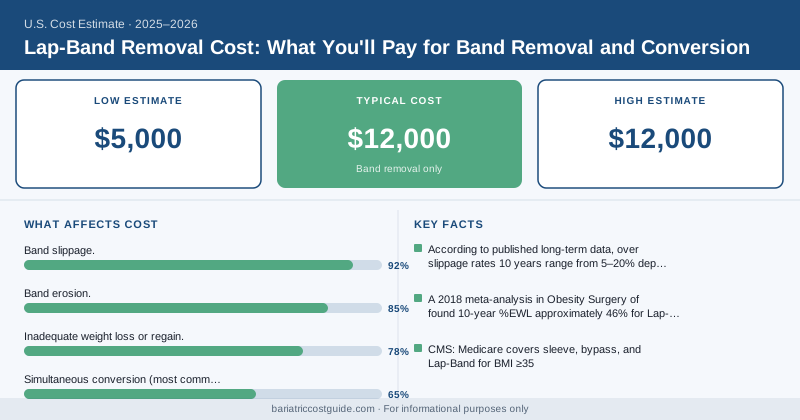
What Lap-Band Removal Actually Costs
Band removal alone (without conversion to another procedure) is a laparoscopic operation that typically takes 30–60 minutes. It sounds simple. In practice, it often isn’t — scar tissue from years of band placement makes dissection more technically complex than a new first-time procedure.
| Procedure | Self-Pay Cost | Notes |
|---|---|---|
| Band removal only | $5,000 – $12,000 | Complexity varies with scar tissue |
| Band removal + sleeve gastrectomy (simultaneous) | $18,000 – $32,000 | Most common combined approach |
| Band removal + gastric bypass (simultaneous) | $22,000 – $40,000 | Higher complexity, GERD patients |
| Band removal for erosion (emergency/urgent) | $8,000 – $20,000 | Higher cost with complications |
| Band removal + reoperation fees (staged) | Additional $5,000 – $15,000 | If done in two separate procedures |
The high cost variation reflects the most important factor: whether band removal is straightforward or complicated by erosion, slippage, or extensive adhesions.
Why Lap-Bands Fail: The Three Main Reasons
Band slippage. The band migrates from its original position as stomach tissue slips through it. Symptoms include vomiting, regurgitation, and inability to eat solid foods. A slipped band can partially or completely obstruct the stomach outlet. According to published long-term data, slippage rates over 10 years range from 5–20% depending on the surgical technique used.
Band erosion. The band erodes through the stomach wall into the gastric lumen. This is the most serious complication — it can cause infection, peritonitis, and requires urgent removal. Erosion occurs in approximately 1–3% of band patients over their lifetime. Because of the severity, erosion removal is often performed on an urgent basis, which increases costs.
Inadequate weight loss or regain. Many patients had good short-term results but experienced weight regain as they learned to eat around the band — high-calorie liquids and soft foods pass through easily even with the band tightened. Long-term weight loss data for Lap-Band is the worst of any approved bariatric procedure. A 2018 meta-analysis in Obesity Surgery found 10-year %EWL of approximately 46% for Lap-Band versus 59% for gastric sleeve and 65% for bypass.
Band Removal: Simultaneous Conversion vs. Staged Approach
Simultaneous conversion (most common): The surgeon removes the band and performs the new procedure (sleeve or bypass) in the same operation. More cost-effective, one hospitalization, one recovery. Requires that tissue is healthy enough to support the new staple line — usually evaluated by the surgeon intraoperatively.
Staged approach: Band removed first; new procedure performed 3–12 months later after tissue healing. Used when band erosion, infection, or tissue quality makes immediate conversion risky. Two hospitalizations, two recoveries, approximately $5,000–$15,000 more expensive total.
Most surgeons prefer simultaneous when tissue allows it. Ask specifically whether your surgeon plans to assess conversion eligibility at the time of removal — don’t assume they’ll default to staged without discussion.
Does Insurance Cover Lap-Band Removal?
Coverage depends on why you’re removing the band:
Covered scenarios (usually):
- Band slippage with documented symptoms and imaging
- Band erosion (emergency coverage is generally available regardless of policy specifics)
- Band infection or port-site complications
- Medical necessity documented by the bariatric surgeon
Potentially uncovered:
- “Elective” removal for inadequate weight loss alone, without mechanical complication
- Conversion to a different procedure when the original surgery wasn’t covered by your current insurer
- Removal when the original surgery was performed out-of-network
The critical documentation point: most insurers require imaging (upper GI series or CT scan) confirming mechanical failure before approving removal for band complications. Your surgeon needs to document the medical necessity clearly to avoid claim denial.
For conversion to sleeve or bypass after removal, insurance coverage follows the same criteria as a first-time bariatric procedure — BMI requirements, comorbidities, prior authorization, and MBSAQIP accreditation requirements all apply. The fact that you’ve had prior bariatric surgery doesn’t automatically grant coverage for revision.
What to Expect During Band Removal
The procedure is laparoscopic in most cases. General anesthesia, typically 30–90 minutes depending on complexity. Hospital stay: usually outpatient or overnight.
Recovery is typically faster than original bariatric surgery — 1–2 weeks before returning to desk work, 4–6 weeks for full activity. If converted simultaneously to sleeve or bypass, recovery follows the new procedure’s timeline (2–4 weeks for sleeve, 2–6 weeks for bypass).
Finding a Surgeon for Band Removal
Not all bariatric surgeons have extensive experience with band removal, particularly complicated erosion cases. Ask specifically:
- How many Lap-Band removals do you perform annually?
- What percentage involve simultaneous conversion?
- Do you have experience with erosion and slippage repairs?
- What are your complication rates for revision procedures?
MBSAQIP Comprehensive Centers are the preferred setting for complex revision procedures including band removal with conversion — they have the multidisciplinary team and equipment for complications.
Bottom Line
Lap-Band removal costs $5,000–$12,000 for removal alone, or $18,000–$40,000 for simultaneous conversion to sleeve or bypass. Most removals are covered by insurance when mechanical complications are documented; elective removal for weight regain alone may not be covered. The staged vs. simultaneous decision is made by the surgeon based on tissue quality at the time of removal. If you’re considering removal of a band that’s failed to produce adequate long-term weight loss, discuss conversion to sleeve or bypass at the same time — doing both in one procedure is typically cheaper and requires only one recovery period.
{ if eq .Lang "zh" }Disclaimer: BariatricCostGuide provides cost data for educational purposes only. We are not a medical provider, insurance company, or financial advisor. All costs are estimates based on published data and vary by location, facility, surgeon, insurance plan, and individual health factors. Consult a board-certified bariatric surgeon and your insurance carrier for personalized medical and cost advice.