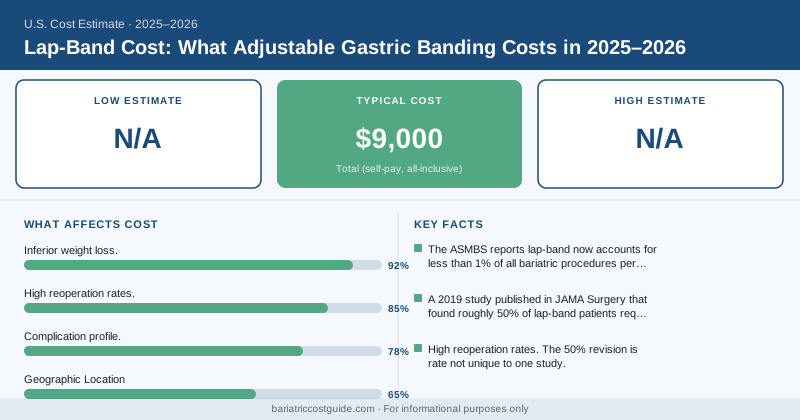
Lap-Band Cost: What Adjustable Gastric Banding Costs in 2025–2026
{ if eq .Lang "zh" }{ else }{ end }The procedure that was once the go-to option for weight loss surgery has fallen dramatically out of favor — and the cost reflects that shift.
Lap-band surgery (adjustable gastric banding) runs $9,000–$18,000 self-pay in 2025–2026. That’s cheaper than gastric sleeve or bypass, but it comes with a catch: revision rates are high, and more centers are declining to offer it at all. The ASMBS reports lap-band now accounts for less than 1% of all bariatric procedures performed in the U.S., down from roughly 35% in 2010.
What Lap-Band Surgery Costs
| Cost Component | Typical Range |
|---|---|
| Surgeon fee | $2,000 – $4,500 |
| Hospital/facility fee | $4,500 – $10,000 |
| Anesthesia fee | $800 – $2,000 |
| Pre-op evaluation (labs, psych, nutrition) | $700 – $2,000 |
| Band and port device (implant cost) | $2,500 – $4,000 |
| Post-op follow-up and adjustments (1 year) | $500 – $1,500 |
| Total (self-pay, all-inclusive) | $9,000 – $18,000 |
What Makes the Lap-Band Different
The lap-band is the only common bariatric procedure that doesn’t alter your stomach or intestinal anatomy permanently. A silicone band is placed around the upper stomach, creating a small pouch. The band is adjustable — a port sits just under your skin, and a surgeon can add or remove saline to tighten or loosen the restriction. It’s also fully reversible.
That sounds appealing. The reality is more complicated.
Long-term outcomes data has consistently shown that the lap-band produces less weight loss than sleeve or bypass, and it requires far more follow-up. Patients typically need 4–8 band adjustments in the first year alone, each costing $150–$400 if not covered by insurance.
Revision and Removal Costs: The Hidden Price
This is where the lap-band’s true cost reveals itself. A 2019 study published in JAMA Surgery found that roughly 50% of lap-band patients require band removal or revision within 10 years of surgery. When that happens, you’re facing additional costs:
| Procedure | Cost Range |
|---|---|
| Band adjustment (per visit) | $150 – $400 |
| Band removal only | $5,000 – $12,000 |
| Band removal + conversion to sleeve | $12,000 – $22,000 |
| Band removal + conversion to bypass | $15,000 – $28,000 |
Those conversion costs are often only partially covered by insurance, and some plans treat the revision as a new bariatric procedure with all its prior authorization requirements — which means starting the approval process over again.
Why Lap-Band Popularity Has Collapsed
Three things drove surgeons away from the lap-band:
Inferior weight loss. Average excess weight loss with the band is 40–50%, compared to 60–70% with sleeve and 65–80% with Roux-en-Y bypass. For patients with significant comorbidities, that difference matters medically.
High reoperation rates. The 50% revision rate is not unique to one study. Multiple long-term analyses have confirmed that band slippage, port malfunction, erosion, and patient intolerance require surgical intervention at high rates.
Complication profile. GERD, esophageal dilation, band erosion into the stomach wall — these complications are unique to the lap-band and don’t occur with sleeve or bypass.
Is the Lap-Band Still Covered by Insurance?
Many insurance plans that covered lap-band procedures in 2010–2015 have updated their bariatric coverage policies. Some now explicitly exclude the lap-band or classify it as investigational for new patients. Others still cover it but require meeting the same BMI and comorbidity criteria as other procedures.
Before assuming your plan covers it, call your insurance company directly and ask:
- Is LAP-BAND (CPT code 43770) a covered bariatric procedure under my plan?
- Are adjustments covered post-operatively (CPT 43771)?
- If I need revision surgery, will that be covered?
Who Still Offers Lap-Band in 2025?
Fewer centers than you’d expect. Many MBSAQIP-accredited bariatric programs have discontinued offering the procedure entirely because they don’t perform enough volume to maintain surgical proficiency. If you’re considering a lap-band specifically, verify the surgeon performs at least 20–30 per year — otherwise revision and complication management risks increase.
Lap-Band vs. Alternatives: The Cost-Effectiveness Picture
Over a 10-year horizon, the lap-band often costs more than seemingly pricier alternatives, once you account for adjustments, revisions, and lower weight-loss-related health savings.
| Procedure | Upfront Cost | 10-Year Revision Rate | Long-Term Weight Loss |
|---|---|---|---|
| Lap-band | $9,000 – $18,000 | ~50% | 40–50% EWL |
| Gastric sleeve | $10,000 – $23,000 | ~15% | 60–70% EWL |
| Gastric bypass | $15,000 – $35,000 | ~10% | 65–80% EWL |
The Bottom Line
Lap-band surgery costs $9,000–$18,000 upfront, but the real cost picture includes adjustment visits, the high probability of revision surgery, and often a conversion to a more effective procedure down the line. It’s the most affordable entry point for bariatric surgery on paper — but the long-term math frequently doesn’t work in its favor. If you’re considering bariatric surgery for the first time, most surgeons today will recommend sleeve or bypass over the band for nearly every candidate.
{ if eq .Lang "zh" }Disclaimer: BariatricCostGuide provides cost data for educational purposes only. We are not a medical provider, insurance company, or financial advisor. All costs are estimates based on published data and vary by location, facility, surgeon, insurance plan, and individual health factors. Consult a board-certified bariatric surgeon and your insurance carrier for personalized medical and cost advice.