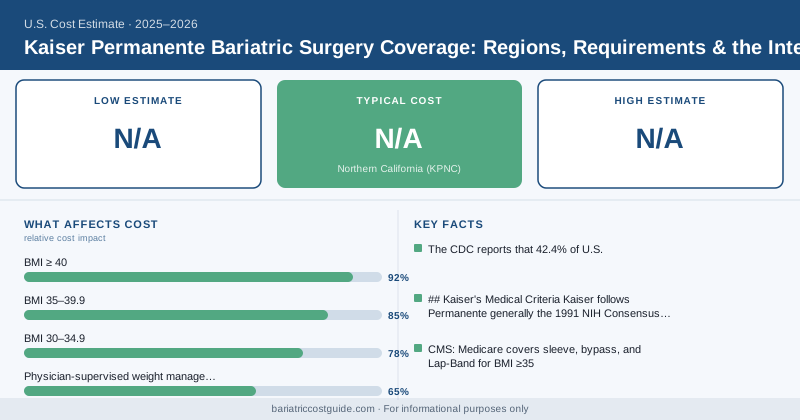
Kaiser Permanente Bariatric Surgery Coverage: Regions, Requirements & the Integrated Care Advantage
{ if eq .Lang "zh" }{ else }{ end }Call Kaiser at 8 a.m. and by noon you might already have a referral to an in-house bariatric program — no separate insurance company to argue with, no out-of-network surprise bills, no surgeon who doesn’t know your chart. That’s the structural advantage Kaiser Permanente members have over everyone else when it comes to weight loss surgery. The CDC reports that 42.4% of U.S. adults now have obesity, and Kaiser, which covers roughly 13 million Americans, has built one of the most vertically integrated bariatric pathways in the country.
Still, “covered” isn’t “automatic.” Here’s what you actually need to know.
Where Kaiser Permanente Offers Bariatric Surgery
Kaiser operates in eight distinct regions, and bariatric surgery availability varies by geography:
| Kaiser Region | Bariatric Program Available | Notes |
|---|---|---|
| Northern California (KPNC) | Yes | Largest region; multiple COE-designated centers |
| Southern California (KPSC) | Yes | High volume; comprehensive pre-op programs |
| Washington (KPWA) | Yes | Covers Seattle metro and surrounding areas |
| Colorado (KPCO) | Yes | Based in Denver; robust program |
| Georgia (KPGA) | Yes | Atlanta-area facilities |
| Mid-Atlantic (MD/VA/DC) | Yes | Multiple hospitals across the region |
| Hawaii (KPHI) | Yes | Honolulu-based program |
| Northwest (KPNW, OR/WA) | Yes | Portland-area; strong integrated program |
All eight regions cover bariatric surgery as a standard benefit for qualifying members — but the specific procedures offered and program structures differ. California and Washington tend to have the highest surgical volumes and the most established centers.
Kaiser’s Medical Criteria
Kaiser Permanente generally follows the 1991 NIH Consensus Statement, the same baseline used by most major insurers:
- BMI ≥ 40 with no comorbidity required
- BMI 35–39.9 plus at least one obesity-related comorbidity (type 2 diabetes, hypertension, sleep apnea, GERD, osteoarthritis, or hyperlipidemia)
- BMI 30–34.9 — Some Kaiser regions have expanded coverage for patients with poorly controlled type 2 diabetes or metabolic syndrome; check with your regional program directly
The American Society for Metabolic and Bariatric Surgery (ASMBS) estimates that only 1–2% of eligible patients actually pursue surgery each year. Kaiser’s integrated model is designed specifically to reduce that gap.
The No-Referral-to-Outside-Surgeon Advantage
What Kaiser Typically Requires Before Surgery
Pre-operative requirements are consistent across regions, though details vary:
Physician-supervised weight management program. Most Kaiser regions require 3–6 months of documented participation in a medically supervised diet program. This usually happens inside Kaiser’s system — through their bariatric department or a Healthy Weight program.
Psychological evaluation. A behavioral health assessment is standard. Kaiser’s in-house therapists or psychologists handle this; you won’t need to find an outside evaluator.
Nutritional counseling. At least one (usually multiple) sessions with a registered dietitian before surgery. Again, this is done in-house.
Medical clearance. EKG, lab work, sleep study if sleep apnea is suspected. For patients with cardiac or pulmonary risk factors, Kaiser’s cardiologists or pulmonologists do the clearance — same facility, same chart.
Smoking cessation. Most regions require documented cessation for a period before surgery. Kaiser offers smoking cessation programs to help members meet this requirement.
Procedures Kaiser Covers
| Procedure | Covered | Typical Cost-Sharing (with coverage) |
|---|---|---|
| Gastric sleeve (VSG) | Yes | Deductible + co-insurance per plan |
| Gastric bypass (RYGB) | Yes | Deductible + co-insurance per plan |
| Gastric band (Lap-Band) | Limited | Less common; declining coverage |
| Duodenal switch (SADI-S/BPD-DS) | Varies by region | Often requires COE designation |
| Revisional surgery | Sometimes | Requires documented complications |
| Balloon procedures | Generally no | Not typically covered as surgical benefit |
Gastric sleeve and gastric bypass are the two workhorses of Kaiser’s bariatric programs. Both are typically performed laparoscopically at Kaiser’s own hospital facilities by Kaiser-employed surgeons.
How the Integrated Model Changes the Cost Picture
At a traditional insurer, bariatric surgery costs can spiral:
- Out-of-network anesthesiologist not covered at in-network rate
- Facility and surgeon on separate claims, each with its own deductible interaction
- Post-op dietitian visits might be out-of-network
- Bariatric surgery financing options become necessary when unexpected bills arrive
At Kaiser, essentially all of this happens in-house. Your surgical facility, your surgeon, your anesthesiologist, your dietitian, your post-op follow-up team — all Kaiser. One deductible, one out-of-pocket maximum, one bill. Members who hit their out-of-pocket max pay nothing beyond that point regardless of how many follow-up visits they need.
For 2025, Kaiser HMO plans typically have deductibles ranging from $0 (for some HMO plans) to $1,500, with out-of-pocket maximums between $1,500 and $7,500 depending on the plan tier and region.
The Pre-Authorization Process at Kaiser
“Prior authorization” functions very differently at Kaiser than at commercial insurers:
- You start with your primary care physician. They document your BMI, comorbidities, and prior weight loss attempts.
- PCP refers you to the Kaiser bariatric program. No insurance company separate from your care team.
- Bariatric program intake. The program coordinator reviews your eligibility, explains the pre-op requirements, and schedules your first appointments.
- Pre-op program completion. You complete the supervised diet, psych eval, and nutritional counseling.
- Surgical scheduling. Once requirements are documented, surgery is scheduled directly.
Because Kaiser is both the insurer and the provider, internal approvals are faster than the 2–8 week timeline common at external insurers. Many members report scheduling surgery within 4–6 months of their first PCP visit.
What Isn’t Covered
Even at Kaiser, some things aren’t included:
Bariatric vitamins. Lifetime supplementation (B12, iron, calcium, vitamin D) is typically not covered as a prescription benefit. HSA/FSA funds can help offset this ongoing cost.
Skin removal surgery. Body contouring after significant weight loss — panniculectomy, brachioplasty, body lifts — is generally not covered unless there’s documented medical necessity (chronic skin infections, etc.).
Out-of-region care. If you live in a Kaiser service area but get surgery somewhere else, coverage is typically limited to emergencies only.
Non-Kaiser programs. Kaiser won’t cover participation in an outside bariatric program or surgery by a non-Kaiser surgeon, with rare exceptions.
How to Check Your Kaiser Bariatric Coverage
- Log into kp.org and navigate to your plan benefits
- Search “bariatric” or “weight loss surgery” in your Evidence of Coverage document
- Call the Member Services line on your card and ask: “Does my plan include bariatric surgery coverage, and what are the requirements?”
- Contact your regional Kaiser bariatric program directly — they can verify benefits and walk you through the intake process
Kaiser’s integration is a genuine advantage if you qualify. The question isn’t whether Kaiser covers bariatric surgery — it’s whether your specific plan tier in your region includes the benefit and whether you meet the clinical criteria. That’s a five-minute phone call worth making today. You can also compare how bariatric surgery insurance coverage works across other major insurers.
{ if eq .Lang "zh" }Disclaimer: BariatricCostGuide provides cost data for educational purposes only. We are not a medical provider, insurance company, or financial advisor. All costs are estimates based on published data and vary by location, facility, surgeon, insurance plan, and individual health factors. Consult a board-certified bariatric surgeon and your insurance carrier for personalized medical and cost advice.