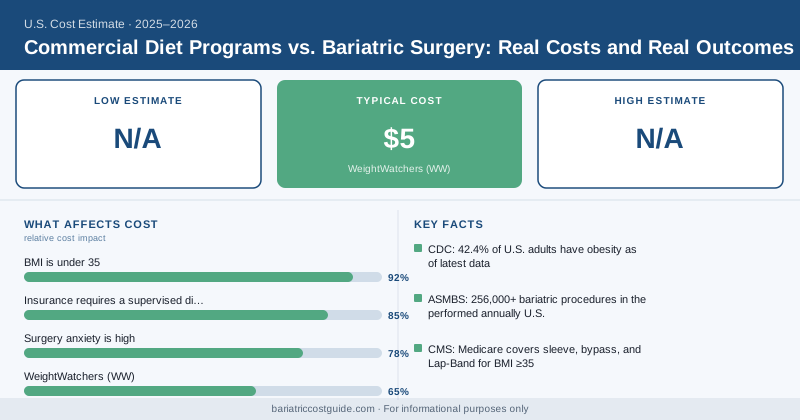
Commercial Diet Programs vs. Bariatric Surgery: Real Costs and Real Outcomes
{ if eq .Lang "zh" }{ else }{ end }Jenny Craig shut down in May 2023 after 40 years. The closure was attributed to competition from GLP-1 medications and a market that had lost confidence in meal-program-only approaches to serious weight loss. It felt like a turning point — the formal acknowledgment that a $1,500/year food delivery service and a weekly counseling call simply can’t do what pharmacology and surgery can do for patients with clinical obesity.
But commercial diet programs aren’t dead. WeightWatchers still has millions of members. Nutrisystem still ships food. Optavia has aggressive recruitment through health coaches. And millions of Americans every year choose them instead of surgery — either because surgery feels too extreme, or because no one has shown them the 5-year data side by side.
Here it is.
The Cost Comparison
| Program or Procedure | Year 1 Cost | 5-Year Cost (estimated) | Average Weight Loss at 1 Year | Sustained at 5 Years? |
|---|---|---|---|---|
| WeightWatchers (WW) | $200 – $350 | $1,000 – $1,750 | 5–7% TBWL | 30–40% maintain results |
| Nutrisystem (food delivery) | $2,400 – $4,200 | $12,000 – $21,000 | 6–10% TBWL | 20–35% maintain results |
| Optavia / Medifast | $1,800 – $4,800 | $9,000 – $24,000 | 8–12% TBWL | 25–40% maintain results |
| Medically supervised VLCD | $2,000 – $6,000 | $10,000 – $30,000 | 12–18% TBWL | 15–25% maintain results |
| Gastric sleeve | $10,000 – $23,000 | $12,500 – $28,000 (with ongoing costs) | 20–28% TBWL | 60–70% maintain results |
| Gastric bypass | $15,000 – $35,000 | $17,500 – $43,000 (with ongoing costs) | 28–35% TBWL | 65–75% maintain results |
TBWL = total body weight loss. The 5-year maintenance column is the one that matters most. Almost every commercial program produces short-term weight loss. Almost none of them maintain it.
What the NIDDK Actually Says About Diet Programs vs. Surgery
The National Institute of Diabetes and Digestive and Kidney Diseases (NIDDK) has studied long-term weight loss outcomes for decades. Their data, drawn from multiple large trials including the LOOK AHEAD trial, is unambiguous: behavioral interventions and commercial diet programs produce meaningful short-term results for many patients, but sustained weight loss at 5+ years occurs in only 20–30% of participants.
The NIDDK data on bariatric surgery shows 60–80% of patients maintaining meaningful weight loss at 5 years — a 2–3x higher maintenance rate than behavioral programs.
Why the gap? It’s not willpower. Surgery changes the hormonal and anatomical environment of eating in ways that behavioral intervention can’t replicate. Gastric sleeve reduces ghrelin (the hunger hormone) by approximately 60–70% — hunger goes down. Gastric bypass changes gut hormone signaling in ways that alter satiety and glucose metabolism. These are structural changes. Jenny Craig and its successors work on behavior. Behavior is subject to relapse. Anatomy is not.
What Commercial Programs Can Actually Do
This isn’t a hit piece on commercial diet programs. They serve a real population.
For people with BMI 27–35 and no serious comorbidities, programs like WeightWatchers offer evidence-based structure, community support, and behavioral tools that can produce 5–8% weight loss — clinically meaningful for preventing diabetes progression in pre-diabetic patients. The 2013 Look AHEAD trial showed intensive lifestyle intervention significantly reduced cardiovascular events in people with Type 2 diabetes and overweight.
Commercial programs make sense when:
- BMI is under 35 with no serious obesity-related conditions
- The patient hasn’t yet tried structured behavioral intervention and needs a systematic approach
- Insurance requires a supervised diet period before bariatric surgery approval (6 months at most programs — and yes, you can use a commercial program for this)
- Surgery anxiety is high and a non-surgical trial is medically appropriate before escalating
Using a Commercial Program to Qualify for Surgery
Many insurance plans require 3–6 months of documented supervised weight management before approving bariatric surgery. A commercial program like WeightWatchers or Optavia — particularly if supervised by your primary care physician who documents your monthly visits — can fulfill this requirement.
You’re not cheating. You’re strategically using the required supervised period to demonstrate motivation, develop behavioral skills, and get insurance approval. A bariatric program coordinator can tell you exactly what documentation your insurer needs. Get that documentation from day one of whatever program you choose.
The Post-Jenny Craig Landscape
With Jenny Craig gone, the commercial diet program market looks like this:
WeightWatchers (WW) — Pivoted toward GLP-1 prescriptions and telehealth. Now offers semaglutide prescriptions through their platform. Essentially acknowledging that meal points alone aren’t enough for patients with clinical obesity.
Nutrisystem / Tivity Health — Still a food-delivery model. $240–$350/month for pre-packaged meals. Works for some patients in the BMI 28–38 range. High attrition when patients leave the meal structure.
Optavia (formerly Medifast) — Multi-level marketing model using independent “health coaches” (not dietitians, usually). Results in trials are decent in the short term (12–18 weeks). Long-term data is thin. Expensive at $1,800–$4,800/year.
OPTIFAST — Medically supervised very-low-calorie meal replacement program often run through hospital weight management centers. Closer to a medical program than a commercial one. Produces 12–18% TBWL, which is at the top of the non-surgical range.
None of these are what bariatric surgery is. The clinical populations they serve overlap with but are distinct from the population that needs surgery.
The 5-Year Cost-Per-Pound Math
Let’s run the same calculation that actually matters: how much does each option cost per pound of weight that’s still gone at 5 years?
For a 240-pound patient targeting 60+ pounds of sustained loss:
WeightWatchers — Loses 15 lbs; maintains 6 lbs at 5 years. 5-year cost: $1,750. Cost per maintained pound: $292/lb
Optavia — Loses 25 lbs; maintains 9 lbs at 5 years. 5-year cost: $18,000. Cost per maintained pound: $2,000/lb
Gastric sleeve (self-pay) — Loses 62 lbs; maintains 42 lbs at 5 years. 5-year cost: $23,000. Cost per maintained pound: $548/lb
Gastric sleeve (insured, $4,000 OOP) — Same outcomes. Cost: $9,000 (surgery OOP + ongoing). Cost per maintained pound: $214/lb
The insured bariatric patient gets the best cost-per-pound of sustained loss in the entire comparison. Even self-pay surgery beats commercial programs on a per-maintained-pound basis once you account for Optavia’s high food costs and poor maintenance rates.
When to Choose Each Option
Choose a commercial program if:
- BMI under 35 with no serious comorbidities
- You haven’t tried structured weight management
- You’re using it to fulfill a required pre-surgical supervised diet period
- Surgery is off the table for health or personal reasons and you need structure
Choose Noom or similar behavioral programs if:
- You want psychology-based behavior change tools
- BMI under 33 and no comorbidities
Choose bariatric surgery if:
- BMI 40+, or BMI 35+ with documented comorbidities
- You’ve been through 2+ supervised weight loss attempts without durable success
- You have type 2 diabetes, severe sleep apnea, significant hypertension, or joint disease
- The long-term cost of obesity-related healthcare exceeds the cost of surgery
For a full GLP-1 medication cost comparison, see that guide separately. For insurance coverage for surgery, see bariatric surgery insurance coverage.
{ if eq .Lang "zh" }Disclaimer: BariatricCostGuide provides cost data for educational purposes only. We are not a medical provider, insurance company, or financial advisor. All costs are estimates based on published data and vary by location, facility, surgeon, insurance plan, and individual health factors. Consult a board-certified bariatric surgeon and your insurance carrier for personalized medical and cost advice.