GLP-1 Shortage Alternatives: Costs When Ozempic or Zepbound Aren't Available
{ if eq .Lang "zh" }{ else }{ end }What do you do when your pharmacy says your Zepbound prescription is on backorder — again? For a period between 2022 and 2024, this was a recurring reality for millions of patients as GLP-1 medications sat on the FDA’s official drug shortage list amid unprecedented demand.
Here’s what your realistic alternatives cost, ranked from cheapest to most involved.
Step 1: Confirm the Shortage Status
Before assuming the worst, check the FDA’s drug shortage database directly. Shortages are sometimes specific to certain doses or delivery devices (like a particular pen size) rather than the medication entirely — your prescriber may be able to switch you to an available strength without switching medications at all.
Alternative Options and Their Costs
| Alternative | Estimated Monthly Cost | Typical Effectiveness vs. GLP-1 |
|---|---|---|
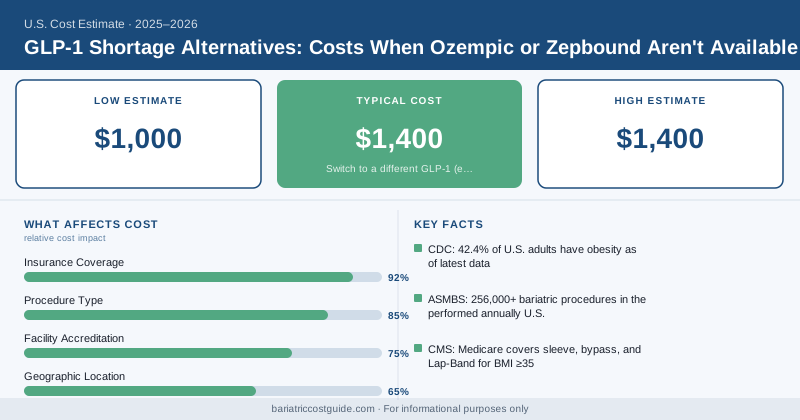
| Switch to a different GLP-1 (e.g., Wegovy to Saxenda) | $1,000 – $1,400 | Comparable to lower, depending on drug |
| Phentermine (older stimulant-based medication) | $30 – $80 | More modest average weight loss |
| Phentermine-topiramate (Qsymia) | $100 – $250 | Moderate, better than phentermine alone |
| Contrave (naltrexone-bupropion) | $100 – $300 | Moderate |
| Compounded GLP-1 (where legally available) | $150 – $500 | Comparable if properly dosed |
| Medically supervised weight loss program alone | $150 – $400 | Lower, but no medication access risk |
| Bariatric surgery | $15,000 – $28,000 (one-time) | Highest, most durable |
Why Shortages Happened in the First Place
Demand for semaglutide and tirzepatide-based medications surged dramatically starting in 2022 as GLP-1 drugs gained mainstream popularity for weight loss beyond their original diabetes indication. Manufacturers couldn’t scale production fast enough to meet demand, triggering official FDA shortage designations that lasted, in tirzepatide’s case, into 2024 before supply caught up.
Ask About Manufacturer Coupon and Savings Programs
Older Medications Aren’t Obsolete
Phentermine, approved by the FDA since 1959, remains one of the most prescribed weight-loss medications in the country precisely because it’s inexpensive, widely available, and effective for short-term use. It won’t match GLP-1 medications for average weight loss, but as a bridge option during a shortage — or for patients who can’t access or afford GLP-1 drugs long-term — it remains clinically relevant. See our phentermine cost guide for full pricing detail.
When Surgery Becomes the More Reliable Option
For patients who’ve experienced repeated medication access disruptions — or who face an indefinite monthly cost they can’t sustain — bariatric surgery offers something GLP-1 medications structurally can’t: a result that doesn’t depend on continued prescription availability or insurance formulary changes. Research from the NIH indicates most patients who stop GLP-1 medications regain a substantial share of lost weight within a year, a dependency risk that doesn’t apply the same way to surgical outcomes.
Making the Comparison for Yourself
If shortage instability has you reconsidering your long-term weight-loss strategy, our GLP-1 versus surgery cost comparison breaks down the 5-year and 10-year cost trajectories for both paths side by side.
{ if eq .Lang "zh" }Disclaimer: BariatricCostGuide provides cost data for educational purposes only. We are not a medical provider, insurance company, or financial advisor. All costs are estimates based on published data and vary by location, facility, surgeon, insurance plan, and individual health factors. Consult a board-certified bariatric surgeon and your insurance carrier for personalized medical and cost advice.