Gastric Bypass Long-Term Cost: 10-Year Supplements, Follow-Up, and Revision Risk
{ if eq .Lang "zh" }{ else }{ end }The $20,000 surgery quote is real. What nobody puts in the brochure is the follow-up cost: $1,500–$3,000/year in supplements and labs, every year, for the rest of your life.
Gastric Roux-en-Y bypass permanently alters nutrient absorption. That change doesn’t go away at year 2 or year 10. Understanding the lifetime financial commitment — not just the surgical price — is essential before choosing bypass over other options.
Why Bypass Creates Permanent Supplement Requirements
Gastric bypass creates a small pouch (about 30mL) from the top of the stomach and bypasses the lower stomach, duodenum, and upper small intestine. The bypassed section is where most iron, calcium, B12, and other micronutrients are primarily absorbed.
This is the mechanism behind bypass’s excellent weight loss and diabetes remission results — and the same mechanism that creates lifetime supplementation requirements. ASMBS guidelines specify minimum post-bypass supplementation requirements:
- Multivitamin: Twice daily (chewable initially, solid after 3–6 months)
- Calcium citrate: 1,200–1,500mg/day in divided doses (calcium carbonate absorbs poorly post-bypass)
- Vitamin D: 3,000 IU/day or more to maintain 25-OH vitamin D > 30 ng/mL
- Iron: 45–60mg/day elemental iron (especially for menstruating women)
- Vitamin B12: 350–500 mcg/day sublingual or 1,000 mcg/month intramuscular injection
- Thiamine: 12mg/day minimum
The 10-Year Cost Model
| Cost Category | Annual Cost | 10-Year Total |
|---|---|---|
| Initial bypass surgery (self-pay) | $20,000 – $35,000 (year 1) | $20,000 – $35,000 |
| Bariatric vitamins (multi + calcium + D + iron + B12) | $800 – $2,500/year | $8,000 – $25,000 |
| Lab monitoring (CBC, metabolic panel, vitamin levels) | $300 – $800/year | $3,000 – $8,000 |
| Dietitian follow-up visits | $200 – $500/year | $2,000 – $5,000 |
| Revision risk (5–10% lifetime probability) | $18,000 – $35,000 if needed | $900 – $3,500 expected |
| Incidental complications (dumping, marginal ulcer) | Variable | $500 – $3,000 cumulative |
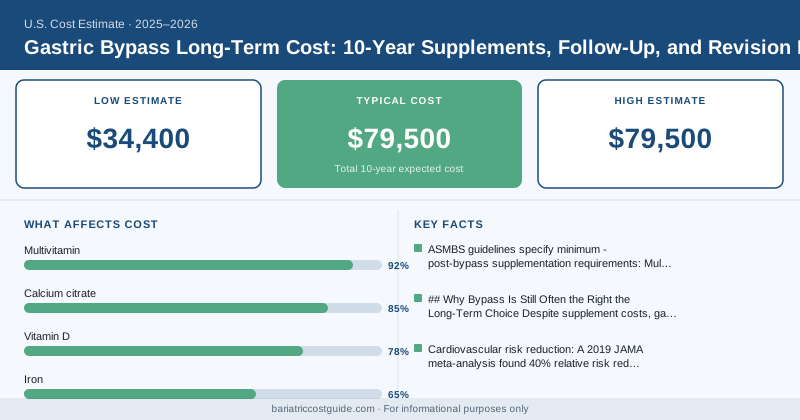
| Total 10-year expected cost | $34,400 – $79,500 |
The wide range reflects the difference between generic supplement brands vs. bariatric-specific formulations (which cost more but are easier to tolerate), how aggressively your program monitors labs, and whether complications occur.
What Happens If You Skip Supplements
Deficiency doesn’t develop overnight — it builds over months to years. But the consequences of inadequate supplementation post-bypass are serious:
Iron deficiency anemia: The most common long-term complication. Menstruating women are particularly vulnerable. Symptoms include fatigue, weakness, and pale skin; severe cases require IV iron infusions ($500–$2,000 per infusion).
B12 deficiency: Can cause peripheral neuropathy and cognitive effects. Neurological B12 damage can be permanent if deficiency is prolonged. Sublingual B12 absorbs adequately without injections for most patients.
Calcium and vitamin D deficiency: Leads to secondary hyperparathyroidism and metabolic bone disease. A 2012 study in Obesity Surgery found bone mineral density declined significantly in the first 2 years post-bypass, with some patients showing osteoporosis-level changes. Fracture risk increases — with associated treatment costs of $15,000–$60,000 for a hip fracture requiring surgical repair.
How to Minimize Long-Term Supplement Costs
Bariatric vitamins don’t have to cost $200/month. Strategies to reduce costs while maintaining compliance:
Compare bariatric multivitamin brands. Bariatric Advantage, Celebrate, and ProCare Health are the most commonly recommended — prices vary by 30–50% between brands for similar formulations. Generic versions exist but may not be absorbed as well post-bypass.
Use Costco/Sam’s Club for single-ingredient supplements. Calcium citrate, vitamin D, and iron are cheaper in bulk at warehouse clubs than from specialty bariatric suppliers.
HSA/FSA eligible. Most bariatric supplements qualify as healthcare expenses if prescribed — save your receipts for tax-advantaged reimbursement.
Annual lab panels vs. individual tests. Many bariatric programs order individual vitamin level tests separately, costing more than comprehensive bariatric lab panels. Ask if your program uses a panel approach — it’s typically cheaper and more clinically complete.
Why Bypass Is Still Often the Right Long-Term Choice
Despite the supplement costs, gastric bypass produces exceptional long-term outcomes that influence the cost-value equation:
Diabetes remission: A 2022 JAMA randomized trial found 60% type 2 diabetes remission at 5 years after gastric bypass, compared to 45.7% for gastric sleeve. For a patient spending $500–$1,500/month on diabetes medications, bypass-induced remission can pay for itself within 2–3 years.
GERD resolution: Unlike gastric sleeve (which worsens GERD in 20–30% of patients), bypass typically resolves GERD. For patients on chronic proton pump inhibitors ($30–$100/month), bypass eliminates that cost.
Cardiovascular risk reduction: A 2019 JAMA meta-analysis found 40% relative risk reduction in major cardiovascular events after bariatric surgery, with bypass showing the strongest effect. Reduced cardiovascular events translate to avoided downstream healthcare costs that can dwarf supplement expenses.
The Revision Rate Context
Gastric bypass has the lowest revision rate of any bariatric procedure. A 2020 ASMBS registry analysis found 5-year reoperation rate of approximately 5–8% for bypass, versus 10–15% for sleeve. Lower revision probability is a meaningful long-term cost advantage — bypass revisions, when needed, cost $18,000–$35,000.
Bottom Line
Gastric bypass has a higher initial price ($20,000–$35,000) than sleeve ($15,000–$23,000), but its better long-term metabolic outcomes — especially diabetes remission and GERD resolution — often generate offsetting savings. The 10-year out-of-pocket total, including supplements, labs, and expected revision probability, runs $34,400–$79,500. For patients with type 2 diabetes, GERD, or high cardiovascular risk, the metabolic benefits frequently justify the surgical premium over sleeve. Budget for ongoing supplement and monitoring costs as permanent line items — they’re not optional, and ignoring them creates serious deficiency risks.
{ if eq .Lang "zh" }Disclaimer: BariatricCostGuide provides cost data for educational purposes only. We are not a medical provider, insurance company, or financial advisor. All costs are estimates based on published data and vary by location, facility, surgeon, insurance plan, and individual health factors. Consult a board-certified bariatric surgeon and your insurance carrier for personalized medical and cost advice.