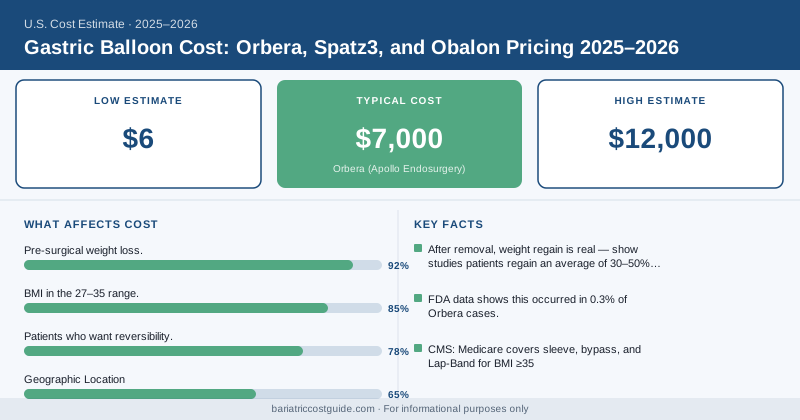
Gastric Balloon Cost: Orbera, Spatz3, and Obalon Pricing 2025–2026
{ if eq .Lang "zh" }{ else }{ end }$8,500. That’s what Orbera typically costs in most U.S. cities. No surgery, no hospital stay, no anesthesia — just a silicone balloon placed in your stomach via endoscope, outpatient, in about 20 minutes.
The intragastric balloon is the least invasive weight loss procedure available, and it’s priced accordingly. It’s also the most limited: balloons are temporary (removed after 6 months to 1 year), and average weight loss runs 25–35% of excess body weight — less than any surgical option. But for patients who want a non-surgical start, need to lose weight before bariatric surgery, or don’t qualify for surgery, the balloon is a legitimate tool.
What a Gastric Balloon Costs in 2025–2026
Costs vary by balloon type, provider, and location. The Orbera balloon — the most widely implanted and studied option — runs $7,000 to $12,000 in most U.S. markets, all-inclusive.
| Balloon System | Self-Pay Cost Range | Duration |
|---|---|---|
| Orbera (Apollo Endosurgery) | $7,000 – $12,000 | 6 months |
| Spatz3 (adjustable) | $9,000 – $15,000 | Up to 12 months |
| ReShape Duo | $6,000 – $10,000 | 6 months |
| Obalon (swallowable) | $6,000 – $9,000 | 6 months |
What’s Included in the Price
Most balloon programs quote a bundled all-inclusive price that covers:
- The balloon device itself
- Endoscopic placement procedure (outpatient, 20–30 minutes)
- Sedation/anesthesia for placement
- Regular follow-up appointments during the balloon period
- Behavioral coaching and dietary counseling
- Endoscopic removal at 6 months (or 12 months for Spatz3)
That bundling is important. Unlike surgical bariatric procedures where you might get separate bills from facility, surgeon, and anesthesiologist, most balloon programs are priced as a single package from the operating physician’s practice.
Insurance Coverage: Almost Never Covered
Here’s the frustrating reality: gastric balloons are almost universally excluded from insurance coverage. The FDA approved Orbera in 2015 and Spatz3 in 2021, but most insurers classify balloons as “investigational” or “not medically necessary” even for medically eligible patients. Don’t count on your insurance.
A handful of employers with progressive wellness benefits cover balloons as a weight management tool, but they’re rare. HSA and FSA funds can typically be used for balloon procedures, since they qualify as medical expenses — that’s worth checking with your HSA administrator.
The Spatz3 Advantage: Adjustable Volume
The Spatz3 is the only adjustable gastric balloon currently FDA-cleared. If nausea or discomfort becomes severe, your doctor can reduce the balloon’s volume without removing it. If you plateau in weight loss, they can increase the volume. This adjustability is why Spatz3 commands a $1,000–$3,000 premium over non-adjustable balloons.
Studies show Spatz3 patients lose more weight on average than Orbera patients — 14.9 kg vs. 10.6 kg in comparative data — partly because of the longer 12-month duration and the ability to upsize if needed.
Who Balloons Actually Make Sense For
Not everyone who inquires about a gastric balloon is a good candidate, and not everyone asking about bariatric surgery should start with a balloon. The balloon typically makes sense for:
Pre-surgical weight loss. Patients with very high BMI (≥ 50) sometimes need to lose 40–80 pounds before a surgeon will safely perform sleeve or bypass. A balloon can achieve that safely in 6 months.
BMI in the 27–35 range. Surgical bariatric procedures are typically approved only for BMI ≥ 40 (or ≥ 35 with comorbidities). Balloons are FDA-cleared down to BMI 30, and some programs use them for patients with BMI 27–30 with weight-related health conditions.
Patients who want reversibility. A balloon is 100% reversible — remove it and your anatomy is unchanged. For patients uncertain about permanent surgery, it’s a useful first step.
The Real Cost Over Time
The balloon is temporary. That’s both its appeal and its limitation. After removal, weight regain is real — studies show patients regain an average of 30–50% of lost weight within 12 months without sustained lifestyle changes.
Some patients have multiple balloon cycles, each costing another $7,000–$15,000. Run two Orbera cycles and you’ve spent $15,000–$24,000 — enough to have paid for a sleeve gastrectomy, which produces better and permanent results.
The Bottom Line
Gastric balloon procedures cost $6,000–$15,000 and are almost never covered by insurance. They’re most valuable as a pre-surgical tool, for patients outside the BMI range for surgery, or for those who want a non-permanent first step. Weight loss is real but modest (25–35% of excess weight) and partially temporary after removal. For permanent, substantial weight loss, surgical options remain more cost-effective over a 5-year horizon.
{ if eq .Lang "zh" }Disclaimer: BariatricCostGuide provides cost data for educational purposes only. We are not a medical provider, insurance company, or financial advisor. All costs are estimates based on published data and vary by location, facility, surgeon, insurance plan, and individual health factors. Consult a board-certified bariatric surgeon and your insurance carrier for personalized medical and cost advice.