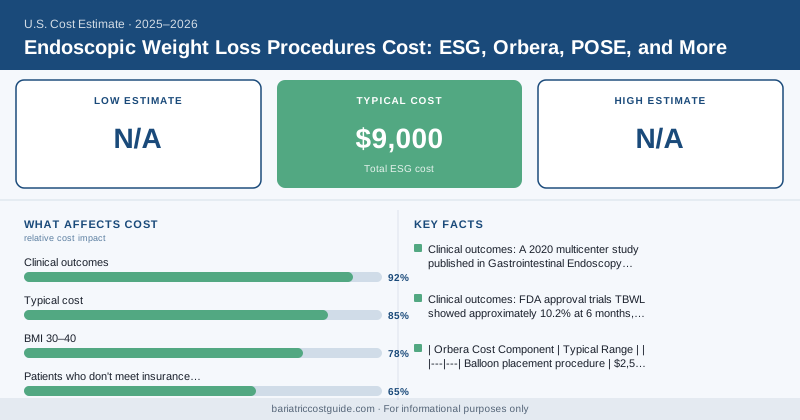
Endoscopic Weight Loss Procedures Cost: ESG, Orbera, POSE, and More
{ if eq .Lang "zh" }{ else }{ end }Not everyone who needs to lose weight qualifies for — or wants — bariatric surgery. Endoscopic weight loss procedures offer a middle ground: more effective than diet programs alone, less invasive than surgery, and done without a single incision. The catch? They cost $6,000–$15,000 and insurance rarely covers them.
Here’s the full breakdown on every FDA-cleared endoscopic option currently available in the US, including what each one costs, how much weight you can expect to lose, and who the right candidate actually is.
What Endoscopic Procedures Are
Endoscopic weight loss procedures are performed through the mouth using a flexible scope — no cuts, no general anesthesia in most cases, no hospital stay. They fall into two categories:
- Space-occupying devices (intragastric balloons) — fill stomach space to reduce capacity
- Structural alteration procedures (ESG, POSE, TORe) — use sutures or staples to reduce stomach volume or reconfigure the anatomy
All currently available US endoscopic procedures produce less weight loss than gastric sleeve or bypass, but for the right patient — BMI 30–40, not ready for surgery, or looking for a bridge — they’re a legitimate option.
Endoscopic Sleeve Gastroplasty (ESG): The Most Popular Option
ESG uses an endoscopic suturing device to stitch the stomach into a sleeve shape from the inside. It reduces gastric volume by approximately 70–80%, similar in concept to sleeve gastrectomy but without the resection. No stomach tissue is removed; sutures can theoretically be reversed (though this is uncommon in practice).
Clinical outcomes: A 2020 multicenter study published in Gastrointestinal Endoscopy found ESG patients achieved approximately 15–18% total body weight loss (TBWL) at 12 months — compared to 25–30% TBWL for surgical sleeve. The gap narrows somewhat with behavioral support.
| ESG Cost Component | Typical Range |
|---|---|
| Procedure fee (gastroenterologist or bariatric physician) | $5,000 – $9,000 |
| Facility/endoscopy suite fee | $2,000 – $5,000 |
| Anesthesia (sedation or MAC) | $500 – $1,500 |
| Pre-op evaluation and labs | $300 – $800 |
| Total ESG cost | $9,000 – $15,000 |
ESG is performed at academic medical centers and increasingly at private bariatric/GI practices. Cash prices vary widely — academic centers tend to be more expensive than private outpatient suites. Some practices offer all-inclusive pricing around $9,000–$11,000.
Orbera Intragastric Balloon
The Orbera balloon (FDA-cleared since 2015) is a silicone balloon filled with saline that’s placed endoscopically into the stomach and left in place for 6 months. It occupies roughly one-third of stomach volume, promoting early satiety.
After 6 months, the balloon must be removed — also endoscopically. A second balloon placement is possible but less common.
Clinical outcomes: FDA approval trials showed approximately 10.2% TBWL at 6 months, with patients regaining about half the weight by 12 months (6 months after balloon removal) without structured behavioral support. With strong dietary counseling, 12-month results are better — around 12–15% TBWL.
| Orbera Cost Component | Typical Range |
|---|---|
| Balloon placement procedure | $2,500 – $4,500 |
| Balloon removal procedure (required at 6 months) | $1,500 – $2,500 |
| Program fee (includes dietary coaching, follow-up) | $1,500 – $3,000 |
| Anesthesia/sedation (both procedures) | $800 – $1,500 |
| Total Orbera cost | $6,000 – $9,000 |
The Obalon balloon (swallowable capsule format, three balloons over 6 months) was FDA-cleared but has been withdrawn from the US market. The Spatz adjustable balloon is used internationally but not FDA-cleared for the US market as of 2025.
Why the Balloon's Behavioral Support Component Matters
POSE Procedure (Primary Obesity Surgery Endoluminal)
The POSE (Primary Obesity Surgery Endoluminal) procedure uses an endoscopic suturing device to place full-thickness plications (folds) in the gastric fundus — reducing stomach capacity and altering the gastric reservoir function. It’s similar to ESG conceptually but targets a different anatomical region.
POSE 2.0 (the current version) showed approximately 14–16% TBWL at 12 months in published studies. It’s performed at fewer centers than ESG and tends to cost similarly.
Typical cost: $8,000–$12,000 all-in.
Transoral Outlet Reduction (TORe)
TORe is different — it’s not a weight loss initiation procedure. It’s used to treat weight regain after gastric bypass by endoscopically tightening the gastric outlet (the connection between the pouch and the small intestine), which tends to dilate over time and reduce satiety signaling.
If you’ve had gastric bypass and regained significant weight, TORe is often more appropriate than full revision surgery. It costs $6,000–$12,000 and is sometimes covered by insurance when medically indicated post-bypass.
Comparing All Options
| Procedure | Typical Cost | Avg. Weight Loss (12 months TBWL) | Duration of Effect | Insurance Coverage |
|---|---|---|---|---|
| Orbera balloon | $6,000 – $9,000 | 10–15% | 6 months (then removed) | Rarely |
| ESG | $9,000 – $15,000 | 15–18% | Sustained (if no suture loss) | Rarely |
| POSE 2.0 | $8,000 – $12,000 | 14–16% | Sustained | Rarely |
| TORe (post-bypass revision) | $6,000 – $12,000 | 10–15% regain reduction | Sustained | Sometimes |
| Gastric sleeve (comparison) | $10,000 – $23,000 | 25–30% | Sustained (mostly) | Often |
| Gastric bypass (comparison) | $15,000 – $35,000 | 30–35% | Sustained | Often |
Who Should Consider Endoscopic Procedures
Endoscopic options make the most sense for:
- BMI 30–40 (surgical procedures often prioritized for BMI 40+)
- Patients who don’t meet insurance criteria for bariatric surgery but want meaningful intervention
- Pre-surgical bridge — losing 20–40 lbs before a higher-risk bariatric surgery improves safety
- Patients who had bariatric surgery and want a non-surgical revision (TORe specifically)
- Patients who tried GLP-1 medications like Wegovy or Zepbound but had tolerability issues
Endoscopic procedures are not appropriate for BMI under 30, patients with uncontrolled psychiatric illness, or those with certain anatomical contraindications.
How to Find an ESG Provider
ESG is currently performed at:
- Academic medical centers with bariatric or gastroenterology programs
- Certified bariatric centers of excellence (some offer ESG alongside surgical options)
- Specialized endoscopic bariatrics practices
Most major cities have at least one provider. Use the ASMBS provider finder or the American College of Gastroenterology directory. Ask any potential provider: “How many ESG procedures do you perform per month?” Providers doing 10+ monthly have better complication profiles than low-volume performers.
For a comprehensive comparison of all weight loss approaches including surgical and medication options, see the full cost comparison guide.
{ if eq .Lang "zh" }Disclaimer: BariatricCostGuide provides cost data for educational purposes only. We are not a medical provider, insurance company, or financial advisor. All costs are estimates based on published data and vary by location, facility, surgeon, insurance plan, and individual health factors. Consult a board-certified bariatric surgeon and your insurance carrier for personalized medical and cost advice.