Employer Insurance and Weight Loss Surgery: ERISA, Self-Funded Plans & How to Check
{ if eq .Lang "zh" }{ else }{ end }Your UnitedHealthcare card says you’re covered. Their website says bariatric surgery is a covered benefit. But your claim gets denied because your employer — not UHC — decided to exclude bariatric surgery from your plan years ago. This happens constantly, and it’s perfectly legal. Here’s why, and what you can do about it.
The ERISA Self-Funded Reality
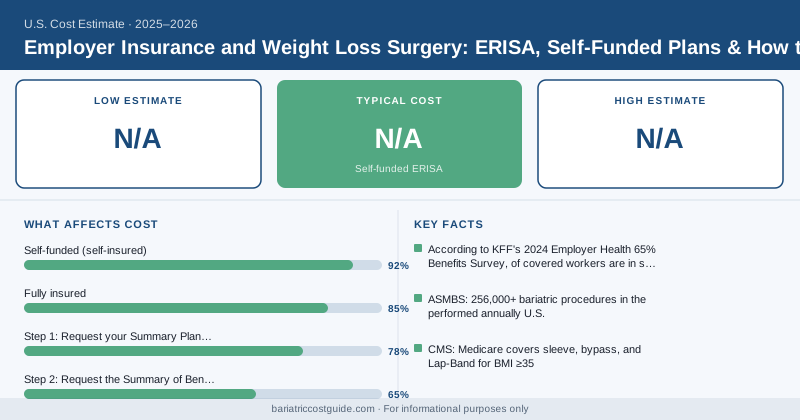
Most Americans with employer-sponsored health insurance are in self-funded ERISA plans. According to KFF’s 2024 Employer Health Benefits Survey, 65% of covered workers are in self-funded plans — including 82% of those at large firms (200+ employees). Here’s how that works:
Self-funded (self-insured): Your employer pays all the claims directly from their own funds. They hire a health insurer (UHC, Cigna, Aetna, BCBS) as a TPA (third-party administrator) to process claims, but the insurer doesn’t actually cover the risk. The employer does.
Fully insured: Your employer pays premiums to an insurer, which covers claims. More common at small businesses.
Why does this matter for bariatric surgery? Because:
- Self-funded plans are governed by ERISA (federal law), not state insurance regulations
- Self-funded employers can design their benefit packages almost any way they want within broad federal limits
- An employer can legally exclude bariatric surgery from a self-funded plan even if the insurer’s “standard” policy covers it
- State insurance mandates (like those requiring bariatric coverage in some states) do not apply to self-funded ERISA plans
| Plan Type | Who Controls Coverage | State Mandates Apply? |
|---|---|---|
| Self-funded ERISA | Employer | No |
| Fully insured (small group) | Insurer + state regs | Yes |
| Fully insured (large group) | Insurer | Varies |
| Federal employee (FEHB) | OPM + plan | No (federal law governs) |
How to Find Out If YOUR Plan Actually Covers It
Don’t rely on your insurer’s website. Here’s the right process:
Step 1: Request your Summary Plan Description (SPD)
The SPD is the governing document for your health plan. Your employer is legally required under ERISA to provide it within 30 days of request. Look for “bariatric surgery,” “weight loss surgery,” or “obesity treatment” — the language will tell you whether it’s covered and under what conditions.
Step 2: Request the Summary of Benefits and Coverage (SBC)
The SBC is a shorter, standardized document. It’s a useful starting point but less comprehensive than the SPD. Both documents should be available in your HR portal or from your HR/benefits department.
Step 3: Call your insurer and ask the right question
Don’t ask “Is bariatric surgery covered?” Ask: “Is bariatric surgery covered under my employer’s specific plan, and can you tell me the plan’s specific benefit terms?” The rep can pull up your employer’s plan design, which may differ from Aetna’s (or whoever’s) standard offering.
Step 4: Ask your HR team directly
Benefits managers know what was purchased. Ask: “Does our health plan include a bariatric surgery benefit?” It’s a direct question. If they don’t know off the top of their head, they can find out in 10 minutes.
Words Matter
What If Your Employer Excluded Bariatric Surgery?
Options if your plan excludes the bariatric benefit:
1. Ask HR to reconsider during open enrollment planning Benefits decisions are often made annually. If enough employees express interest, employers sometimes add the benefit — especially since research consistently shows the long-term cost savings of treating obesity surgically vs. managing downstream comorbidities medically. The ASMBS estimates bariatric surgery reduces a patient’s total healthcare costs within two to four years of the procedure.
2. Self-pay or alternative financing If your employer’s plan doesn’t cover it, you’re looking at self-pay options ranging from $15,000 to $30,000 depending on procedure and geography. Medical tourism to Mexico can reduce costs by 60–70%. Financing options include medical loans, CareCredit, and hospital payment plans.
3. Check if you qualify for state Medicaid State Medicaid rules apply to Medicaid plans, not employer ERISA plans. If you’re income-eligible, a Medicaid pathway may be available regardless of what your employer’s plan does.
4. COBRA (limited) If you’re between jobs, COBRA continues your current employer plan — which means it also continues any bariatric exclusion. Doesn’t help here.
Your Appeal Rights Under ERISA
ERISA plans must:
- Provide written notice of denied claims with reasons
- Allow internal appeals
- Provide external review — but this applies primarily to clinical decisions, not coverage exclusions
The critical distinction: if your employer excluded bariatric surgery as a benefit (a coverage design decision), you typically can’t appeal that exclusion the same way you’d appeal a medical necessity denial. The plan is doing exactly what it was designed to do.
If, however, the plan includes bariatric coverage and your specific claim was denied as not medically necessary, standard appeal rights apply:
- Internal appeal (typically 180 days to file)
- External independent review for clinical denials
- Peer-to-peer review by surgeon
States with Bariatric Surgery Coverage Mandates (Fully Insured Plans)
Several states mandate bariatric surgery coverage for fully insured plans. These include:
- Massachusetts
- New York (for plans covering more than 50 employees)
- Maryland
- New Jersey (with conditions)
- Virginia (recent legislation)
Check your specific state insurance commissioner’s website for current mandate status, as these laws change.
The Bottom Line on Employer Plans
The insurer logo on your card doesn’t determine coverage. Your employer’s plan document does. Start with the SPD, check both the benefits section and the exclusions section, and ask your HR team directly. If bariatric coverage is in your plan, you’re playing by the insurer’s standard rules (BMI criteria, prior auth, supervised diet). If it’s been excluded, you have fewer leverage points — but you still have the option to pursue surgery through other pathways.
{ if eq .Lang "zh" }Disclaimer: BariatricCostGuide provides cost data for educational purposes only. We are not a medical provider, insurance company, or financial advisor. All costs are estimates based on published data and vary by location, facility, surgeon, insurance plan, and individual health factors. Consult a board-certified bariatric surgeon and your insurance carrier for personalized medical and cost advice.