Duodenal Switch Cost: DS and SADI-S Pricing for 2025–2026
{ if eq .Lang "zh" }{ else }{ end }Here’s a number that surprises most patients: 70–85% excess weight loss. That’s what the duodenal switch delivers — and it’s why some of the most severe obesity cases end up here, even at $20,000 to $40,000.
The duodenal switch (DS) is the most complex and most powerful bariatric procedure available. It combines a sleeve gastrectomy (to reduce stomach size) with a significant intestinal bypass that limits how much fat and calories your body can absorb. ASMBS data shows it consistently outperforms all other bariatric procedures for long-term weight loss and metabolic improvement — but the complexity and cost put it out of reach for many patients.
What Duodenal Switch Surgery Costs
Self-pay costs for standard biliopancreatic diversion with duodenal switch (BPD/DS) run $20,000 to $40,000 in the U.S. The newer single-anastomosis duodenal-ileal bypass with sleeve gastrectomy (SADI-S) is somewhat simpler and typically costs 10–20% less.
| Cost Component | BPD/DS Range | SADI-S Range |
|---|---|---|
| Surgeon fee | $4,000 – $8,000 | $3,500 – $7,000 |
| Hospital/facility fee | $10,000 – $22,000 | $9,000 – $18,000 |
| Anesthesia fee | $1,500 – $3,500 | $1,200 – $3,000 |
| Pre-op evaluation | $1,200 – $3,000 | $1,000 – $2,500 |
| Total self-pay | $20,000 – $40,000 | $18,000 – $35,000 |
Why DS Costs More Than Other Procedures
Three factors push the cost of duodenal switch above every other bariatric option:
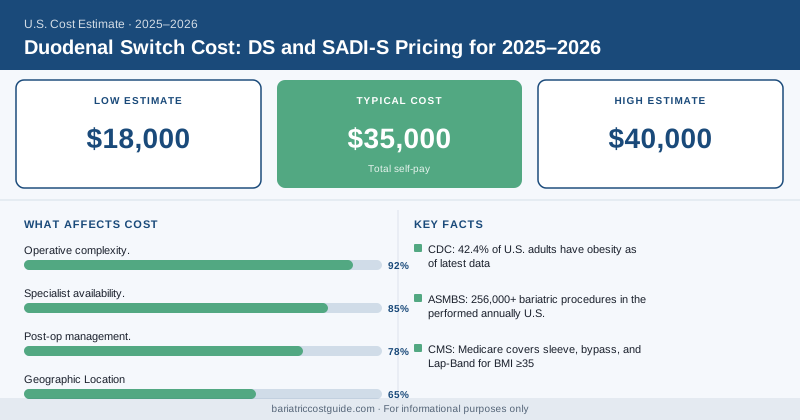
Operative complexity. The DS involves two separate intestinal connections (anastomoses) versus one in gastric bypass or none in sleeve. The procedure typically takes 3–5 hours, compared to 1–2 hours for a sleeve. More OR time means higher facility costs.
Specialist availability. Not every bariatric surgeon performs DS. It requires advanced laparoscopic skills. Surgeons who offer it — and who do it in meaningful volume — command premium fees.
Post-op management. DS patients have more nutritional monitoring needs than other bariatric patients. ASMBS guidelines recommend quarterly lab work indefinitely due to higher rates of protein malabsorption and fat-soluble vitamin deficiencies (A, D, E, K).
DS vs. SADI-S: What’s the Difference?
The traditional BPD/DS creates two separate connections in the intestine, which is more complex but also more studied. The SADI-S (also called OADS — one anastomosis duodenal switch) creates only one intestinal connection, making it faster to perform and potentially reducing some risks.
Outcomes data for SADI-S is now compelling — a 2023 meta-analysis found comparable weight loss to traditional DS with lower complication rates. Most high-volume bariatric programs now offer SADI-S as the preferred DS variant for new patients.
Insurance Coverage: Harder to Get Than Bypass
Getting insurance to cover a duodenal switch is harder than for sleeve or bypass. Why? Two reasons:
First, fewer plans explicitly list DS/SADI-S as covered procedures. Plans that cover “bariatric surgery” often mean sleeve and bypass; DS may require special medical necessity approval.
Second, DS requires stronger clinical justification — typically BMI ≥ 50, or BMI ≥ 40 with multiple severe comorbidities. Surgeons submitting DS prior authorizations need detailed documentation of why a less invasive procedure isn’t appropriate.
That said, for super-obese patients (BMI ≥ 50), insurance approval rates for DS are actually quite good when the clinical case is well-documented.
Who Is Actually a Candidate for Duodenal Switch?
ASMBS guidelines suggest DS/SADI-S is best suited for:
- BMI ≥ 50 (super obesity)
- Patients who have severe type 2 diabetes or hyperlipidemia
- Those for whom maximum metabolic benefit is the primary goal
- Patients who have already had a sleeve with inadequate weight loss (revision to DS)
DS is not appropriate for patients with inflammatory bowel disease, significant nutritional deficiencies, or difficulty with long-term follow-up. The lifetime supplement burden is substantial, and patients must be committed to it.
Long-Term Costs Are Higher
The DS’s higher efficacy comes with a higher ongoing cost than other procedures. Budget for:
- Vitamin and supplement regimen: $1,500–$2,500/year — significantly more than sleeve or bypass due to fat malabsorption requiring fat-soluble vitamins in water-soluble form
- Quarterly lab work: $300–$600/year, indefinitely
- Protein intake monitoring: Protein malnutrition is a real risk; some patients need protein supplementation long-term
Over 10 years, the DS’s total cost of ownership (surgery + ongoing) can run $35,000–$60,000 — but so can the cost of obesity-related medical care for patients who don’t achieve adequate weight loss with less aggressive procedures.
The Bottom Line
Duodenal switch costs $20,000–$40,000 self-pay and is the most powerful bariatric procedure available. It’s also the hardest to get insured, requires the most careful long-term follow-up, and has the highest ongoing costs. For patients with super-obesity or severe metabolic disease who’ve been unable to achieve results with other approaches, the clinical results can justify every dollar. For average-BMI bariatric candidates, sleeve or bypass typically delivers better value.
{ if eq .Lang "zh" }Disclaimer: BariatricCostGuide provides cost data for educational purposes only. We are not a medical provider, insurance company, or financial advisor. All costs are estimates based on published data and vary by location, facility, surgeon, insurance plan, and individual health factors. Consult a board-certified bariatric surgeon and your insurance carrier for personalized medical and cost advice.