Crowdfunding Weight Loss Surgery: GoFundMe Results ($3k–$8k) & How to Write Your Story
{ if eq .Lang "zh" }{ else }{ end }The average GoFundMe campaign for weight loss surgery raises between $3,000 and $8,000 — not enough to cover full surgery costs, but potentially enough to close a funding gap, cover the deductible, or make surgery financially feasible when combined with a loan or payment plan. Crowdfunding isn’t magic and it isn’t free money. It works when you have a real network, a compelling story, and the willingness to be vulnerable publicly. Here’s what actually drives results.
What GoFundMe Campaigns for Bariatric Surgery Actually Raise
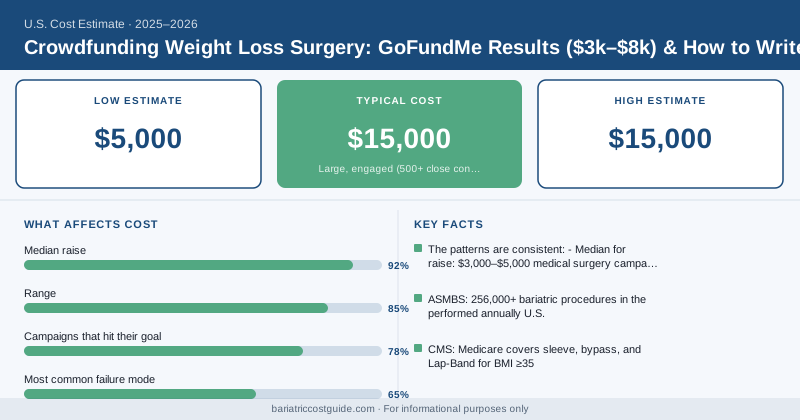
GoFundMe doesn’t publish procedure-specific data, but bariatric and medical surgery campaigns are well-documented in crowdfunding research. The patterns are consistent:
- Median raise: $3,000–$5,000 for medical surgery campaigns that receive at least some traction
- Range: $500–$30,000+ (outliers with large social networks or viral stories)
- Campaigns that hit their goal: Roughly 10–20% of medical GoFundMe campaigns reach their stated goal; most fall short
- Most common failure mode: The campaign is set up but never actively shared — it raises $0 from strangers and minimal amounts from close contacts
A 2021 study in the Journal of General Internal Medicine found that GoFundMe campaigns for medical expenses raised an average of $9,475 when successful, but that success was heavily predicted by the size and engagement of the organizer’s social network. Campaigns from people with limited social networks raised dramatically less.
| Social Network Size | Realistic GoFundMe Outcome |
|---|---|
| Large, engaged (500+ close contacts) | $5,000–$15,000+ |
| Medium (200–500 contacts, active social media) | $3,000–$8,000 |
| Small (under 200 contacts, limited social media) | $500–$2,500 |
| Minimal network + no social media | Often $0–$500 |
How to Write a Compelling Bariatric Surgery Story
This is where most campaigns fail. A wall of text about insurance denials and BMI numbers doesn’t motivate donors. What does:
Lead with your life, not your diagnosis.
Weak opener: “I have been struggling with obesity my whole life and my BMI is 42 and I have type 2 diabetes and sleep apnea.”
Strong opener: “I’ve been on blood pressure medication since I was 29. I’ve watched my kids grow up from the sideline because I can’t run with them. My doctor told me three months ago that my diabetes is no longer controlled by medication alone. I need surgery — and I need help getting there.”
The difference: the second version tells a human story that donors can feel. They understand what it means to watch your kids from the sideline. They can picture your doctor’s face. Numbers alone don’t do that.
Be specific about the goal.
Don’t just say “I need surgery.” Explain:
- What procedure you need and why (your doctor recommends it)
- What the total cost is
- How much your insurance covers (or that it doesn’t)
- What this specific fundraising goal will cover
Specificity builds trust. “I need $4,500 to cover the hospital deductible after my insurance approved the procedure” is more credible than “I need $20,000 for surgery.”
Update regularly.
Campaigns that update donors — with doctor’s appointments, insurance updates, progress, setbacks — raise more. Each update notifies past donors, who may share or give more. A campaign that went silent two weeks after launch looks abandoned.
The Best Performing Medical Campaign Elements
Platform Options Beyond GoFundMe
GoFundMe is the dominant platform but takes a fee (currently no platform fee, but payment processing fees of ~2.9% + $0.30 per donation).
GiveSendGo is a faith-based crowdfunding platform with lower fees and a user base that responds well to stories framed in terms of faith, family, and community.
Fundly and Plum Fund are alternatives with similar fee structures to GoFundMe.
Facebook Fundraisers: Facebook’s built-in fundraising tool charges no fee for personal fundraisers (the funds go directly to a bank account via Meta’s payment system). If your social network is Facebook-heavy, this can be more efficient than a third-party platform.
What Makes People Share (and Give)
Donations to medical crowdfunding campaigns come from:
- Close friends and family (typically 60–70% of total donations)
- Extended network (coworkers, acquaintances, community members) — about 20–30%
- Strangers who found the campaign organically — typically under 10%
This means your campaign’s success is almost entirely determined by how aggressively you share it within your existing network. Expecting strangers to find and fund your campaign without active promotion doesn’t work.
Effective sharing tactics:
- Personal text messages (not just a group blast) to close contacts with a direct ask
- Facebook and Instagram posts with your story — authentic, not polished
- Community group posts (neighborhood apps, church groups, local Facebook groups)
- Updates when significant milestones are reached (surgery approved, date set, etc.)
Framing Around Medical Legitimacy
Campaigns that emphasize medical legitimacy raise more and face less skepticism:
- Mention your doctor’s recommendation specifically
- If your insurance denied coverage, explain why the denial is wrong or the coverage gap
- Note the specific procedure and facility (a recognized medical center adds credibility)
- Share if you’ve been on a diet program or working toward surgery for an extended period
Donors are skeptical of campaigns that seem like weight loss is a preference rather than a medical necessity. Your goal is to communicate that this is medically recommended treatment for a serious condition — not an elective lifestyle choice.
Combining Crowdfunding with Other Funding Sources
Crowdfunding works best as a gap-filler, not a complete funding solution. Realistic combination strategies:
- Insurance covers 80% → crowdfunding covers deductible + copay
- Hospital self-pay plan + crowdfunding covers down payment requirement
- Personal loan covers surgery → crowdfunding covers pre/post-op costs
- Grants + crowdfunding together close the gap to afford a payment plan down payment
Don’t wait until every other option is exhausted to start a campaign. GoFundMe campaigns can take three to six months to build to meaningful amounts. Start it when you start your insurance and financing process, not as a last resort.
{ if eq .Lang "zh" }Disclaimer: BariatricCostGuide provides cost data for educational purposes only. We are not a medical provider, insurance company, or financial advisor. All costs are estimates based on published data and vary by location, facility, surgeon, insurance plan, and individual health factors. Consult a board-certified bariatric surgeon and your insurance carrier for personalized medical and cost advice.