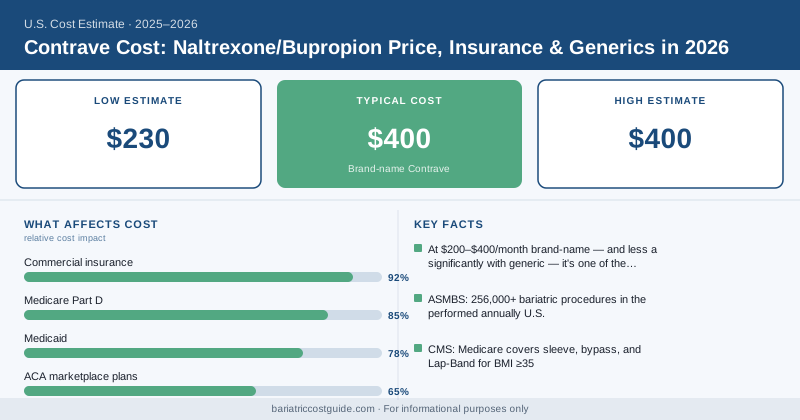
Contrave Cost: Naltrexone/Bupropion Price, Insurance & Generics in 2026
{ if eq .Lang "zh" }{ else }{ end }Most patients assume weight loss medications cost $1,000+ a month. Contrave breaks that assumption. At $200–$400/month brand-name — and significantly less with a generic — it’s one of the few FDA-approved options that doesn’t feel like a second mortgage.
Contrave combines two generic drugs: naltrexone (an opioid antagonist) and bupropion (an antidepressant also used for smoking cessation). The combination works on the brain’s hunger and reward circuits, reducing appetite and cravings rather than slowing digestion like GLP-1 medications do. It’s been on the market since 2014 and has a well-established safety profile.
Contrave Prices in 2026
| Version | Monthly Cash Price |
|---|---|
| Brand-name Contrave | $230 – $400 |
| Contrave with manufacturer coupon | $99 – $150 |
| Generic naltrexone/bupropion ER | $80 – $180 |
| GoodRx / discount card (brand) | $140 – $200 |
| GoodRx / discount card (generic) | $45 – $90 |
The brand-name coupon is offered by Currax Pharmaceuticals through their Contrave Savings Card program — eligible commercially insured patients can pay as little as $99/month. Uninsured patients don’t qualify for the savings card but can often find the generic for under $100 at major pharmacy chains.
Contrave Generic: What to Know
Does Insurance Cover Contrave?
Insurance coverage for Contrave follows the same frustrating pattern as other anti-obesity medications — it’s possible but far from guaranteed.
Commercial insurance: Some plans cover Contrave; many exclude anti-obesity medications entirely. The plans most likely to cover it are those from employers who’ve explicitly added obesity drug coverage. When covered, expect a Tier 2 or Tier 3 copay of $50–$150/month after meeting your deductible.
Medicare Part D: Does not cover Contrave under current federal law. Anti-obesity medications are excluded from the Medicare Part D formulary unless prescribed for a different approved indication. The broader insurance coverage guide explains this exclusion in detail.
Medicaid: A small number of states have added anti-obesity medication coverage; most haven’t. Call your state Medicaid office or check the formulary directly.
ACA marketplace plans: Coverage is inconsistent. Some marketplace plans (particularly more comprehensive Silver and Gold tiers) cover obesity medications; many don’t. Review the formulary, not just the plan summary.
One important advantage Contrave has over GLP-1 medications: because it’s essentially two generic drugs combined, the out-of-pocket cost even without insurance is dramatically lower than Saxenda, Wegovy, or Ozempic. For patients who can’t get insurance coverage for any weight loss drug, Contrave is often the most financially accessible option. See how it compares to GLP-1 pricing in our full GLP-1 medication cost guide.
How Effective Is Contrave?
This is where the honest comparison gets uncomfortable. In the COR-BMOD trial (the largest Contrave pivotal trial), patients on Contrave plus behavioral therapy lost an average of 9.3% of body weight over 56 weeks. That’s meaningful — but it’s roughly half the weight loss seen with semaglutide (Wegovy).
The NIDDK (National Institute of Diabetes and Digestive and Kidney Diseases) reports that approximately 2 in 3 adults in the U.S. are overweight or have obesity, and treatment options that work even partially are valuable. Contrave has its place — especially for patients who:
- Can’t or won’t inject medications
- Have tried and failed other options
- Are primarily driven by food cravings or emotional eating
- Need a more affordable option
| Medication | Delivery | Monthly Cost | Average Weight Loss |
|---|---|---|---|
| Contrave (brand) | Daily pill | $200 – $400 | ~5–9% body weight |
| Contrave generic | Daily pill | $45 – $180 | ~5–9% body weight |
| Saxenda | Daily injection | $1,300 – $1,500 | ~8% body weight |
| Wegovy | Weekly injection | $1,300 – $1,600 | ~15% body weight |
| Qsymia | Daily pill | $180 – $300 | ~9–10% body weight |
| Ozempic (off-label) | Weekly injection | $900 – $1,100 | ~10–12% body weight |
Contrave Side Effects: What Insurance Reviewers and Patients Ask About
The naltrexone component of Contrave blocks opioid receptors — which means you cannot take opioid pain medications while on Contrave. If you’re on opioids for chronic pain or use them periodically, Contrave isn’t an option.
The bupropion component carries an FDA black-box warning about increased suicidal thoughts in younger patients (under 24), consistent with all antidepressants. It can also cause seizures at higher doses and is contraindicated in patients with a seizure history, bulimia, or anorexia nervosa.
Who Qualifies for a Contrave Prescription?
FDA-approved qualifying criteria are the same as other anti-obesity medications:
- BMI ≥ 30, or
- BMI ≥ 27 with at least one weight-related health condition (type 2 diabetes, hypertension, high cholesterol)
Your prescriber will also screen for the contraindications listed above before prescribing.
Contrave vs. Surgery: The Long-Term Math
At $200/month generic, Contrave costs $2,400/year. After five years, that’s $12,000 — and you’re still on the medication (stopping typically leads to weight regain). Surgery, by contrast, is a one-time cost of $15,000–$28,000 (gastric sleeve cost guide) with no ongoing medication expense and dramatically greater long-term weight loss. Financing options for bariatric surgery can make the upfront cost manageable.
That math doesn’t mean medication is wrong — for many patients, it’s the right tool. But it’s worth understanding the full picture before committing to an indefinite prescription.
Bottom Line
Contrave is the most affordable FDA-approved weight loss medication when generics are used. At $45–$90/month with a discount card, it’s accessible even without insurance. The tradeoff is more modest weight loss than newer GLP-1 medications and hard contraindications for opioid users. If you’re opioid-free, can tolerate the side effects, and want a non-injectable option at a lower price, Contrave is worth discussing with your doctor.
{ if eq .Lang "zh" }Disclaimer: BariatricCostGuide provides cost data for educational purposes only. We are not a medical provider, insurance company, or financial advisor. All costs are estimates based on published data and vary by location, facility, surgeon, insurance plan, and individual health factors. Consult a board-certified bariatric surgeon and your insurance carrier for personalized medical and cost advice.