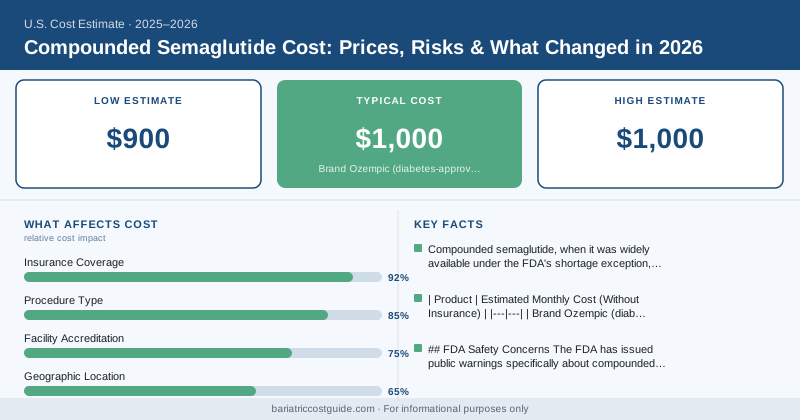
Compounded Semaglutide Cost: Prices, Risks & What Changed in 2026
{ if eq .Lang "zh" }{ else }{ end }Brand-name Ozempic runs $900 to $1,300 a month without insurance. Compounded semaglutide, when it was widely available under the FDA’s shortage exception, ran $150 to $400 a month for a comparable dose. That price gap is why millions of Americans turned to compounding pharmacies — but the legal landscape shifted meaningfully in 2025.
Why Compounded Semaglutide Existed in the First Place
The FDA maintains a drug shortage list, and federal law allows licensed compounding pharmacies to prepare copies of a shortage drug when the brand-name version isn’t available in sufficient supply. Semaglutide sat on that list for an extended period starting in 2022, driven by explosive demand for GLP-1 medications for both diabetes and weight loss. That shortage designation is what made mass compounding legal.
| Product | Estimated Monthly Cost (Without Insurance) |
|---|---|
| Brand Ozempic (diabetes-approved) | $900 – $1,000 |
| Brand Wegovy (weight-loss approved) | $1,000 – $1,300 |
| Compounded semaglutide (during shortage exception) | $150 – $400 |
| Compounded semaglutide (post-shortage, limited exceptions) | $200 – $500 |
What Changed When the FDA Ended the Shortage Designation
Once the FDA determined manufacturer supply had caught up with demand, mass compounding under the shortage exception was no longer legally permitted for most pharmacies. This didn’t eliminate compounded semaglutide entirely — state-licensed pharmacies can still compound personalized versions for patients with a documented, individualized medical need (such as a genuine allergy to an inactive ingredient in the brand formulation), but the volume, marketing, and easy online access that characterized the shortage period narrowed substantially.
Ask Specifically Why You Qualify for Compounding
FDA Safety Concerns
The FDA has issued public warnings specifically about compounded semaglutide products, citing:
- Inconsistent dosing accuracy compared to FDA-approved manufacturing standards
- Use of semaglutide salt forms (like semaglutide sodium or semaglutide acetate) that have not been approved by the FDA and lack the same safety and efficacy data as the approved base compound
- Reports of adverse events tied to dosing errors, some requiring hospitalization according to FDA adverse event reporting data
How Compounded Semaglutide Compares to Bariatric Surgery Cost
| Option | Year 1 Cost | Long-Term Considerations |
|---|---|---|
| Compounded semaglutide (where legally available) | $1,800 – $6,000 | Requires indefinite continued use to maintain results |
| Gastric sleeve (self-pay) | $15,000 – $22,000 | One-time cost; durable weight loss for most patients |
Research on GLP-1 medications, including data referenced by the CDC, indicates that most patients regain a substantial portion of lost weight within a year of stopping the medication — meaning the cost comparison isn’t a one-time expense versus a one-time expense, but an indefinite monthly cost versus a single surgical investment.
Weighing Your Options
If cost is the primary barrier to GLP-1 therapy, talk to your prescriber about patient assistance programs offered directly by manufacturers, which can significantly reduce brand-name costs for eligible patients. For a longer-term comparison of medication versus surgical approaches, see our guide on GLP-1 medications versus bariatric surgery.
{ if eq .Lang "zh" }Disclaimer: BariatricCostGuide provides cost data for educational purposes only. We are not a medical provider, insurance company, or financial advisor. All costs are estimates based on published data and vary by location, facility, surgeon, insurance plan, and individual health factors. Consult a board-certified bariatric surgeon and your insurance carrier for personalized medical and cost advice.