Breast Lift After Weight Loss: Cost With and Without Implants
{ if eq .Lang "zh" }{ else }{ end }Weight loss doesn’t treat everyone’s chest the same way. Some patients lose significant breast volume after bariatric surgery; others primarily experience ptosis (drooping) without much volume change. The right procedure — and the right cost — depends almost entirely on which problem you’re dealing with.
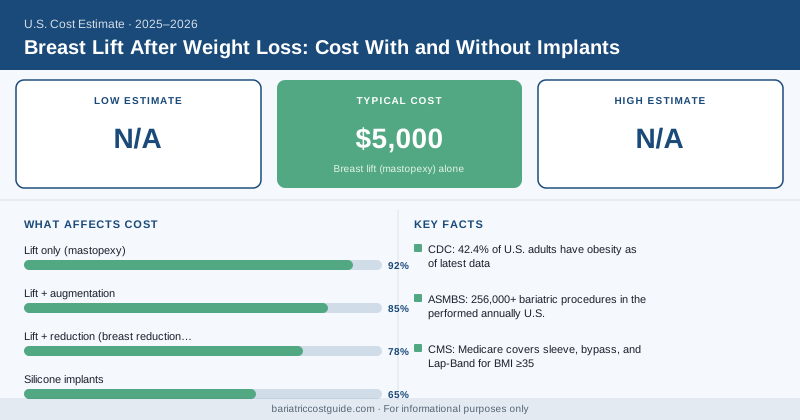
A mastopexy (breast lift) without implants runs $5,000–$8,000. Add implants, and you’re looking at $8,000–$14,000 for the combined procedure. Insurance covers neither in the vast majority of cases — but there’s a narrow exception worth understanding.
Mastopexy Cost Breakdown
| Procedure | Typical Cost |
|---|---|
| Breast lift (mastopexy) alone | $5,000 – $8,000 |
| Breast lift + augmentation (implants) | $8,000 – $14,000 |
| Breast lift + reduction (if large) | $6,000 – $12,000 |
| Surgeon fee alone | $3,000 – $6,000 |
| Anesthesia | $800 – $1,800 |
| Facility fee | $1,200 – $3,500 |
The With-Implants vs. Without-Implants Decision
This is the most important decision you’ll make about breast contouring after weight loss — and it’s worth a real, honest conversation with your surgeon.
Lift only (mastopexy): Reshapes and elevates existing breast tissue. Doesn’t add volume. Right for patients who had smaller breasts before weight loss and primarily need lift and reshaping. The result looks natural and proportionate, but if you had larger, fuller breasts before, the lift alone may feel like a significant volume compromise.
Lift + augmentation: Adds implants to restore lost volume while simultaneously lifting. The right choice for patients who’ve lost substantial breast volume during weight loss and want to restore their previous fullness. More complex surgery, longer OR time, higher cost, and slightly higher complication profile.
Lift + reduction (breast reduction mastopexy): For patients who had large breasts before weight loss and still have excess volume plus ptosis after. A breast reduction that simultaneously lifts may qualify for insurance coverage if you meet the tissue removal thresholds — typically 500g+ per breast resected.
When Insurance Actually Pays
The one breast procedure that sometimes gets covered: breast reduction (not lift) when the removed tissue meets specific gram thresholds. Aetna, UnitedHealthcare, Cigna, and most BCBS plans use the Schnur sliding scale, which bases minimum resection weight on the patient’s body surface area.
Typical minimum: 500g per breast removed. Some insurers require 600g+.
A pure mastopexy with no significant resection — even after massive weight loss — is classified as cosmetic and won’t be covered.
The ASPS reports that breast reduction is consistently among the top 5 reconstructive plastic surgery procedures by volume, with insurance covering a significant portion of those cases. A lift-only, however, is in the top cosmetic (non-covered) category.
Getting a Breast Reduction Covered After Weight Loss
If you’re a good candidate for combined lift + reduction (you had large, heavy breasts before weight loss and still have significant volume plus ptosis), the insurance pathway is:
- Document chronic symptoms: back pain, shoulder grooving, rashes under the breast fold, skin infections (intertrigo)
- Get primary care physician documentation at multiple visits
- Confirm your surgeon will submit a prior auth with expected gram resection weight
- Insurance will sometimes require conservative treatment trials (physical therapy, prescription strength antiperspirants for the fold)
This isn’t guaranteed coverage, but patients who document thoroughly and meet gram thresholds have reasonable approval rates with most major insurers.
Implant Type Decisions (If Augmentation Is Part of the Plan)
If you’re adding volume:
- Silicone implants: More natural feel. FDA-approved. Currently account for the majority of augmentations. Cost premium: $1,000–$2,500 over saline.
- Saline implants: Filled at time of surgery, so incisions are slightly smaller. Firmer feel. Less expensive.
- Implant sizing: Post-bariatric patients should consider moderate-profile implants; very large implants on deflated tissue can cause premature ptosis recurrence and may need revision sooner.
Staging: Is It Smart to Combine Breast Lift With Other Procedures?
Many post-bariatric patients want to combine the breast lift with abdominal work. This is often done — but with guidelines:
- Total OR time should stay under 6–8 hours
- Nutritional status must be optimized (albumin, vitamin D, B12, iron all within normal range)
- Your surgeon should be experienced with combined post-bariatric cases
Doing breast and abdomen in a single session typically saves $2,000–$4,000 compared to two separate events. The tradeoff is a more complex recovery and higher combined complication risk.
Recovery: What to Budget for Beyond the Surgical Fee
- 1–2 weeks off work for desk jobs
- Surgical bra worn for 6–8 weeks
- No strenuous upper body activity for 6 weeks
- Follow-up visits: 3–5 (usually included in quote, but confirm)
- Scar care: $50–$150 over 3–6 months post-op
Total additional post-op budget: $300–$700.
{ if eq .Lang "zh" }Disclaimer: BariatricCostGuide provides cost data for educational purposes only. We are not a medical provider, insurance company, or financial advisor. All costs are estimates based on published data and vary by location, facility, surgeon, insurance plan, and individual health factors. Consult a board-certified bariatric surgeon and your insurance carrier for personalized medical and cost advice.