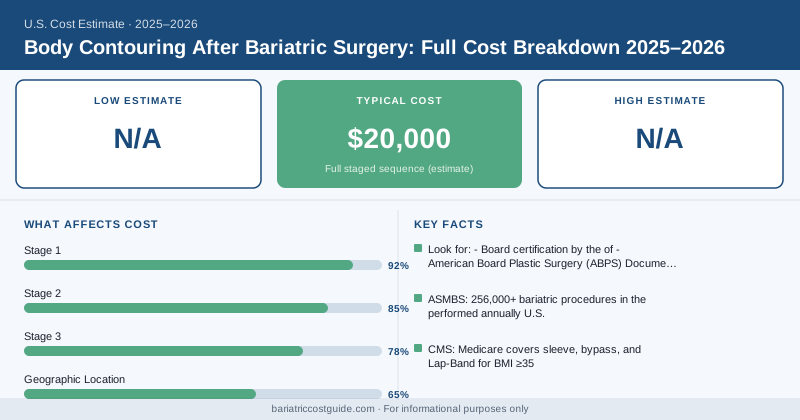
Body Contouring After Bariatric Surgery: Full Cost Breakdown 2025–2026
{ if eq .Lang "zh" }{ else }{ end }Most patients who lose 100+ pounds after bariatric surgery eventually confront the same math: they’ve transformed their health, but they’re carrying 10–20 pounds of excess skin that no amount of exercise will fix. Addressing it fully — abdomen, thighs, arms, breasts, back — costs anywhere from $20,000 to over $50,000, and almost no one does it all at once.
The ASPS reported more than 50,000 post-bariatric body contouring procedures were performed in the U.S. in 2022, a number that’s grown steadily as bariatric surgery volume has increased. What the statistics don’t capture is how most patients actually navigate the cost: in stages, over 2–5 years, mixing insurance coverage with self-pay spending.
What “Full Body Contouring” Actually Means
Post-bariatric body contouring is not a single operation. It’s a sequence of procedures targeting different zones:
| Procedure | Area | Typical Self-Pay Cost |
|---|---|---|
| Panniculectomy / tummy tuck | Abdomen | $4,000 – $20,000 |
| Lower body lift (belt lipectomy) | Abdomen + hips + buttocks | $15,000 – $30,000 |
| Brachioplasty (arm lift) | Upper arms | $5,000 – $10,000 |
| Medial thigh lift | Inner thighs | $6,000 – $12,000 |
| Breast lift (mastopexy) | Breasts | $5,000 – $10,000 |
| Back lift (bra roll excision) | Upper/lower back | $4,000 – $9,000 |
| Full staged sequence (estimate) | All zones | $20,000 – $50,000+ |
Why Staging Is the Standard of Care
You don’t do all of this in one operation. Most experienced post-bariatric plastic surgeons limit total operative time to 6–8 hours per session. Operating beyond that threshold significantly increases the risk of complications: blood clots, infection, prolonged anesthesia exposure, poor wound healing.
The typical staging sequence most surgeons recommend:
Stage 1 — Abdomen and lower body (panniculectomy or lower body lift). This removes the most skin by volume and often has partial insurance coverage.
Stage 2 — Upper body: arms and/or back. Often done 6–12 months after stage 1.
Stage 3 — Breasts and any remaining refinements. Typically 12–18 months after stage 1.
The 18-Month Stability Rule
Lower Body Lift: The Anchor Procedure
The lower body lift (also called belt lipectomy or circumferential body lift) is the most comprehensive single-stage option for the abdomen, outer thighs, and buttocks. It involves an incision that wraps around the entire circumference of the torso — essentially lifting everything from the waist down.
Cost range: $15,000–$30,000 all-in.
What drives that variation:
- Surgeon fee alone: $7,000–$15,000 for experienced post-bariatric specialists
- OR time: typically 4–7 hours
- Multi-night hospital stay often required (vs. outpatient for isolated procedures)
- Drain management, compression garments, post-op visits: add $500–$1,500
This is one of the most technically demanding procedures in plastic surgery, and choosing a surgeon who has done hundreds of these — not dozens — matters significantly for outcomes.
What Insurance Covers (and What It Doesn’t)
Here’s the honest breakdown:
May be covered (with documentation):
- Panniculectomy when pannus causes recurrent infections, rashes, or functional impairment
- Some insurers cover medial thigh lift if inner thigh skin causes persistent intertrigo
Almost never covered:
- Lower body lift (cosmetic classification)
- Arm lift / brachioplasty
- Breast lift (unless combined with reduction meeting size criteria)
- Back lift
The practical result: most patients pay for 70–90% of their full body contouring sequence out of pocket, with insurance potentially covering the panniculectomy component of a larger procedure.
Financing a Multi-Stage Sequence
A $30,000–$50,000 total spend over 3–5 years is manageable with planning. Common approaches:
- Health savings account (HSA): Panniculectomy qualifies as a medical expense; cosmetic procedures do not
- Surgical financing: CareCredit, Alphaeon, and Prosper Healthcare Lending offer 12–24 month promotional periods
- Incremental approach: Do stage 1 (the most functionally impactful procedure), recover financially and physically, then schedule subsequent stages
- Mexico or international surgery: Some patients pursue the lower body lift in Tijuana or Monterrey at 40–60% of U.S. prices, though revision costs if complications arise fall entirely on the patient
Finding the Right Surgeon
Not all plastic surgeons have post-bariatric body contouring expertise. Look for:
- Board certification by the American Board of Plastic Surgery (ABPS)
- Documented post-bariatric cases in before/after portfolio
- Membership in ASPS or American Society for Aesthetic Plastic Surgery (ASAPS)
- Willingness to coordinate with your bariatric team on nutritional optimization
The price premium for a specialist in post-bariatric contouring is real — often 20–40% higher than a general plastic surgeon. Given the complexity of the procedures and the importance of wound healing, most patients find it’s worth it.
{ if eq .Lang "zh" }Disclaimer: BariatricCostGuide provides cost data for educational purposes only. We are not a medical provider, insurance company, or financial advisor. All costs are estimates based on published data and vary by location, facility, surgeon, insurance plan, and individual health factors. Consult a board-certified bariatric surgeon and your insurance carrier for personalized medical and cost advice.