Bariatric Vitamins & Supplements Cost 2026: $300–$800/Year (What You Actually Need)
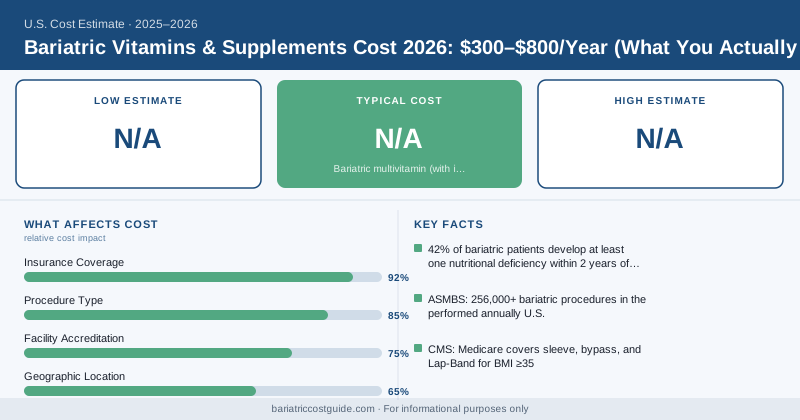
{ if eq .Lang "zh" }{ else }{ end }42% of bariatric patients develop at least one nutritional deficiency within 2 years of surgery if they don’t supplement consistently — that figure comes from a 2020 analysis published in Obesity Surgery covering outcomes across major bariatric centers. It’s not a scare tactic. It’s the reason your surgeon hands you a supplement list on day one.
The good news: you don’t have to spend a fortune. The $300–$800 annual range is wide for a reason — your specific procedure, the brands you choose, and whether you’re buying in bulk all move that number significantly. Here’s the breakdown.
Why Supplements Are Non-Negotiable After Bariatric Surgery
Both gastric sleeve and gastric bypass alter your digestive anatomy in ways that permanently reduce nutrient absorption. Your reduced stomach volume means you absorb less from food. Bypass specifically bypasses the duodenum and part of the jejunum — the sections of the small intestine responsible for absorbing iron, calcium, zinc, and B12. The ASMBS Clinical Practice Guidelines list lifelong vitamin and mineral supplementation as a standard of care for all bariatric patients, not a recommendation.
The deficiencies that develop without supplementation are serious: iron-deficiency anemia (common in women after bypass), metabolic bone disease from calcium and vitamin D deficiency, peripheral neuropathy from B12 deficiency, and hair loss from zinc and protein deficits. These aren’t mild inconveniences — they’re the conditions that drive patients back to their bariatric surgeon with complications years post-op.
What You Actually Need: By Procedure
| Supplement | Gastric Sleeve | Gastric Bypass | Duodenal Switch |
|---|---|---|---|
| Bariatric multivitamin (with iron) | Required | Required | Required |
| Calcium citrate (500–600mg, 3x/day) | Required | Required | Required (higher dose) |
| Vitamin D3 (3,000+ IU/day) | Required | Required | Required (higher dose) |
| B12 (sublingual or spray) | Recommended | Required | Required |
| Iron (separate supplement) | If labs show deficiency | Often required | Usually required |
| Zinc | Recommended | Recommended | Required |
| Vitamin A | Not typically needed | Recommended | Required |
Sleeve patients have the lightest supplement burden because sleeve doesn’t bypass any intestinal segment — it only reduces stomach size. Bypass patients have more malabsorption issues, particularly for iron and B12. Duodenal switch patients have the most aggressive supplement requirements because DS bypasses a much longer segment of intestine.
Annual Cost by Procedure Type
| Patient Type | Monthly Supplement Cost | Annual Cost Estimate |
|---|---|---|
| Gastric sleeve (basic protocol) | $25 – $45/month | $300 – $540/year |
| Gastric sleeve (comprehensive) | $40 – $60/month | $480 – $720/year |
| Gastric bypass (basic protocol) | $40 – $65/month | $480 – $780/year |
| Gastric bypass (comprehensive) | $55 – $80/month | $660 – $960/year |
| Duodenal switch | $65 – $100/month | $780 – $1,200/year |
“Basic protocol” means you’re buying the minimum required supplements at mid-range brands. “Comprehensive” includes additional B12, extra zinc, and buying bariatric-specific formulations vs. splitting regular supplements. Most patients land somewhere in the middle.
Bariatric-Specific Brands vs. Regular Vitamins: The Cost Comparison
| Brand Type | Monthly Cost | Annual Cost | Notes |
|---|---|---|---|
| Bariatric Advantage (bariatric-specific) | $45 – $70 | $540 – $840 | One of the leading bariatric brands; chewable options |
| Celebrate Vitamins (bariatric-specific) | $40 – $65 | $480 – $780 | Wide format variety (chewable, capsule, soft chew) |
| ProCare Health (bariatric-specific) | $35 – $55 | $420 – $660 | Often recommended for value; solid formulations |
| Barimelts (bariatric-specific) | $30 – $50 | $360 – $600 | Dissolvable tablets, popular with patients who can’t swallow pills |
| Buying separate supplements (non-bariatric) | $20 – $40 | $240 – $480 | Lower cost but requires careful label-reading; calcium MUST be citrate form |
You can reduce costs by buying individual supplements rather than all-in-one bariatric formulas. The critical constraint: calcium must be calcium citrate (not carbonate). Everything else — multivitamin, D3, B12, iron — is available in adequate-dose regular supplements. If you go the DIY route, have your bariatric dietitian review your supplement stack before finalizing it.
Use Your HSA or FSA to Buy Bariatric Vitamins
The Calcium Citrate Rule (Non-Negotiable)
This one deserves its own section because it’s the most commonly made and most consequential supplement mistake after bariatric surgery. Calcium carbonate — the form in Tums, Caltrate, and most grocery store calcium supplements — requires stomach acid to absorb. After sleeve and bypass, you have significantly less stomach acid than before. The result: calcium carbonate largely passes through unabsorbed.
Calcium citrate is the correct form. It absorbs without stomach acid. It costs slightly more than carbonate supplements, but the differential is small — $5–$10/month more. Don’t skip it to save money. Inadequate calcium absorption after bariatric surgery is the primary driver of metabolic bone disease in this patient population.
Take calcium citrate in doses of 500–600mg, 2–3 times per day, with at least 2 hours between doses. Larger single doses don’t absorb effectively — your body can only process about 500mg of calcium at once.
Where to Buy Bariatric Supplements for Less
Direct from brand websites: Bariatric Advantage, Celebrate, and ProCare all offer subscription discounts (typically 10–15% off retail) when you set up auto-ship. If you’re going to take these monthly anyway, subscription purchasing is the straightforward way to reduce cost.
Amazon Subscribe & Save: Most major bariatric brands are available on Amazon with 5–15% subscription discounts. Useful for supplements you’ve already validated with your dietitian.
Bulk purchasing: Buying 3-month supplies vs. 1-month supplies typically saves 10–20%. Once you’ve confirmed tolerability of a specific brand and format, buying in bulk is worth it.
Costco / Sam’s Club (for individual components): For patients buying separate supplements rather than all-in-one bariatric formulas, Costco’s calcium citrate and vitamin D3 are well-formulated and priced well below pharmacy retail.
Bottom Line
Budget $300–$800/year for bariatric supplements depending on your procedure and brand choices. That’s $25–$65/month — a line item that’s manageable but not zero. Use calcium citrate (never carbonate), use your HSA/FSA funds, and buy in bulk once you’ve confirmed what works. The annual supplement cost is real, but it’s far cheaper than the deficiency complications it prevents. Your lab work every 6–12 months will confirm you’re hitting adequate levels — if something’s low, your bariatric dietitian will adjust the protocol.
{ if eq .Lang "zh" }Disclaimer: BariatricCostGuide provides cost data for educational purposes only. We are not a medical provider, insurance company, or financial advisor. All costs are estimates based on published data and vary by location, facility, surgeon, insurance plan, and individual health factors. Consult a board-certified bariatric surgeon and your insurance carrier for personalized medical and cost advice.