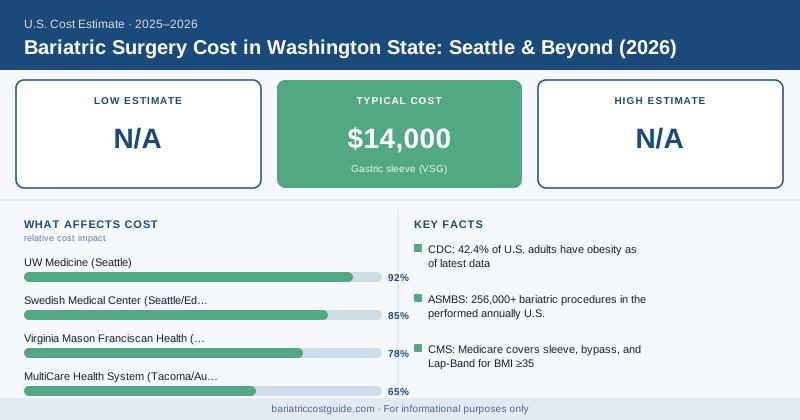
Bariatric Surgery Cost in Washington State: Seattle & Beyond (2026)
{ if eq .Lang "zh" }{ else }{ end }Most patients searching bariatric surgery in Seattle expect to pay more than the national average. They’re right. Washington State — especially the Seattle-Bellevue metro — runs 15–25% above national pricing across the board. The $17,000 floor here corresponds to national mid-range; the ceiling touches $32,000 at premium academic programs.
That said, Washington is one of the better states for bariatric patients once you factor in Apple Health, the state’s expanded Medicaid program. Apple Health covers bariatric surgery with criteria that, according to the Washington State Health Care Authority, have been in effect since the ACA Medicaid expansion in 2014 — making Washington one of roughly 26 states with meaningful Medicaid bariatric access.
Washington State Bariatric Surgery Prices (2026)
| Procedure | Seattle Metro | Tacoma / South Sound | Eastern WA (Spokane) | National Average |
|---|---|---|---|---|
| Gastric sleeve (VSG) | $18,000 – $29,000 | $16,500 – $26,000 | $15,500 – $24,000 | $14,000 – $23,000 |
| Gastric bypass (Roux-en-Y) | $21,000 – $32,000 | $19,500 – $29,000 | $18,000 – $27,000 | $18,000 – $28,000 |
| Duodenal switch | $27,000 – $38,000 | $25,000 – $35,000 | $23,000 – $33,000 | $22,000 – $35,000 |
| Mini gastric bypass | $19,000 – $28,000 | $18,000 – $26,000 | $17,000 – $25,000 | $17,000 – $25,000 |
| Revision surgery | $26,000 – $42,000 | $23,000 – $38,000 | $21,000 – $35,000 | $20,000 – $35,000 |
Eastern Washington — Spokane in particular — is meaningfully cheaper than Seattle. Providence Health and MultiCare programs in Spokane offer competitive pricing for patients willing to travel across the Cascades. The price gap between Seattle and Spokane can exceed $5,000 for the same procedure at an equally accredited program.
Washington's Tech Workforce and Employer Coverage
Major Bariatric Programs in Washington
UW Medicine (Seattle) The University of Washington Medical Center operates one of the Pacific Northwest’s leading bariatric programs through its Center for Bariatric Surgery. MBSAQIP-accredited. UW Medicine is the academic reference center for complex cases — high BMI patients, revisions, and patients with complex comorbidities. Self-pay pricing is accordingly premium: $22,000–$32,000 for gastric sleeve. UW is in-network with most major commercial plans in Washington and is a primary Apple Health (Medicaid) provider for bariatric services.
Swedish Medical Center (Seattle/Edmonds/Ballard) Swedish’s Bariatric Surgery Program is one of the highest-volume programs in the Pacific Northwest. MBSAQIP-accredited Comprehensive Center. Swedish operates across multiple Seattle-area campuses, offering good geographic convenience. Self-pay sleeve pricing runs $19,000–$28,000. Swedish is now part of the Providence system, which increases its insurance network footprint in Washington.
Virginia Mason Franciscan Health (Seattle/Tacoma) Virginia Mason’s Weight Loss Surgery Program is MBSAQIP-accredited and operates at both Seattle and Tacoma locations. Virginia Mason tends to be somewhat more affordable than UW or Swedish for self-pay patients — roughly $17,500–$26,000 for sleeve. It’s a strong option for patients in the greater Puget Sound area who want an accredited academic-affiliated program at a more accessible price point.
MultiCare Health System (Tacoma/Auburn/Covington) MultiCare’s Weight Loss Surgery program is the major bariatric provider south of Seattle, serving Pierce, King, and Thurston counties. MBSAQIP-accredited. Self-pay pricing runs $16,500–$25,000 for sleeve. MultiCare is frequently in-network with Regence BlueCross BlueShield of Washington, the state’s largest commercial insurer, and is a key access point for Apple Health patients in the South Sound.
Providence Health (Spokane and Eastern WA) Providence Sacred Heart Medical Center in Spokane runs the primary bariatric program for Eastern Washington. MBSAQIP-accredited. Spokane pricing is noticeably more competitive — $15,500–$23,000 for sleeve self-pay. For Eastern Washington residents or those willing to travel from the Seattle side, Providence Spokane offers legitimate savings. Providence is also strong for Apple Health patients in Eastern WA.
PeaceHealth (Southwest Washington/Vancouver) PeaceHealth Southwest Medical Center in Vancouver, WA serves the Portland-Vancouver metro on the Washington side. Worth noting for Clark County residents: Portland-side Oregon Health & Science University (OHSU) is also accessible and may offer different pricing depending on your insurance situation.
Apple Health (Washington Medicaid) Coverage
Apple Health — Washington’s Medicaid program — covers bariatric surgery for qualifying adult members. The Washington State Health Care Authority’s coverage criteria include:
- BMI ≥ 40, or
- BMI ≥ 35 with at least one comorbid condition (type 2 diabetes, hypertension, sleep apnea, coronary artery disease, GERD, hyperlipidemia)
- 3-month medically supervised diet attempt documented within the past 2 years
- Psychological evaluation and clearance
- Nutritional counseling
Apple Health coverage is delivered through contracted managed care organizations: Coordinated Care, Community Health Plan of Washington (CHPW), Molina Healthcare of Washington, and UnitedHealthcare Community Plan. Each MCO may have additional authorization requirements beyond the base criteria. Coverage applies to gastric sleeve, gastric bypass, and adjustable gastric band procedures.
Not all bariatric programs accept all Apple Health MCOs. UW Medicine, Swedish, and MultiCare are the most accessible Apple Health providers. Confirm MCO acceptance with the bariatric program coordinator before starting your pre-authorization paperwork.
The full insurance coverage guide covers the prior authorization process in detail.
Commercial Insurance in Washington
Regence BlueCross BlueShield of Washington is the dominant commercial insurer in the state. Regence covers bariatric surgery with standard MBSAQIP criteria requirements on most plans. Some employer plans require a 6-month medically supervised diet before authorization.
Kaiser Permanente Washington is a significant player in the Seattle metro. Kaiser’s integrated model means bariatric surgery is coordinated internally — your surgeon, dietitian, and psychologist are all Kaiser providers. This simplifies authorization but limits your choice of program to Kaiser facilities.
Premera Blue Cross is the other major Washington-specific commercial insurer. Coverage terms are similar to Regence. Premera is strong in mid-size Washington cities and rural areas.
Self-Pay Tips for Washington
Spokane is the best value market in the state. Providence Sacred Heart’s bariatric program in Spokane delivers MBSAQIP-accredited care at $5,000–$8,000 less than comparable Seattle programs. If you’re self-pay and can manage the travel, it’s worth serious consideration.
Get itemized estimates, not packaged quotes. Seattle programs often quote “packages” that may or may not include all follow-up visits, lab work, and nutritional counseling. Ask specifically: does this price include 12 months of post-op follow-up appointments? Lab monitoring? Nutritional supplements? The answers affect your true total cost significantly.
Washington residents near the Oregon border have access to OHSU and Legacy Health in Portland, which may offer different pricing and insurance access. If you’re in Clark County, Vancouver, or the Columbia Gorge area, get quotes from both sides of the border.
For financing options, see the bariatric surgery financing guide. For the full picture on self-pay costs, the bariatric surgery without insurance cost guide covers what to expect nationally and how to negotiate.
Bottom Line
Washington State’s bariatric surgery market is premium-priced, with Seattle self-pay sleeve costs running $18,000–$29,000. Apple Health covers surgery for qualifying members, making Washington one of the better Medicaid-access states for bariatric care. For self-pay patients, Spokane offers the same accreditation level at significantly lower prices — worth a look before committing to a Seattle program.
{ if eq .Lang "zh" }Disclaimer: BariatricCostGuide provides cost data for educational purposes only. We are not a medical provider, insurance company, or financial advisor. All costs are estimates based on published data and vary by location, facility, surgeon, insurance plan, and individual health factors. Consult a board-certified bariatric surgeon and your insurance carrier for personalized medical and cost advice.