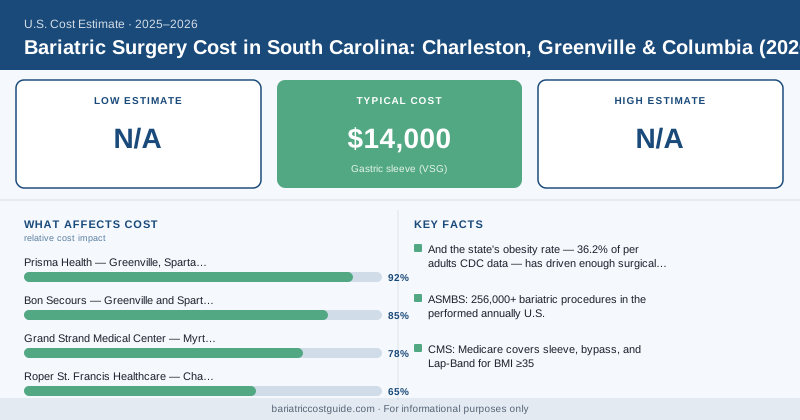
Bariatric Surgery Cost in South Carolina: Charleston, Greenville & Columbia (2026)
{ if eq .Lang "zh" }{ else }{ end }Most patients assume they’ll need to travel out of state for high-quality bariatric surgery — and South Carolina genuinely doesn’t get the credit it deserves. MUSC in Charleston is one of the Southeast’s top academic medical programs. Prisma Health covers the Upstate and Midlands with accredited programs in Greenville and Columbia. And the state’s obesity rate — 36.2% of adults per CDC data — has driven enough surgical volume that these programs have serious experience.
South Carolina has three distinct markets: Charleston (premium academic, higher prices), Greenville/Spartanburg Upstate (Prisma-dominated, competitive pricing), and the Columbia Midlands (mid-tier, generally affordable). Coastal areas like Myrtle Beach have regional options but the more complex or insurance-navigated cases flow to one of the three main hubs.
South Carolina Bariatric Surgery Prices (2026)
| Procedure | Charleston | Greenville/Columbia | National Average |
|---|---|---|---|
| Gastric sleeve (VSG) | $16,500 – $24,000 | $15,500 – $21,500 | $14,000 – $23,000 |
| Gastric bypass (Roux-en-Y) | $20,000 – $28,000 | $19,000 – $26,500 | $18,000 – $28,000 |
| Duodenal switch | $25,000 – $36,000 | $23,000 – $33,000 | $22,000 – $35,000 |
| Mini gastric bypass | $18,000 – $25,000 | $17,000 – $24,000 | $17,000 – $25,000 |
| Revision surgery | $23,000 – $38,000 | $21,000 – $35,000 | $20,000 – $35,000 |
Charleston’s academic market premium adds 5–10% to prices versus Greenville or Columbia. For a straightforward primary sleeve, the Upstate SC programs offer excellent value and comparable outcomes. Charleston’s premium is primarily justified for complex cases, revision surgery, or patients with significant comorbidities who benefit from MUSC’s multidisciplinary infrastructure.
South Carolina's Coastal Heat and Recovery
Major Bariatric Programs in South Carolina
MUSC Health (Medical University of South Carolina) — Charleston MUSC is South Carolina’s flagship academic medical center and home to the state’s most comprehensive bariatric surgery program. The MUSC Weight Management Center is MBSAQIP-accredited and staffed by fellowship-trained bariatric surgeons who handle the full spectrum of procedures including complex revisions, duodenal switch, and patients with prior abdominal surgeries. MUSC is the right choice for high-complexity patients — those with BMI > 60, prior failed surgeries, significant cardiac history, or rare metabolic conditions. Self-pay sleeve at MUSC runs $18,000–$24,000 — above the state average, reflecting the academic overhead. For commercially insured patients, MUSC is in-network with most major SC plans. MUSC is also a primary teaching institution, which means patients receive care from both attending surgeons and resident/fellow teams — appropriate for most patients, and worth knowing before you choose.
Prisma Health — Greenville, Spartanburg, and Columbia Prisma Health is the dominant health system in Upstate South Carolina, formed from the merger of Greenville Health System and Palmetto Health. Its bariatric surgery programs operate at Prisma Health Greenville Memorial Hospital, Prisma Health Richland Hospital (Columbia), and Prisma Health Baptist Hospital (Columbia). All three are MBSAQIP-accredited. Prisma is the right choice for most routine primary bariatric procedures in SC — it’s broadly in-network, well-staffed, and prices at roughly $15,500–$21,500 for sleeve self-pay, making it among the more competitive academic-adjacent programs in the Southeast. Prisma also handles significant TennCare and SC Healthy Connections Medicaid volume given its reach.
Bon Secours — Greenville and Spartanburg Bon Secours St. Francis Health System operates a bariatric program in the Greenville/Spartanburg Upstate market as a Prisma competitor. Its program at St. Francis Downtown and St. Francis Eastside is MBSAQIP-accredited. Pricing is competitive with Prisma ($15,500–$21,000 for sleeve self-pay). For patients in Spartanburg specifically, Bon Secours may offer shorter wait times.
Grand Strand Medical Center — Myrtle Beach Grand Strand Medical Center (part of the HCA Healthcare network) serves coastal South Carolina and the tourism corridor. Its bariatric program handles primary procedures well and serves the significant year-round and seasonal population of the Grand Strand. For Myrtle Beach or Conway-area patients, Grand Strand is the practical local option — patients with complex needs are typically referred to Prisma or MUSC.
Roper St. Francis Healthcare — Charleston Roper operates hospitals in the Charleston metro as a competitor to MUSC. Its bariatric program is MBSAQIP-accredited and handles solid volume for primary procedures in the Charleston market. For patients who prefer a community-hospital experience over MUSC’s academic center environment, Roper is a legitimate option at slightly lower price points than MUSC.
SC Healthy Connections (South Carolina Medicaid) Coverage
SC Healthy Connections is South Carolina’s Medicaid program. It covers bariatric surgery for qualifying members through managed care organizations. Medical necessity criteria:
- BMI ≥ 40 (Class III obesity), or
- BMI ≥ 35 with at least one qualifying comorbidity (type 2 diabetes, severe hypertension, obstructive sleep apnea, hyperlipidemia, coronary artery disease, or severe GERD)
- Documentation of prior medically supervised weight loss attempts (typically 3–6 months)
- Psychological/behavioral health evaluation clearance
- Pre-authorization required before scheduling
SC Healthy Connections is administered through three MCOs: Healthy Blue (BCBS South Carolina), Molina Healthcare of South Carolina, and UnitedHealthcare Community Plan. Each MCO manages its own prior authorization process. The full insurance coverage guide covers the general documentation steps applicable to all Medicaid programs.
South Carolina did expand Medicaid under the ACA (in 2023), which has expanded eligibility compared to prior years — more working adults are now SC Healthy Connections-eligible than under the previous system. If you previously checked and didn’t qualify, it’s worth checking again under the expanded criteria.
Hospital acceptance varies by MCO. MUSC, Prisma, and Bon Secours are broadly contracted across SC Healthy Connections MCOs. Always call your specific MCO and confirm the bariatric surgery contract status before scheduling — not every program in the state accepts every MCO.
Commercial Insurance in South Carolina
South Carolina’s commercial market is dominated by BlueCross BlueShield of South Carolina (the largest insurer in the state), followed by UnitedHealthcare, Cigna, Aetna, and Humana.
BCBS South Carolina: Covers gastric sleeve, gastric bypass, and duodenal switch with standard criteria. South Carolina BCBS typically requires 6 months of medically supervised diet documentation and behavioral health clearance. BCBS SC is strongly network-positioned at both MUSC and Prisma Health — the two dominant systems — making finding an in-network provider straightforward for most BCBS members.
UnitedHealthcare: Standard criteria, often requires Center of Excellence designation. MUSC and Prisma Greenville are typically UHC-designated in South Carolina.
Cigna: Significant presence in the Upstate market (Greenville/Spartanburg) driven by manufacturing and textile industry employers. Standard bariatric coverage criteria.
Self-Pay Tips for South Carolina
South Carolina offers genuine value in the Upstate and Midlands — Greenville and Columbia pricing is meaningfully below Charleston for comparable primary procedures.
Compare Prisma vs. Bon Secours in Greenville. These two systems compete directly in the Upstate market. For self-pay patients, getting quotes from both can reveal a $1,500–$3,000 difference for the same procedure. Both are MBSAQIP-accredited — the quality floor is comparable.
Reserve MUSC for complex cases. If you’re a straightforward candidate for a primary sleeve or bypass, paying MUSC’s premium for academic brand recognition isn’t necessary. Save MUSC for what it does best: complex histories, revisions, and multidisciplinary needs.
Ask about bundled packages. Some SC programs offer all-inclusive self-pay packages covering surgeon, facility, anesthesia, and follow-up. These eliminate billing surprises that can add $2,000–$4,000 to itemized pricing.
For self-pay patients, bariatric surgery financing options like CareCredit or Prosper Healthcare Lending can spread South Carolina’s prices into manageable monthly payments.
Bottom Line
South Carolina’s bariatric surgery market is stronger than most patients realize. MUSC in Charleston handles the state’s most complex cases; Prisma Health dominates the Upstate and Midlands with competitive pricing and broad insurance contracting. SC Healthy Connections Medicaid covers qualifying patients through three MCOs. Self-pay prices in Greenville and Columbia are competitive with national averages — and the Prisma vs. Bon Secours competition in the Upstate gives you real leverage when shopping. If you’re straightforward and cost-conscious, the Upstate is where you’ll find the best value in South Carolina.
{ if eq .Lang "zh" }Disclaimer: BariatricCostGuide provides cost data for educational purposes only. We are not a medical provider, insurance company, or financial advisor. All costs are estimates based on published data and vary by location, facility, surgeon, insurance plan, and individual health factors. Consult a board-certified bariatric surgeon and your insurance carrier for personalized medical and cost advice.