Bariatric Surgery for Sleep Apnea: Cost vs. Lifetime CPAP Expenses
{ if eq .Lang "zh" }{ else }{ end }Roughly 77% of patients undergoing bariatric surgery have obstructive sleep apnea — and the majority of them see it resolve completely after significant weight loss.
That statistic from the NIH isn’t just clinically interesting. It has real financial implications. CPAP therapy is a lifetime expense for most OSA patients. Bariatric surgery, if it resolves OSA, converts a recurring annual cost into a one-time investment.
What CPAP Therapy Costs Over a Lifetime
| CPAP Expense | Cost |
|---|---|
| Initial CPAP machine (purchase) | $800 – $2,000 |
| CPAP machine replacement (every 5–7 years) | $800 – $2,000 |
| Annual supplies (mask, tubing, filters, humidifier) | $300 – $600 |
| Annual sleep study (often required for CPAP compliance check) | $500 – $1,500 |
| CPAP resupply (insurance covered portions if applicable) | Variable |
| Estimated 10-year out-of-pocket total | $6,000 – $14,000 |
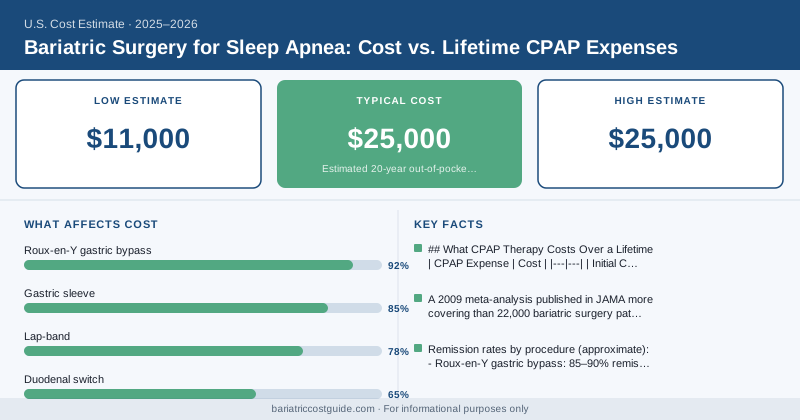
| Estimated 20-year out-of-pocket total | $11,000 – $25,000 |
Note: These are out-of-pocket estimates. Most insurance plans cover CPAP hardware with prior authorization and compliance requirements, but supply copays and equipment replacement costs accumulate significantly over decades.
Sleep Apnea Remission After Bariatric Surgery
This is where the numbers get interesting. A 2009 meta-analysis published in JAMA covering more than 22,000 bariatric surgery patients found that obstructive sleep apnea resolved or improved in 83.6% of cases following bariatric surgery. More recent prospective data has confirmed this finding across procedure types.
Remission rates by procedure (approximate):
- Roux-en-Y gastric bypass: 85–90% remission
- Gastric sleeve: 70–80% remission
- Lap-band: 60–70% improvement (lower than anatomic procedures)
- Duodenal switch: 90%+ remission (highest weight loss, best metabolic outcomes)
“Remission” means OSA is no longer detectable on follow-up sleep study. Most patients discontinue CPAP within 12–18 months of surgery after a sleep study confirms resolution.
The 10-Year Cost Comparison
| Scenario | Upfront Cost | Ongoing Annual Cost | 10-Year Total |
|---|---|---|---|
| CPAP only (no surgery) | $1,000 – $2,000 | $500 – $800 | $6,000 – $10,000 |
| Bariatric surgery + OSA resolves | $4,000 – $8,000 (OOP with insurance) | $200 – $500 (post-op vitamins/visits) | $6,000 – $13,000 |
| Bariatric surgery, self-pay + OSA resolves | $12,000 – $20,000 | $200 – $500 | $14,000 – $25,000 |
The comparison shifts depending on how much you’re paying for surgery. Patients with insurance who pay $4,000–$6,000 out of pocket for bariatric surgery, and who see OSA resolve, often break even on the CPAP comparison within 5–7 years — while also reaping all the other benefits of significant weight loss.
The Comorbidity Argument for Insurance Approval
Sleep apnea as a qualifying comorbidity is one of the most commonly documented conditions that helps patients meet insurance criteria for bariatric surgery. Under NIH guidelines (and most major insurance policies), a BMI of 35–39.9 with OSA typically qualifies you for bariatric surgery coverage.
If you have both obesity and untreated or CPAP-dependent sleep apnea, the OSA diagnosis can be your ticket to insurance approval — which dramatically changes the surgery cost equation.
How to Use an OSA Diagnosis to Support Bariatric Surgery Approval
If you have sleep apnea and are seeking bariatric surgery insurance approval:
- Get a formal sleep study (polysomnography) if you haven’t — not just a home test
- Get documentation from your sleep medicine physician confirming diagnosis and CPAP dependency
- Include OSA specifically in your comorbidity documentation submitted with prior authorization
- Note that OSA doesn’t need to be “severe” — moderate OSA (AHI 15–30) typically qualifies
- If you’re CPAP non-compliant, document that too — it supports the case that OSA management is inadequate with current treatment
What Happens to Your CPAP Equipment Post-Surgery
Most bariatric programs require a follow-up sleep study 6–18 months post-op before you stop CPAP. Don’t stop on your own — some patients see dramatic OSA improvement after 30–50 lbs of loss but still have residual apnea that requires treatment.
When OSA fully resolves and you discontinue CPAP, you can typically stop renting/replacing supplies. Your insurance may ask you to return rented equipment. Equipment you purchased outright is yours.
The Bottom Line
CPAP therapy costs $6,000–$25,000 over 10–20 years in out-of-pocket expenses. Bariatric surgery resolves obstructive sleep apnea in approximately 83% of cases — making surgery, particularly for patients with insurance coverage, a financially competitive alternative when the full lifetime cost picture is considered. It’s one of the most compelling cost arguments for bariatric surgery that often goes uncalculated.
{ if eq .Lang "zh" }Disclaimer: BariatricCostGuide provides cost data for educational purposes only. We are not a medical provider, insurance company, or financial advisor. All costs are estimates based on published data and vary by location, facility, surgeon, insurance plan, and individual health factors. Consult a board-certified bariatric surgeon and your insurance carrier for personalized medical and cost advice.