Robot-Assisted Bariatric Surgery Cost: Is the da Vinci Premium Worth It?
{ if eq .Lang "zh" }{ else }{ end }“Robotic bariatric surgery” sounds futuristic and premium. The da Vinci system’s marketing is effective. But the clinical question isn’t whether robotic surgery is impressive technology — it’s whether the $2,000–$5,000 premium you’ll pay over standard laparoscopic surgery translates into better outcomes for you as a patient.
The honest answer is nuanced.
What Robot-Assisted Bariatric Surgery Costs
Robotic bariatric surgery typically adds a facility premium for equipment use and disposables. The da Vinci system costs hospitals $1–$2.5 million to purchase, plus $150,000+/year in maintenance. That overhead flows through to patients.
| Procedure | Laparoscopic Cost | Robotic (da Vinci) Cost | Premium |
|---|---|---|---|
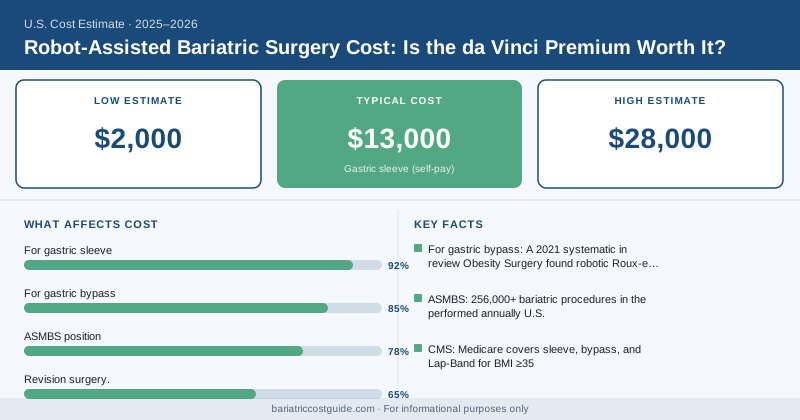
| Gastric sleeve (self-pay) | $10,000 – $23,000 | $13,000 – $28,000 | $2,000 – $5,000 |
| Gastric bypass (self-pay) | $15,000 – $35,000 | $18,000 – $40,000 | $2,000 – $5,000 |
| Duodenal switch | $20,000 – $40,000 | $23,000 – $45,000 | $2,000 – $5,000 |
| Revision surgery | $18,000 – $35,000 | $21,000 – $40,000 | $2,000 – $5,000 |
Insurance generally pays the same facility rate for robotic vs. laparoscopic procedures — the premium often falls to the patient in higher facility fees if the hospital bills separately for robotic system use. Always confirm with your facility whether robotic surgery incurs a separate charge before assuming it’s fully covered.
What the Clinical Evidence Shows
Here’s the honest summary of the robotic vs. laparoscopic comparison for bariatric procedures:
For gastric sleeve: A 2022 meta-analysis in Surgical Endoscopy (17 studies, 3,400+ patients) found no statistically significant difference in major complications, leak rates, operative time, or 30-day readmission between robotic and laparoscopic sleeve gastrectomy. Operating room time was actually longer for robotic procedures.
For gastric bypass: A 2021 systematic review in Obesity Surgery found robotic Roux-en-Y bypass had lower anastomotic leak rates in some studies (1.0% vs 2.8% laparoscopic), but this finding wasn’t consistent across all studies. Conversion to open surgery rates were lower with robotic assistance.
ASMBS position: The ASMBS has not endorsed robotic bariatric surgery as standard of care or superior to laparoscopic technique. Their published guidelines note that “surgeon experience and training are the most significant predictors of outcomes” — which means a highly experienced laparoscopic surgeon may produce better outcomes than a less-experienced robotic surgeon.
When Robotic Surgery Has a Legitimate Advantage
The robotic approach may offer genuine benefit in these specific scenarios:
Revision surgery. Scar tissue from a prior procedure creates technical challenges. The robotic system’s articulating instruments can navigate around adhesions more precisely than standard laparoscopic tools. This is the scenario where most bariatric surgeons see the most consistent advantage.
Super-obesity (BMI ≥ 50). Extremely large abdominal volume creates visualization challenges that robotic optics can help address.
Complex anatomy. Prior abdominal surgeries, unusual anatomical variations, or prior lap band requiring concurrent removal may benefit from robotic precision.
Surgeon-specific. Some surgeons operate better robotically than laparoscopically based on their training and volume. If your surgeon’s outcomes are measurably better robotically, that’s a legitimate reason to choose it.
Questions to Ask Your Surgeon
The most important variable is surgeon experience and volume — not the platform. A bariatric surgeon performing 200 laparoscopic sleeve cases per year will likely produce better outcomes than one performing 20 robotic cases per year.
Ask specifically:
- How many total bariatric procedures do you perform annually?
- What percentage are robotic vs. laparoscopic?
- What are your personal complication rates for the procedure I’m having?
- Do you recommend robotic for my specific case — and why?
- Does choosing robotic change my out-of-pocket cost?
Your surgeon recommending robotic isn’t automatically a red flag — but you deserve a clinical rationale beyond “it’s our program’s preferred platform.”
Does Insurance Cover Robotic Bariatric Surgery?
Generally yes, as the same procedure. Insurance codes for robotic bariatric procedures are the same CPT codes as laparoscopic procedures — the approach (robotic vs. laparoscopic) doesn’t change the code or the insurer’s reimbursement.
The potential out-of-pocket difference comes from facility fees. If your hospital charges a “robotic surgery suite” facility fee that exceeds standard OR fees, and that differential isn’t fully covered by insurance, you may see higher cost sharing. Ask the hospital’s billing department before your procedure.
The Bottom Line
Robotic bariatric surgery costs $2,000–$5,000 more than laparoscopic in most self-pay scenarios. The clinical evidence does not consistently support paying this premium for standard first-time sleeve or bypass procedures. For revision surgery or complex anatomy, robotic assistance has stronger evidence for benefit. Surgeon experience with the chosen platform matters more than the platform itself — choose your surgeon based on volume, outcomes data, and your case complexity, not based on the technology they advertise.
{ if eq .Lang "zh" }Disclaimer: BariatricCostGuide provides cost data for educational purposes only. We are not a medical provider, insurance company, or financial advisor. All costs are estimates based on published data and vary by location, facility, surgeon, insurance plan, and individual health factors. Consult a board-certified bariatric surgeon and your insurance carrier for personalized medical and cost advice.