Sleeve-to-Bypass Revision Surgery Cost: Price, GERD Indication, and Coverage
{ if eq .Lang "zh" }{ else }{ end }Sleeve-to-bypass is now the most commonly performed bariatric revision procedure in the United States. That’s not surprising given that sleeve gastrectomy became the most popular primary bariatric procedure starting around 2013 — and a portion of those patients are now, a decade later, experiencing the two main reasons revision becomes necessary: severe GERD that doesn’t respond to medication, and weight regain that fails conservative management.
Here’s what that revision costs, what insurance covers, and who actually needs it.
Sleeve-to-Bypass Revision Costs
| Scenario | Self-Pay Cost | Notes |
|---|---|---|
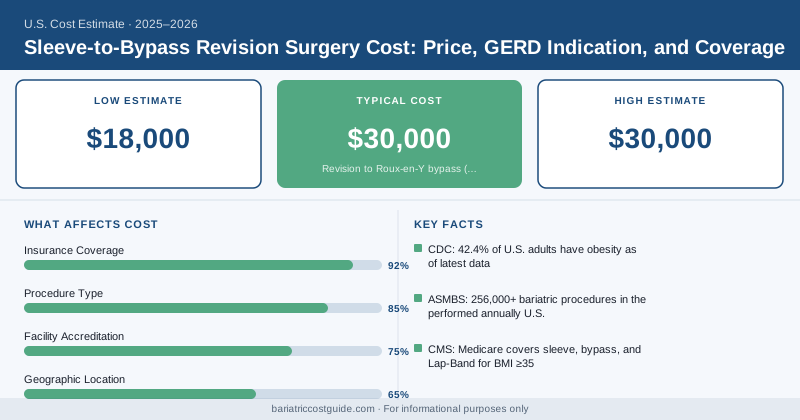
| Revision to Roux-en-Y bypass (standard) | $18,000 – $30,000 | Most common approach |
| Revision to bypass (complex — prior complications) | $25,000 – $40,000 | Adhesions, prior abdominal surgery |
| Revision to SADI-S or duodenal switch | $22,000 – $45,000 | For inadequate weight loss, higher EWL |
| Staged revision (removal then redo later) | Additional $8,000 – $15,000 | If immediate conversion not possible |
Revision surgery costs more than primary bariatric procedures for two main reasons: longer operating time (typically 2–4 hours vs. 1–2 for primary) and higher complication risk requiring more surgical resources. The MBSAQIP requires Comprehensive Center accreditation for most revision procedures — which is a factor in facility cost.
The Two Main Reasons for Sleeve-to-Bypass Revision
GERD (the most common indication in 2025–2026):
Gastric sleeve doesn’t eliminate stomach acid production — it just makes the stomach smaller. In some patients, the sleeve configuration increases lower esophageal sphincter pressure and acid exposure, worsening GERD. A 2020 meta-analysis in Obesity Reviews found new or worsened GERD in 20–30% of sleeve patients at 5 years, and Barrett’s esophagus in 3.7% by 7 years.
When GERD is severe, progressive, or complicated by Barrett’s changes, the anatomical fix is conversion to Roux-en-Y gastric bypass. Bypass reroutes bile away from the esophagus, reliably resolving GERD in 90%+ of patients. It’s not a temporary solution — it’s a structural correction.
Inadequate weight loss or weight regain:
Sleeve gastrectomy produces 60–70% excess weight loss at 1–2 years in most patients, declining to 50–60% at 5–10 years. For patients who don’t reach their weight loss goals or experience significant regain, conversion to gastric bypass or SADI-S (single anastomosis duodeno-ileal bypass with sleeve) provides a second mechanism: malabsorption.
Bypass adds calorie malabsorption through the bypassed intestinal segment. For patients whose sleeve restriction has been insufficient, this represents a meaningful additional weight loss mechanism.
Who Is a Good Candidate for Sleeve-to-Bypass Revision?
Ideal candidates share these characteristics:
For GERD indication:
- Persistent symptomatic GERD despite maximum proton pump inhibitor therapy
- Documented erosive esophagitis on EGD despite medication
- Barrett’s esophagus (low or high-grade dysplasia) that warrants intervention
- EGD confirming the sleeve is structurally intact (no dilation or leak)
For weight loss indication:
- Inadequate primary weight loss (< 50% EWL at 2 years with intact sleeve)
- Significant weight regain (> 20% of initial weight loss regained) after documented dietary adherence
- Sleeve dilation confirmed on upper GI or endoscopy
- Failure of conservative management (dietary coaching, GLP-1 medications, behavioral program)
For both:
- Psychological evaluation confirming readiness for the dietary changes required post-bypass (stricter than post-sleeve)
- Nutritional status adequate for surgery (labs within normal range for key micronutrients)
- No untreated substance use disorder (cross-addiction risk post-bypass is higher than post-sleeve)
Insurance Coverage for Sleeve-to-Bypass Revision
Coverage for revision is more complex than coverage for primary bariatric surgery. Insurers evaluate revision requests on two criteria: medical necessity and coverage for the specific revision type.
GERD/Barrett’s indication: This is the most straightforward coverage path. If your surgeon documents:
- Persistent GERD symptoms despite maximum PPI dosing
- Endoscopic findings confirming GERD complications (Barrett’s, erosive esophagitis)
- Clinical necessity for bypass to resolve the condition
Most commercial plans covering bariatric surgery will cover this revision. The documentation burden is on the surgeon — imaging and endoscopy results need to be in the prior authorization submission.
Weight loss failure indication: Harder to get covered. Many plans require documentation of:
- Structural sleeve failure (dilation on imaging) — more persuasive than “didn’t lose enough weight”
- Failed conservative management attempts (3–6 months)
- Behavioral evaluation confirming the patient addressed non-surgical causes of regain
Plans that specifically exclude revisions for weight regain are common. If your plan denies coverage for weight-related revision, appeal with documented structural findings and comorbidity burden.
The Pre-Op Requirements for Revision
Sleeve-to-bypass revision requires more pre-op workup than primary surgery:
- Upper GI series or CT: Maps current sleeve anatomy, identifies any structural abnormalities
- EGD: Assesses current esophageal/stomach mucosal status, identifies Barrett’s, hiatal hernia
- Nutritional labs: Full bariatric panel including vitamins, minerals, protein — deficiencies must be corrected before revision
- Psychological re-evaluation: Many programs require updated psychological clearance for revision patients
- Cardiopulmonary clearance: More rigorous than for primary surgery given higher patient age and comorbidity burden at revision timing
The Cost Over Time With Revision Factored In
The standard bariatric surgery cost comparison typically quotes primary procedure costs. When you factor in the 10–15% sleeve revision probability over a 10-year horizon, the expected all-in sleeve gastrectomy cost is:
- Primary sleeve: $15,000–$23,000
- Revision probability (12.5% expected): $2,250–$4,375 expected value
- Ongoing supplements over 10 years (post-revision, higher): $12,000–$25,000
- Total expected 10-year cost: $29,250–$52,375
This makes revision-adjusted sleeve costs closer to primary bypass costs — which explains why some surgeons with access to all procedures recommend bypass for patients with pre-existing GERD or high regain risk factors, even as the primary operation.
Bottom Line
Sleeve-to-bypass revision costs $18,000–$35,000 for a standard case, higher for complex anatomy. It’s the most commonly performed revision because sleeve gastrectomy became so prevalent — and a percentage of those patients develop GERD or inadequate weight loss over time. Insurance covers this revision most reliably when GERD documentation (Barrett’s, erosive esophagitis on EGD) is the primary indication. If you’re having your sleeve evaluated for revision, get endoscopy results before meeting with your surgeon — the EGD findings drive both the clinical recommendation and the insurance coverage documentation.
{ if eq .Lang "zh" }Disclaimer: BariatricCostGuide provides cost data for educational purposes only. We are not a medical provider, insurance company, or financial advisor. All costs are estimates based on published data and vary by location, facility, surgeon, insurance plan, and individual health factors. Consult a board-certified bariatric surgeon and your insurance carrier for personalized medical and cost advice.