Bariatric Surgery Revision Cost: What You'll Pay for Sleeve-to-Bypass and More
{ if eq .Lang "zh" }{ else }{ end }About 1 in 8 bariatric surgery patients will need some form of revision within 10 years. It’s not a failure of the patient — it’s a function of how bariatric surgery interacts with the body over time.
Revision surgery is more complex, more expensive, and harder to get insured than primary bariatric surgery. It’s also sometimes the only path to achieving adequate weight loss or resolving complications from an earlier procedure. Here’s what revision costs, when it’s needed, and how to navigate insurance for it.
Why Patients Need Revision Surgery
Revisions fall into two categories: failure revisions (inadequate weight loss or significant regain) and complication revisions (anatomical problems requiring correction).
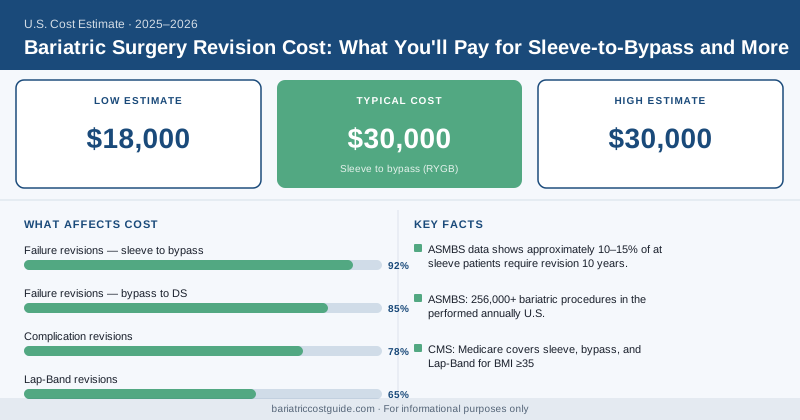
Failure revisions — sleeve to bypass: The most common revision in the U.S. today is conversion of a gastric sleeve to Roux-en-Y gastric bypass. This happens when: the sleeve didn’t achieve adequate weight loss, the patient has regained significant weight, or the sleeve caused or worsened severe GERD. ASMBS data shows approximately 10–15% of sleeve patients require revision at 10 years.
Failure revisions — bypass to DS: When gastric bypass doesn’t achieve adequate weight loss, conversion to duodenal switch or SADI-S is sometimes the next step. Less common but more complex.
Complication revisions: These include strictures (narrowing at the sleeve opening requiring dilation or revision), GERD that doesn’t respond to medication, or pouch stretch after bypass.
Lap-Band revisions: The era of widespread Lap-Band placement (2000s–2010s) created a large population of patients now needing band removal and often conversion to sleeve or bypass. Band revision and conversion is now one of the most common revision categories.
What Revision Surgery Costs
| Revision Type | Self-Pay Cost | Complexity |
|---|---|---|
| Sleeve to bypass (RYGB) | $18,000 – $30,000 | High |
| Sleeve to SADI-S/DS | $22,000 – $35,000 | Very high |
| Bypass to DS | $25,000 – $40,000 | Very high |
| Lap-Band removal alone | $8,000 – $15,000 | Moderate |
| Band removal + sleeve conversion | $15,000 – $28,000 | High |
| Stricture repair | $5,000 – $15,000 | Moderate |
Why Revision Costs More Than Primary Surgery
Revision surgery involves operating in scar tissue from a previous procedure — “hostile abdomen” in surgical terminology. That’s harder, takes longer, carries higher bleeding and leak risk, and requires a more experienced surgeon.
Surgeon fees for revision are typically 20–40% higher than for the equivalent primary procedure. Facility fees are comparable or higher. Anesthesia time is longer.
The combination pushes revision costs 20–50% above primary procedure costs for the equivalent type of surgery.
Revision Insurance Coverage Is Harder to Get Than Primary Coverage
Insurance that covered your primary surgery doesn’t automatically cover revision. Most plans require:
- Documentation that the original procedure was medically appropriate and performed correctly
- Documentation of weight regain or complications that meet the plan’s revision criteria
- New prior authorization with the same documentation requirements as primary surgery (new supervised diet documentation, new psych evaluation, new medical clearances)
- Some plans require 18–24 months post-primary before approving revision for weight regain
For complication-related revisions (stricture, severe GERD, leak repair), insurance tends to be more cooperative — complications are harder to deny than “didn’t lose enough weight.”
Work with an experienced bariatric program coordinator who has navigated revision approvals successfully. The documentation strategy for revision approval is different from primary approval.
When Is Revision Actually Worth It?
Not every patient who hasn’t achieved ideal weight loss needs revision surgery. The decision involves weighing:
Has the primary procedure actually failed? Weight regain of 30–50% of lost weight is common at 5 years after sleeve or bypass. Regain doesn’t automatically mean surgical failure — dietary factors, medication changes, and hormonal shifts all contribute. Revision surgery for regain without significant dietary optimization rarely produces lasting results.
Is there a specific anatomical problem? Sleeve dilation, pouch stretch after bypass, or a malfunctioning band are structural problems that revision can fix. These are cleaner indications.
What does the revision improve? Sleeve-to-bypass conversion has the strongest evidence base for achieving meaningful additional weight loss and resolving sleeve-related GERD. The data for bypass-to-DS is thinner but promising in selected patients.
Finding a Surgeon for Revision
Not all bariatric surgeons perform revisions. It requires advanced laparoscopic skills, experience with the original procedure type, and comfort operating in a previously altered anatomy. Ask specifically:
- How many revisions do you perform per year? (Look for 50+)
- What revision types do you perform?
- What’s your published leak rate for revisions?
- How do you handle complications that require reoperation?
High-volume revision surgeons exist at major academic medical centers and large bariatric programs. They’re worth traveling to see — this is not the time to choose the closest available surgeon.
The Bottom Line
Bariatric revision surgery costs $18,000–$35,000 for the most common type (sleeve-to-bypass), is 20–50% more expensive than primary surgery, and harder to get insurance approval for. It’s the right choice when there’s a clear anatomical problem to correct or when primary surgery genuinely failed to meet clinical goals despite appropriate lifestyle adherence. Choose a high-volume revision surgeon, document your case meticulously for insurance, and be realistic about what revision can and can’t fix.
{ if eq .Lang "zh" }Disclaimer: BariatricCostGuide provides cost data for educational purposes only. We are not a medical provider, insurance company, or financial advisor. All costs are estimates based on published data and vary by location, facility, surgeon, insurance plan, and individual health factors. Consult a board-certified bariatric surgeon and your insurance carrier for personalized medical and cost advice.