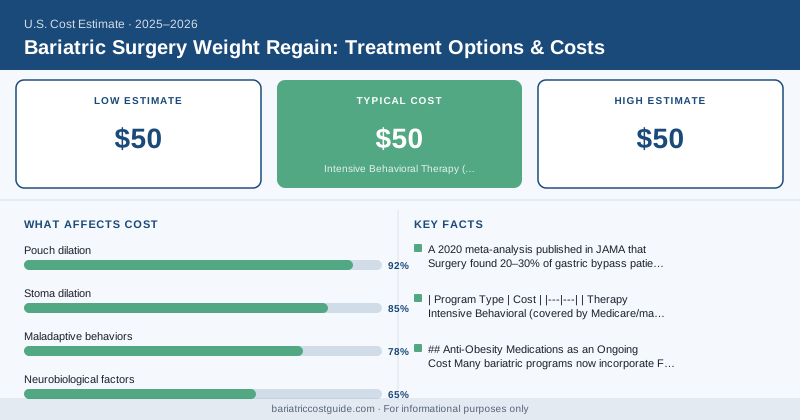
Bariatric Surgery Weight Regain: Treatment Options & Costs
{ if eq .Lang "zh" }{ else }{ end }Weight regain after bariatric surgery is more common than the industry tends to advertise. A 2020 meta-analysis published in JAMA Surgery found that 20–30% of gastric bypass patients regain a substantial portion of their lost weight within 5 years — and sleeve gastrectomy patients show similar patterns at the 7–10 year mark. If you’re in that group, you’re not a failure. You’re dealing with a medically documented pattern that has real treatment options, each with its own cost profile.
Why Regain Happens
Understanding the cause helps predict the right treatment:
- Pouch dilation: The stomach pouch stretches over time, allowing larger meals
- Stoma dilation (bypass patients): The connection between pouch and intestine widens
- Maladaptive behaviors: Return to grazing, high-calorie liquids, reduced activity
- Neurobiological factors: Hunger hormones and satiety signals can partially reset over years
- Medication effects: Some psychiatric, diabetes, and hormonal medications cause weight gain
The treatment approach — and the cost — differs based on cause.
Treatment Option 1: Structured Lifestyle Programs
First-line response for mild-to-moderate regain (less than 30–40% of originally lost weight). Don’t dismiss this as “just diet and exercise” — the specific programs matter.
| Program Type | Cost |
|---|---|
| Intensive Behavioral Therapy (covered by Medicare/many insurers post-bariatric) | $0 – $50 copay per visit |
| Commercial weight management programs (WW, Noom) | $200 – $500/year |
| OPTIFAST or medically supervised VLCD | $2,000 – $5,000 for 26-week program |
| Anti-obesity medications (GLP-1 agonists: semaglutide, liraglutide) | $900 – $1,400/month without insurance |
| GLP-1 with insurance prior auth | $25 – $150 copay/month |
GLP-1 receptor agonists (semaglutide/Ozempic, Wegovy; liraglutide/Saxenda) have shown meaningful efficacy for post-bariatric weight regain. Getting them covered requires documentation of BMI qualifying criteria and often a prior auth process.
Treatment Option 2: Endoscopic Revision Procedures
For patients with documented pouch or stoma dilation who aren’t ready for surgical revision. Less invasive, lower cost, shorter recovery — but also less weight loss effect than surgical revision.
Transoral outlet reduction (TORe) / StomaphyX / OverStitch: Endoscopic suturing to reduce the size of the pouch-to-intestine connection (stoma). Performed under sedation, no incisions.
Cost: $3,000–$8,000 depending on facility and technology used. Insurance coverage: variable. Some plans cover it as treatment for post-surgical complication; most require prior authorization.
Revised Outlet Reduction (ReShape procedure): Similar mechanism. Cost range similar.
Expected result: 40–60% of patients achieve meaningful weight loss (10–20 lbs) at 12 months; the benefit appears to be synergistic with behavioral intervention.
Treatment Option 3: Surgical Revision
For significant regain (>50% of original weight loss), failed endoscopic options, or patients with recurrent comorbidities (type 2 diabetes returning, sleep apnea back). This is the most expensive and highest-risk option.
| Revision Procedure | Cost Range |
|---|---|
| Sleeve revision to gastric bypass (RYGB) | $18,000 – $30,000 |
| Sleeve revision to duodenal switch (DS) | $22,000 – $38,000 |
| Bypass revision (pouch/stoma reduction) | $15,000 – $28,000 |
| Gastric band to sleeve or bypass conversion | $16,000 – $30,000 |
Revision surgery is more complex than primary bariatric surgery — more scar tissue, longer OR time, higher complication rates, longer recovery. The ASMBS reports that revision procedures carry 2–3 times the complication rate of primary cases, which is why thorough workup and surgeon experience selection matters even more the second time.
Getting Insurance to Cover Revision Surgery
Insurance coverage for revision bariatric surgery is harder to obtain than for primary surgery — but not impossible. Coverage is most likely when:
- Medical necessity is clear: Recurrence of serious comorbidities (diabetes, hypertension, sleep apnea) that were resolved after original surgery
- Cause is structural: Documented pouch dilation, stoma dilation, or failed primary procedure via upper endoscopy or upper GI imaging
- Primary bariatric surgery was covered by the same insurer: Continuity of coverage helps
- Behavioral work is documented: Most insurers want proof you’ve tried supervised diet/exercise programs and failed before approving revision
- Program requirements are met: Many insurers require a second full pre-surgical evaluation process (psych clearance, nutritional counseling, medical clearance)
Expect the prior authorization process to take 60–120 days and involve at least one appeal.
Anti-Obesity Medications as an Ongoing Cost
Many bariatric programs now incorporate FDA-approved anti-obesity medications (AOMs) as part of a regain prevention or treatment protocol:
- Semaglutide (Wegovy): $900–$1,400/month self-pay; with insurance $25–$150 copay
- Phentermine/topiramate (Qsymia): $50–$200/month
- Naltrexone/bupropion (Contrave): $100–$250/month; generics now available at ~$80/month
- Liraglutide (Saxenda): $1,200–$1,500/month self-pay
These are ongoing monthly costs — not one-time expenses. Budget accordingly if your bariatric team recommends them.
The Full Cost Spectrum
Expect to spend:
- Mild regain, lifestyle intervention only: $500–$3,000/year
- Moderate regain with endoscopic revision: $4,000–$10,000 one-time + ongoing lifestyle costs
- Significant regain requiring surgical revision: $18,000–$38,000 if self-pay; $0–$8,000 if insured with good coverage
Addressing regain early — before you’re back at your original weight — is dramatically cheaper at every stage. Lifestyle intervention at 20 lbs regained is infinitely cheaper than surgical revision at 80 lbs regained.
{ if eq .Lang "zh" }Disclaimer: BariatricCostGuide provides cost data for educational purposes only. We are not a medical provider, insurance company, or financial advisor. All costs are estimates based on published data and vary by location, facility, surgeon, insurance plan, and individual health factors. Consult a board-certified bariatric surgeon and your insurance carrier for personalized medical and cost advice.