Bariatric Surgery Hospital Readmission: Rates, Costs & Prevention
{ if eq .Lang "zh" }{ else }{ end }5–7% sounds small. But when you’re one of the roughly 260,000 Americans having bariatric surgery this year, 5–7% is 13,000–18,000 readmissions annually. And each one typically adds $15,000–$50,000 to the total cost of care.
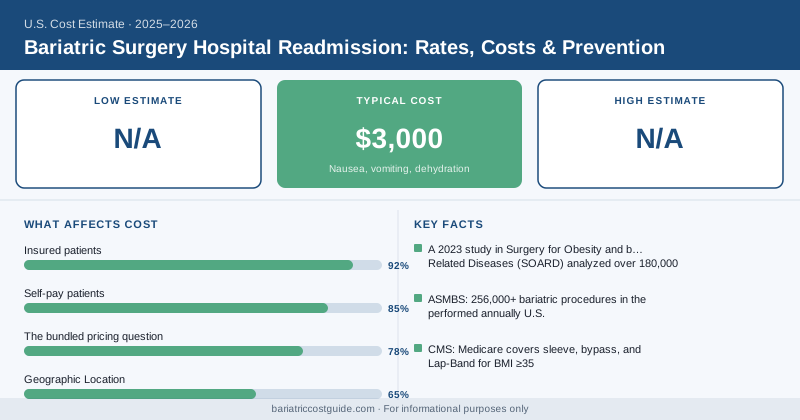
A 2023 study in Surgery for Obesity and Related Diseases (SOARD) analyzed over 180,000 bariatric procedures and found a 30-day readmission rate of 5.3% for sleeve gastrectomy and 6.1% for gastric bypass at non-accredited centers — versus 3.2% and 4.1% at MBSAQIP-accredited centers. That accreditation gap matters, and it’s worth understanding before you choose a program.
Most Common Readmission Causes
Understanding why readmissions happen helps you know what to watch for:
| Readmission Cause | Frequency | Typical Additional Cost |
|---|---|---|
| Nausea, vomiting, dehydration | 30–40% of readmissions | $3,000 – $12,000 |
| Anastomotic leak (bypass) | 1–3% of procedures | $30,000 – $80,000+ |
| Stenosis / stricture (sleeve) | 2–4% of sleeves | $8,000 – $25,000 |
| Pulmonary embolism / DVT | 0.5–1.5% of procedures | $20,000 – $60,000 |
| Wound infection | 1–3% of procedures | $5,000 – $20,000 |
| Bleeding (internal) | 0.5–1% of procedures | $15,000 – $40,000 |
| Port/trocar site hernia | 1–2% at 1 year | $8,000 – $18,000 |
Who Pays for a Readmission?
This depends entirely on your insurance situation:
Insured patients: The readmission is typically covered as a complication of a covered surgical procedure. You’ll owe your co-insurance and may hit a new benefit period deductible if the readmission spans a deductible reset date. Out-of-pocket: $1,500–$8,000 typically.
Self-pay patients: This is the financial exposure that concerns many self-pay bariatric patients. A serious complication requiring readmission and extended hospital stay can produce a hospital bill of $30,000–$100,000+ — entirely on you if you don’t have insurance.
The bundled pricing question: Some self-pay bariatric “packages” include 90-day complication coverage. Many don’t. If you’re paying cash, ask explicitly: “If I’m readmitted in the first 90 days for a complication, what is my financial exposure?”
What MBSAQIP Accreditation Means for Readmission Risk
The Metabolic and Bariatric Surgery Accreditation and Quality Improvement Program (MBSAQIP) requires accredited centers to meet specific standards for:
- Pre-operative patient selection and evaluation
- Surgical team training and volume minimums
- Post-operative monitoring protocols
- Complication tracking and reporting
The 30-day readmission data consistently shows 1.5–2x lower readmission rates at MBSAQIP-accredited centers vs. non-accredited facilities. When choosing a bariatric program, MBSAQIP status isn’t just a credential — it’s a measurable predictor of your likelihood of avoiding costly complications.
Find accredited centers at: facs.org/quality-programs/accreditation-and-verification/metabolic-and-bariatric-surgery-accreditation
The Dehydration Problem: The #1 Readmission Driver
Nausea, vomiting, and dehydration account for roughly one-third of all bariatric readmissions — and it’s largely preventable. The problem: after surgery, the stomach can only hold 2–4 oz of liquid at a time, and patients who struggle with nausea stop drinking. Dehydration sets in within 24–48 hours, and the next stop is the ER.
Prevention protocol that most programs recommend:
- Sip 1 oz of liquid every 15 minutes while awake — even when nauseous
- Track urine output: pale yellow urine throughout the day means adequate hydration; dark urine or no output for 4+ hours is an emergency
- Keep anti-nausea medications (Zofran, Phenergan) accessible and use them proactively
- Call the bariatric program’s 24-hour line before going to the ER — many programs can manage mild dehydration with outpatient IV fluids at their infusion suite for $200–$500, versus a $5,000+ ER visit
Blood Clot Risk: DVT and Pulmonary Embolism
Venous thromboembolism (VTE) — deep vein thrombosis and pulmonary embolism — is one of the most serious readmission drivers, and it’s the leading cause of death in the first 30 days after bariatric surgery.
Risk factors that increase VTE risk:
- BMI > 50 at time of surgery
- History of prior DVT or clotting disorder
- Immobility during recovery
- Long operating time (>3 hours)
- Dehydration
Prevention: LMWH (low molecular weight heparin) anticoagulation is standard post-operatively. Most programs discharge patients with a 2–4 week supply of enoxaparin (Lovenox) injections. Cost: $150–$600 depending on dose and duration. This is not optional. Using it is how you avoid the $30,000–$80,000 PE readmission.
How to Minimize Your Readmission Risk (and Cost)
- Choose an MBSAQIP-accredited center — statistically measurable lower readmission rates
- Call before going to the ER — many programs have nurse lines and infusion centers that handle early post-op problems at a fraction of ER cost
- Follow post-op hydration protocols religiously — the #1 driver of preventable readmissions
- Take your anticoagulation medication — skipping it to save money is not worth the risk
- Attend every follow-up visit — the 1-week and 3-week post-op visits exist specifically to catch developing problems before they become emergencies
- Know your program’s after-hours contact — have the number in your phone before you’re discharged
The difference between a $200 outpatient IV fluid visit and a $15,000 inpatient readmission often comes down to making one phone call 12 hours earlier.
{ if eq .Lang "zh" }Disclaimer: BariatricCostGuide provides cost data for educational purposes only. We are not a medical provider, insurance company, or financial advisor. All costs are estimates based on published data and vary by location, facility, surgeon, insurance plan, and individual health factors. Consult a board-certified bariatric surgeon and your insurance carrier for personalized medical and cost advice.