Reactive Hypoglycemia After Bariatric Surgery: Cost Guide
{ if eq .Lang "zh" }{ else }{ end }Most patients assume the shaking and sweating a couple of hours after eating is just dumping syndrome. It’s a reasonable guess — but for a meaningful number of gastric bypass patients, it’s actually something different: reactive hypoglycemia, also called post-bariatric hypoglycemia or late dumping syndrome. And knowing which one you’re dealing with changes both the treatment and the cost.
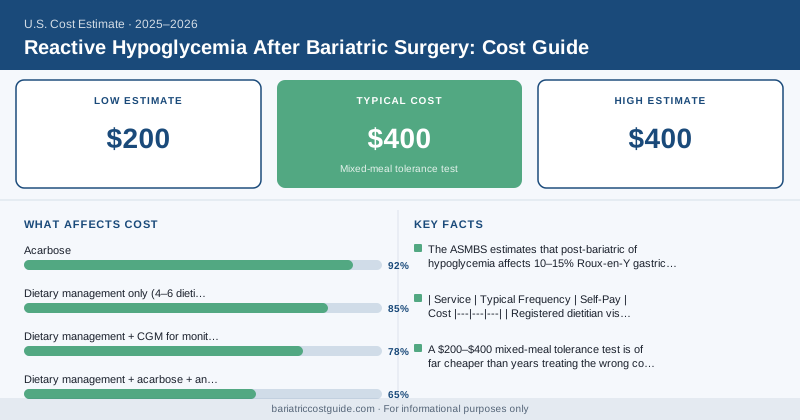
The ASMBS estimates that post-bariatric hypoglycemia affects 10–15% of Roux-en-Y gastric bypass patients. It’s rare after gastric sleeve surgery because the mechanism — rapid glucose absorption triggering an exaggerated insulin response — depends on the bypass anatomy. When blood sugar spikes fast, insulin overshoots, and blood sugar crashes 1–3 hours later. That’s the pattern. And it’s very manageable once it’s correctly identified and addressed.
Understanding What You’re Dealing With
Early dumping syndrome hits within 30 minutes of eating — nausea, cramping, diarrhea — and is driven by food moving too fast into the small intestine. Reactive hypoglycemia hits later: sweating, shakiness, confusion, heart pounding, 1–3 hours post-meal. The trigger is an insulin surge, not the mechanical dump itself.
Diagnosing it correctly matters because the treatment differs. A mixed-meal tolerance test — where you eat a standardized meal and have blood sugar drawn at intervals — is the standard diagnostic tool. A continuous glucose monitor (CGM) worn for 2–4 weeks can also confirm the pattern in your daily life.
Diagnosis Costs
| Service | When | Self-Pay Cost |
|---|---|---|
| Mixed-meal tolerance test | Diagnostic, ordered by bariatric or endocrine team | $200 – $400 |
| CGM device (Dexcom G7, Libre 3) | 2–4 week diagnostic or ongoing | $250 – $450/month self-pay |
| CGM with insurance (prior auth) | Ongoing management | $25 – $75 copay/month |
| Endocrinology or bariatric medicine consult | Initial evaluation | $200 – $400 |
Insurance coverage for CGM in post-bariatric hypoglycemia patients has improved since 2023 — several major plans now cover it when reactive hypoglycemia is documented with ICD-10 code E16.0 (drug-induced hypoglycemia without coma) or E16.2. Your endocrinologist’s office can help with the prior authorization paperwork.
Dietary Management: The First-Line Treatment
Here’s the good news: most cases of reactive hypoglycemia respond well to diet modification alone. The protocol isn’t complicated, but you’ll want a registered dietitian who understands post-bariatric anatomy to coach you through it.
The core principles: small portions, protein first at every meal, avoid refined carbohydrates and sugary drinks entirely, never eat carbs alone without protein or fat to slow absorption. This isn’t the same advice you got right after surgery — it’s more specific to glucose management, and it works for the majority of patients.
| Service | Typical Frequency | Self-Pay Cost |
|---|---|---|
| Registered dietitian visit (bariatric-focused) | 4–6 visits for initial protocol | $100 – $200/visit |
| Dietitian visit (ongoing maintenance) | Every 3–6 months | $100 – $200/visit |
| Annual dietitian cost (stable patient) | 2–3 visits/year | $200 – $600 |
| With insurance (in-network) | Per visit copay | $20 – $60 |
A 2022 review published in Obesity Surgery found that structured dietary counseling resolved symptoms in roughly 70% of post-bariatric hypoglycemia patients within three months, without the need for medication. Six visits with a knowledgeable dietitian — roughly $600–$1,200 self-pay — is a very cost-effective first step.
What to Eat to Prevent Blood Sugar Crashes
Medication Costs When Diet Isn’t Enough
About 30% of patients don’t get full symptom control from diet alone. Medication becomes the next step, and it’s generally affordable.
Acarbose is the most commonly prescribed medication for post-bariatric hypoglycemia. It slows carbohydrate absorption in the intestine, blunting the glucose spike that triggers the insulin surge. Generic acarbose is well-tolerated by most patients and dramatically cheaper than the alternatives.
| Medication | Mechanism | Monthly Cost (Generic) |
|---|---|---|
| Acarbose (generic) | Slows carb absorption | $20 – $100 |
| Diazoxide | Suppresses insulin secretion | $80 – $300/month |
| Octreotide (injection) | Suppresses insulin release | $500 – $1,500/month self-pay |
| With insurance (prior auth, documented hypoglycemia) | Covered generics | $5 – $40 copay |
Acarbose causes gas and bloating in some patients — a meaningful side effect for anyone who already deals with dumping syndrome or GI sensitivity. If it’s not tolerated, diazoxide is the next option. Octreotide is reserved for severe refractory cases and isn’t a long-term solution.
Rare but Real: Surgical Treatment for Severe Cases
A small fraction of patients — roughly 1–2% of those with post-bariatric hypoglycemia — have a condition called nesidioblastosis, where the insulin-producing cells in the pancreas have proliferated and don’t respond to dietary or medical management. In these cases, partial pancreatectomy (surgical removal of part of the pancreas) may be considered.
Total Annual Cost by Management Level
- Dietary management only (4–6 dietitian visits): $400–$1,200 in year one, $200–$600 for annual maintenance
- Dietary management + CGM for monitoring: $1,100–$2,400 with insurance; $3,500–$6,600 self-pay
- Dietary management + acarbose + annual CGM check: $1,400–$2,800/year
- Refractory cases on octreotide or diazoxide: $6,000–$20,000+/year
- Nesidioblastosis requiring pancreatectomy: $15,000–$40,000 (one-time, plus ongoing diabetes management if it results)
Keeping Costs Under Control
- Confirm the diagnosis first — reactive hypoglycemia and early dumping syndrome look similar but are treated differently. A $200–$400 mixed-meal tolerance test is far cheaper than years of treating the wrong condition
- Prioritize dietary intervention — the ASMBS and most bariatric endocrinologists agree that diet modification is first-line; medication before diet optimization is skipping ahead
- Use your HSA or FSA for dietitian visits, CGM supplies, and prescription costs — all qualify as medical expenses
- Check GoodRx for acarbose — generic acarbose is available for as low as $18–$35 for a 30-day supply at major pharmacies with discount pricing
- Ask about CGM coverage proactively — prior authorization for CGM in documented post-bariatric hypoglycemia is increasingly approved, but you often have to ask; it won’t necessarily be offered automatically
Disclaimer: BariatricCostGuide provides cost data for educational purposes only. We are not a medical provider, insurance company, or financial advisor. All costs are estimates based on published data and vary by location, facility, surgeon, insurance plan, and individual health factors. Consult a board-certified bariatric surgeon and your insurance carrier for personalized medical and cost advice.