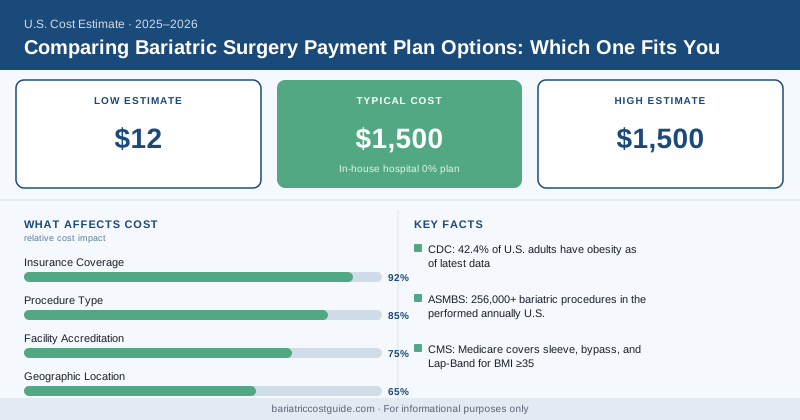
Comparing Bariatric Surgery Payment Plan Options: Which One Fits You
{ if eq .Lang "zh" }{ else }{ end }“0% for 12 months” sounds identical whether it’s your hospital’s in-house plan, a CareCredit card, or a fintech medical lender. It isn’t. The fine print determines whether you pay exactly what you borrowed — or get hit with a year of retroactive interest because you were $200 short at the deadline.
Side-by-Side Monthly Payment Comparison
Based on an $18,000 procedure balance:
| Option | Term | Approx. APR | Estimated Monthly Payment |
|---|---|---|---|
| In-house hospital 0% plan | 12 months | 0% (if paid in full) | $1,500 |
| CareCredit deferred-interest | 12-24 months | 0% (if paid in full by deadline) | $750 – $1,500 |
| Credit union personal loan | 36-60 months | 6% – 10% | $360 – $550 |
| Medical financing company (fintech) | 24-60 months | 8% – 20% | $340 – $815 |
| Standard credit card (no promo) | Revolving | 20% – 29% | Varies, highest total cost |
The Deferred-Interest Trap
This is the single most important distinction in bariatric surgery financing. Deferred-interest plans (common with medical credit cards) calculate interest from day one but waive it only if you pay the full balance before the promotional period ends. Miss that deadline by even $50, and many issuers charge interest retroactively on the entire original balance — not just the remaining amount.
| Plan Type | If Paid in Full by Deadline | If Balance Remains at Deadline |
|---|---|---|
| Deferred-interest (many medical credit cards) | $0 interest | Retroactive interest on full original balance |
| True 0% APR (fixed, no deferred structure) | $0 interest | Interest only on remaining balance going forward |
Ask explicitly: “Is this a true 0% APR plan, or a deferred-interest plan?” The wording sounds similar but the financial consequences are very different.
Only Choose Deferred-Interest If You're Certain You'll Pay It Off
How to Choose Between Options
- Calculate your realistic monthly payment capacity before comparing rates
- Ask if the 0% offer is deferred-interest or true 0% APR — this single question prevents the most expensive financing mistake
- Compare the total cost over the full term, not just the initial monthly payment
- Check your credit union first — members often qualify for lower personal loan rates than national medical financing companies
- Read the early payoff terms — confirm there’s no prepayment penalty if you want the flexibility to pay off early
Combining Financing With Insurance and HSA/FSA
If you have partial insurance coverage, you typically only need to finance your out-of-pocket portion — often $1,500-$6,000 — rather than the full self-pay cost, which dramatically changes which financing option makes sense. Layering in HSA or FSA funds to cover part of the balance further reduces what you need to finance at all.
The Bottom Line
The “cheapest-looking” monthly payment isn’t always the cheapest total cost. Run the full-term math for each option side by side — including realistic assumptions about your own payoff timeline — before signing. For a broader look at all financing categories including grants and crowdfunding, see our complete financing options guide.
{ if eq .Lang "zh" }Disclaimer: BariatricCostGuide provides cost data for educational purposes only. We are not a medical provider, insurance company, or financial advisor. All costs are estimates based on published data and vary by location, facility, surgeon, insurance plan, and individual health factors. Consult a board-certified bariatric surgeon and your insurance carrier for personalized medical and cost advice.