Bariatric Surgery Cost in Ohio: Cleveland, Columbus & Cincinnati (2026)
{ if eq .Lang "zh" }{ else }{ end }The $23,000 quote a Columbus patient gets from an independent surgical center and the $28,000 quote from a major academic hospital can both be for the exact same procedure — gastric sleeve, same accreditation level. Ohio’s bariatric market is mature and competitive, which means price variation is wide and shopping aggressively pays off.
Ohio is one of the more favorable states for weight loss surgery seekers. According to the American Society for Metabolic and Bariatric Surgery (ASMBS), Ohio consistently ranks among the top states for total bariatric procedure volume. High volume means experienced surgeons, lower complication rates, and — for self-pay patients — real price competition.
Ohio Bariatric Surgery Prices (2026)
| Procedure | Cleveland Metro | Columbus Metro | Cincinnati Metro | National Average |
|---|---|---|---|---|
| Gastric sleeve (VSG) | $15,000 – $25,000 | $14,500 – $24,000 | $15,000 – $24,500 | $14,000 – $23,000 |
| Gastric bypass (Roux-en-Y) | $18,500 – $28,000 | $17,500 – $27,000 | $18,000 – $27,500 | $18,000 – $28,000 |
| Duodenal switch | $24,000 – $34,000 | $23,000 – $33,000 | $23,500 – $33,500 | $22,000 – $35,000 |
| Mini gastric bypass | $17,000 – $25,000 | $16,500 – $24,500 | $17,000 – $25,000 | $17,000 – $25,000 |
| Revision surgery | $22,000 – $36,000 | $21,000 – $35,000 | $22,000 – $35,000 | $20,000 – $35,000 |
Cleveland runs slightly higher than Columbus — primarily because of the premium attached to nationally recognized academic medical centers like Cleveland Clinic. Columbus, with more independent accredited programs competing for patients, tends to offer the most competitive self-pay pricing in the state.
Ohio's Obesity Rates and Why They Matter for Surgery Access
Major Bariatric Programs in Ohio
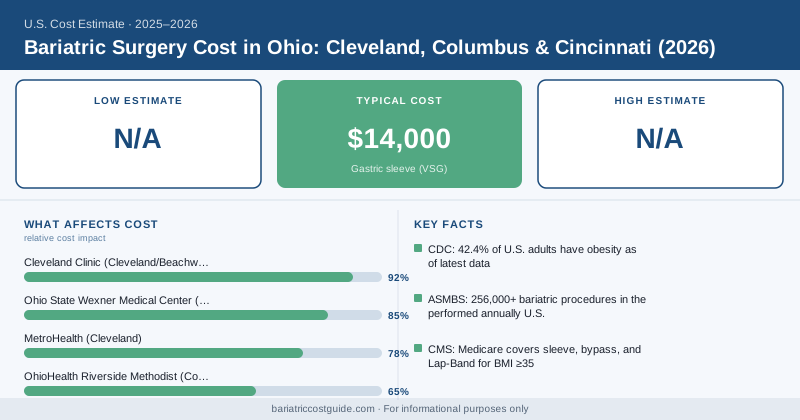
Cleveland Clinic (Cleveland/Beachwood) Cleveland Clinic’s Bariatric & Metabolic Institute is one of the most recognized programs in the country. It’s MBSAQIP-accredited at the Comprehensive Center level — the highest designation available. Cleveland Clinic operates bariatric services at its main campus on Euclid Avenue and at Fairview Hospital. Self-pay prices reflect the institution’s premium reputation: $20,000–$28,000 for gastric sleeve. For complex patients, revision cases, or those with significant comorbidities, the multidisciplinary resources at Cleveland Clinic are hard to match anywhere in Ohio. Cleveland Clinic is in-network with most major commercial plans in Northeast Ohio.
Ohio State Wexner Medical Center (Columbus) OSU’s Wexner Medical Center runs a high-volume MBSAQIP-accredited bariatric program. As an academic medical center, it handles complex cases and participates in research. Self-pay sleeve pricing runs $18,000–$26,000. OSU is in-network with most commercial insurers operating in central Ohio, and it’s one of the primary Medicaid bariatric providers in Columbus. Its location in Columbus also means strong connectivity to state employees — Ohio’s largest employer — whose OPERS health plans commonly cover bariatric surgery.
MetroHealth (Cleveland) MetroHealth is Cleveland’s safety-net hospital system and a major access point for Medicaid and uninsured bariatric patients in Cuyahoga County. Its bariatric program is MBSAQIP-accredited. MetroHealth is one of the more accessible programs for Ohio Medicaid patients in the Cleveland market. Self-pay pricing tends to run below Cleveland Clinic — roughly $15,000–$22,000 for sleeve — making it a strong option for cost-conscious patients who still want an accredited academic program.
OhioHealth Riverside Methodist (Columbus) OhioHealth’s weight loss surgery program, centered at Riverside Methodist Hospital in Columbus, is MBSAQIP-accredited and one of the highest-volume programs in central Ohio. OhioHealth’s network also includes Grant Medical Center and several community hospitals. Self-pay sleeve pricing: $16,000–$24,000. OhioHealth is particularly strong for patients with Anthem BCBS coverage — it’s a preferred provider in many Anthem commercial plans across Ohio.
TriHealth / Good Samaritan (Cincinnati) TriHealth’s bariatric program at Good Samaritan Hospital is Cincinnati’s major academic bariatric option. MBSAQIP-accredited. Self-pay pricing runs $16,000–$25,000 for sleeve. TriHealth is well-positioned for patients with Anthem, Humana, or Aetna coverage in the Greater Cincinnati market.
UC Health (Cincinnati) University of Cincinnati Medical Center’s bariatric program serves the academic medical market in Southwest Ohio. Prices run slightly higher — $18,000–$27,000 for sleeve — reflecting the academic premium, but UC Health handles complex revision cases and patients with serious comorbidities that community programs may decline.
Ohio Medicaid Coverage
Ohio Medicaid covers bariatric surgery for qualifying members under the following criteria:
- BMI ≥ 40 (morbid obesity), or
- BMI ≥ 35 with at least one documented comorbidity (type 2 diabetes, hypertension, obstructive sleep apnea, hyperlipidemia, severe GERD, or severe osteoarthritis)
- 6-month medically supervised diet and exercise program completed and documented
- Psychological evaluation with clearance for surgery
- Nutritional counseling
Ohio Medicaid coverage is administered through managed care plans: Buckeye Health Plan, CareSource, Molina Healthcare, Paramount, and UnitedHealthcare Community Plan. Each managed care plan has its own prior authorization process — your plan’s requirements may differ from the base Medicaid criteria.
Not every Ohio bariatric program accepts all managed care plans. MetroHealth and OSU Wexner are the most consistently accessible for Medicaid patients in their respective metros. Always call the bariatric coordinator and confirm your specific managed care plan is accepted before starting the pre-approval process.
The complete insurance coverage guide walks through the prior authorization process step by step.
Commercial Insurance in Ohio
The dominant commercial insurers in Ohio are Anthem BCBS of Ohio, Medical Mutual of Ohio, UnitedHealthcare, Aetna, and Cigna. All cover bariatric surgery with standard criteria.
Anthem BCBS of Ohio is the largest commercial insurer in the state. Anthem typically requires BMI documentation, 3–6 months of medically supervised weight management, and psychological clearance. Some employer plans add a Center of Excellence requirement — verify this before choosing a program.
Medical Mutual of Ohio is a regional insurer with strong market penetration across Ohio. Coverage criteria mirror national standards. Medical Mutual is often in-network at mid-size Ohio community hospital bariatric programs that larger national carriers may not include.
State employee plans: If you work for Ohio state government or a school district with OPERS or STRS coverage, check your specific plan document — many Ohio public employer plans cover bariatric surgery with criteria similar to standard Medicaid thresholds.
Self-Pay Tips for Ohio
Ohio is genuinely one of the better self-pay markets in the Midwest. A few tactics that work here:
Columbus is the best self-pay market in the state. More competing accredited programs — including OhioHealth Riverside, OSU Wexner, and several independent certified centers — means real price competition. Patients willing to get three quotes in Columbus regularly find $3,000–$6,000 variation between programs.
Ask about all-inclusive package pricing. Several Ohio programs, particularly community hospital-based centers, offer all-inclusive packages (surgeon, facility, anesthesia, 12-month follow-up) rather than component billing. These packages often deliver better value than hospital-system pricing where each department bills separately.
The Cleveland Clinic premium is real — but so is the access to their network. If you’re a complex patient (prior abdominal surgeries, significant cardiac risk, high-risk sleep apnea), Cleveland Clinic’s multidisciplinary evaluation catches issues that standard programs miss. The $4,000–$5,000 price premium can be worth it in those cases.
For patients without coverage, bariatric surgery financing options through CareCredit or Prosper Healthcare Lending can make Ohio’s already-competitive prices accessible on monthly payments. Ohio also has several credit unions with medical loan products worth comparing.
If you’re exploring your coverage options from the ground up, the bariatric surgery without insurance guide covers the full self-pay landscape.
Bottom Line
Ohio’s $15,000–$28,000 price range for bariatric surgery reflects a mature, high-volume market. Cleveland Clinic is the prestige option; MetroHealth and OhioHealth Riverside give cost-conscious patients accredited programs at meaningful discounts. Ohio Medicaid covers surgery with the standard BMI criteria — but you’ll need to navigate managed care plan authorization separately. For self-pay patients, Columbus is the most price-competitive metro in the state.
{ if eq .Lang "zh" }Disclaimer: BariatricCostGuide provides cost data for educational purposes only. We are not a medical provider, insurance company, or financial advisor. All costs are estimates based on published data and vary by location, facility, surgeon, insurance plan, and individual health factors. Consult a board-certified bariatric surgeon and your insurance carrier for personalized medical and cost advice.