Bariatric Surgery Nutritional Deficiency Costs: Labs, Supplements & Long-Term Care
{ if eq .Lang "zh" }{ else }{ end }Nobody warns you about the supplementation math before surgery. Then you’re six months post-op, and your iron is tanking, your B12 is borderline, and your bariatric surgeon is handing you a list of supplements that adds up to $150–$300 a month. This isn’t a scare tactic — it’s a reality check. Nutritional management after bariatric surgery is a lifelong commitment with real costs that should be in your financial planning.
The ASMBS 2022 guidelines identify nutritional deficiency as one of the most clinically significant long-term complications after bariatric surgery, particularly after procedures that involve malabsorption — gastric bypass and duodenal switch especially.
Why Deficiencies Happen After Bariatric Surgery
Bariatric surgery changes where and how nutrients are absorbed. The stomach produces less intrinsic factor (needed for B12 absorption). The bypass configuration skips portions of the duodenum where iron and calcium are primarily absorbed. And eating less volume means less raw nutrient intake even before absorption issues are factored in.
The four highest-risk deficiencies:
- Iron — Especially in menstruating women; bypass patients most at risk
- Vitamin B12 — Across all procedure types; deficiency can cause irreversible neurological damage if untreated
- Vitamin D — Extremely common; contributes to bone loss long-term
- Folate — Important especially for women of childbearing age
Secondary concerns: calcium (bone density), zinc, thiamine (B1), vitamin A (DS patients specifically), magnesium.
Annual Lab Monitoring Costs
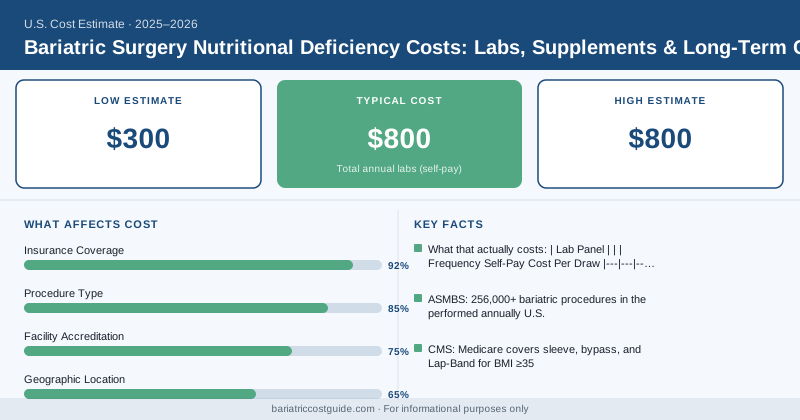
ASMBS recommends labs at 3, 6, and 12 months in year one, then annually thereafter. What that actually costs:
| Lab Panel | Frequency | Self-Pay Cost Per Draw |
|---|---|---|
| CBC, ferritin, iron studies | Every 6–12 months | $80 – $200 |
| B12 and folate | Every 12 months | $40 – $100 |
| 25-OH Vitamin D | Every 12 months | $40 – $120 |
| Comprehensive metabolic panel | Every 12 months | $50 – $150 |
| PTH, calcium, zinc, magnesium | Every 12 months | $100 – $250 |
| Thyroid (TSH) | Every 12–24 months | $30 – $80 |
| Total annual labs (self-pay) | Per year | $300 – $800 |
With insurance (co-pays after deductible), lab costs typically run $50–$200/year. The full self-pay cost hits if you’re uninsured or in a high-deductible plan.
Annual Supplement Costs by Procedure Type
This is where post-bariatric costs add up fastest. What you need depends on your procedure.
Gastric sleeve patients: Lowest risk but not zero. Standard bariatric multivitamin plus vitamin D and calcium.
Gastric bypass (RYGB) patients: Highest deficiency risk. Require more aggressive supplementation.
Duodenal switch patients: Highest of all. Fat-soluble vitamins (A, D, E, K) require specific attention.
| Supplement | Recommended Daily | Monthly Cost |
|---|---|---|
| Bariatric multivitamin (chewable or capsule) | 1–2x/day | $20 – $60 |
| Calcium citrate (not carbonate) | 1,200–1,500 mg/day | $15 – $40 |
| Vitamin D3 | 3,000–5,000 IU/day | $5 – $15 |
| Iron (for bypass patients/menstruating women) | 45–60 mg elemental | $10 – $30 |
| Vitamin B12 (sublingual or injection) | 500–1,000 mcg/day | $10 – $25 |
| Omega-3 fatty acids | 1–2g/day | $10 – $25 |
| Monthly total estimate | — | $70 – $195 |
Annual supplement budget: $840–$2,340.
Calcium Citrate vs. Calcium Carbonate — Not Interchangeable
When Deficiency Requires Medical Treatment
Dietary supplements aren’t always enough. Some patients develop clinically significant deficiencies that require medical intervention:
IV iron infusion: For patients who can’t tolerate oral iron or have refractory iron deficiency. Cost: $400–$1,500 per infusion; typically 1–3 infusions for initial correction. Usually covered by insurance when documented iron deficiency anemia is present.
B12 injections: Some patients can’t adequately absorb sublingual B12. Monthly IM injections: $15–$50/injection through a physician’s office, or $20–$40/month for self-administered subcutaneous with a prescription. Covered by insurance when B12 deficiency is documented.
High-dose vitamin D prescription: Ergocalciferol 50,000 IU weekly (prescription). Monthly cost: $10–$40 generic. Requires monitoring.
Thiamine (B1) IV: For patients with suspected Wernicke’s encephalopathy (a rare but serious B1 deficiency complication). Usually given in an inpatient or infusion center setting: $300–$800 per treatment, typically covered as an emergency/complication.
The Real Annual Cost of Nutritional Management
| Scenario | Annual Cost |
|---|---|
| Uncomplicated sleeve, insured, standard supplements | $800 – $1,400 |
| Gastric bypass, standard supplements + insured labs | $1,200 – $2,000 |
| Bypass with iron deficiency requiring periodic infusions | $2,000 – $4,500 |
| Duodenal switch, full supplementation protocol | $1,800 – $3,500 |
Reducing Your Supplement Costs (Legitimately)
- Buy bariatric-specific brands in bulk: Bariatric Advantage, Celebrate Vitamins, and ProCare Health all offer subscription pricing that saves 15–25%
- Use GoodRx for prescription supplements: High-dose vitamin D and prescription B12 are significantly cheaper with discount cards
- Get labs at your bariatric program’s annual visit: Many programs do the full panel at one visit, covered as a single “bariatric follow-up” claim
- Flexible Spending Account (FSA/HSA): Most bariatric supplements qualify as medical expenses — pay with pre-tax dollars
- Generic multivitamins: Some patients tolerate well-chosen generic chewable vitamins that meet bariatric specs at half the cost of branded products
Disclaimer: BariatricCostGuide provides cost data for educational purposes only. We are not a medical provider, insurance company, or financial advisor. All costs are estimates based on published data and vary by location, facility, surgeon, insurance plan, and individual health factors. Consult a board-certified bariatric surgeon and your insurance carrier for personalized medical and cost advice.