Bariatric Surgery Cost in Minnesota: Mayo Clinic, Minneapolis & Beyond (2026)
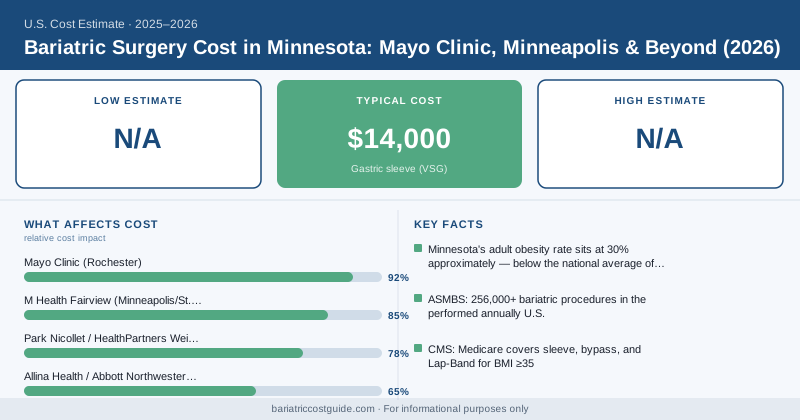
{ if eq .Lang "zh" }{ else }{ end }Mayo Clinic is the name everyone knows — but paying Mayo prices for a routine gastric sleeve isn’t necessary for most patients. Park Nicollet Health Services in the Twin Cities offers MBSAQIP-accredited bariatric surgery for $16,000–$22,000 self-pay. Mayo’s world-class multidisciplinary evaluation runs $26,000–$33,000. For a healthy 38-year-old with a straightforward BMI-45 sleeve indication, those extra dollars don’t buy meaningfully better outcomes.
That said: for complex patients, revision surgery, or metabolic cases with multiple comorbidities, Mayo Clinic Rochester is as good as it gets anywhere in the world. The decision between programs isn’t just about cost — it’s about matching complexity to capability.
Minnesota’s Medical Assistance program (the state’s Medicaid brand) covers bariatric surgery with standards that align to ASMBS clinical guidelines. And the state’s strong employer-based insurance market — anchored by major employers like UnitedHealth Group, 3M, Target, and Mayo itself — means commercial coverage rates are among the highest in the country.
Minnesota Bariatric Surgery Prices (2026)
| Procedure | Twin Cities Metro | Rochester (Mayo) | Duluth / Greater MN | National Average |
|---|---|---|---|---|
| Gastric sleeve (VSG) | $16,000 – $26,000 | $26,000 – $33,000 | $15,500 – $24,000 | $14,000 – $23,000 |
| Gastric bypass (Roux-en-Y) | $19,500 – $29,000 | $30,000 – $38,000 | $18,500 – $27,500 | $18,000 – $28,000 |
| Duodenal switch | $25,000 – $36,000 | $36,000 – $46,000 | $23,500 – $34,000 | $22,000 – $35,000 |
| Mini gastric bypass | $18,000 – $26,500 | N/A (not commonly offered) | $17,000 – $25,000 | $17,000 – $25,000 |
| Revision surgery | $24,000 – $38,000 | $34,000 – $50,000 | $22,000 – $36,000 | $20,000 – $35,000 |
Mayo Clinic’s pricing reflects its comprehensive evaluation model — pre-op includes cardiology, endocrinology, pulmonology, psychology, and nutrition consults as standard. That’s a $6,000–$12,000 premium over Twin Cities programs. Most straightforward sleeve and bypass candidates don’t need that depth of pre-op evaluation.
Major Bariatric Programs in Minnesota
Mayo Clinic (Rochester) Mayo Clinic’s Division of Colon and Rectal Surgery and Department of Surgery handle bariatric cases through the Mayo Clinic Bariatric Surgery Program. Mayo’s outcomes data is exceptional — low complication rates, high long-term weight loss maintenance. ASMBS recognizes Mayo as a Comprehensive Center. The program is best suited for: patients with significant cardiac or pulmonary comorbidities, those needing revisional bariatric surgery after prior failures elsewhere, patients with complex anatomy, and anyone seeking the most thorough pre-surgical workup available in the US. For routine cases, the premium is hard to justify unless you have Mayo-network insurance coverage.
M Health Fairview (Minneapolis/St. Paul) M Health Fairview — the academic health system affiliated with the University of Minnesota — operates a high-volume bariatric program at several Twin Cities locations. The University of Minnesota Medical Center is the flagship, with satellite programs at Fairview Southdale and Fairview Ridges. Self-pay sleeve pricing runs $18,000–$26,000. M Health Fairview is MBSAQIP-accredited and a strong choice for commercially insured patients with BCBS MN, HealthPartners, or Medica plans.
Park Nicollet / HealthPartners Weight Management Park Nicollet’s surgical weight loss program in St. Louis Park is one of the most price-competitive accredited options in the Twin Cities. Part of the HealthPartners system, Park Nicollet offers sleeve gastrectomy self-pay packages starting around $16,000 all-inclusive. For HealthPartners-insured patients, Park Nicollet is the natural in-network choice. Its bariatric team has strong volume and good outcomes data. This is the best value for straightforward cases in the metro.
Allina Health / Abbott Northwestern (Minneapolis) Allina Health’s bariatric program at Abbott Northwestern Hospital in Minneapolis is another established Twin Cities option. Abbott Northwestern has been performing bariatric surgery for decades and maintains MBSAQIP accreditation. Self-pay sleeve pricing runs $17,500–$25,000. Allina is strongly positioned with Aetna and some employer self-insured plans in the metro.
Essentia Health (Duluth) For northern Minnesota patients, Essentia Health in Duluth offers bariatric surgery without the drive to the Twin Cities. Essentia is MBSAQIP-accredited and serves a large rural catchment area. Self-pay pricing runs $15,500–$23,000 — competitive with the metro. For upper Midwest patients on the Minnesota/Wisconsin border, Essentia is often the most accessible option.
Minnesota Medical Assistance (Medicaid) Coverage
Minnesota’s Medical Assistance program — the state’s Medicaid brand — covers bariatric surgery for qualifying adult members. Minnesota uses a managed care delivery system for most Medicaid enrollees, with health plans including Blue Cross Community Health Plan, HealthPartners, Hennepin Health, and UCare.
Standard coverage criteria:
- BMI ≥ 40, or
- BMI ≥ 35 with at least one qualifying comorbidity (type 2 diabetes, severe sleep apnea, hypertension, coronary artery disease, hyperlipidemia)
- Medically supervised weight management documentation (typically 3–6 months)
- Psychological evaluation
- Medical clearance from primary care
- Pre-authorization from your managed care plan
Minnesota also has MinnesotaCare — a state-subsidized program for adults with incomes too high for Medicaid but who lack affordable employer coverage. MinnesotaCare covers bariatric surgery with similar criteria.
Minnesota's Obesity Rate Context
The Mayo Question: When Is It Worth It?
Most patients don’t need Mayo Clinic for bariatric surgery. The cases where Mayo’s premium is genuinely justified:
- Prior bariatric surgery that failed or caused complications — Mayo’s revision volume and subspecialty depth are unmatched in the region
- Significant cardiac or pulmonary disease — Mayo’s pre-op cardiac and pulmonary workup is more comprehensive than at any other Minnesota program
- Complex anatomy from prior abdominal surgeries — Mayo’s surgical volume and backup resources reduce risk in technically difficult cases
- Research trial access — Mayo runs more bariatric-related research trials than any other MN program
For a healthy adult with a BMI of 42 and no major comorbidities seeking sleeve gastrectomy? Park Nicollet or M Health Fairview will deliver equivalent outcomes at $10,000 less.
Self-Pay Strategies for Minnesota Patients
Get quotes from both Park Nicollet and M Health Fairview. These two systems compete in the same geography with similar accreditation and outcomes. Price differences for the same procedure can range $2,000–$4,000.
Duluth can be a genuine alternative. If you live in northern or central Minnesota, Essentia Health in Duluth is fully accredited and priced below the Twin Cities. The savings can cover the cost of a short trip.
Check HealthPartners commercial insurance carefully. HealthPartners is one of the dominant commercial insurers in Minnesota and covers bariatric surgery for qualifying members. If you have HP commercial coverage, ask about their specific criteria — some plans have been more flexible on the supervised diet requirement than typical BCBS or Aetna plans.
For financing options if you’re self-pay, see our guide on bariatric surgery financing options. To understand what Medicaid covers nationally, see does Medicaid cover weight loss surgery.
{ if eq .Lang "zh" }Disclaimer: BariatricCostGuide provides cost data for educational purposes only. We are not a medical provider, insurance company, or financial advisor. All costs are estimates based on published data and vary by location, facility, surgeon, insurance plan, and individual health factors. Consult a board-certified bariatric surgeon and your insurance carrier for personalized medical and cost advice.